
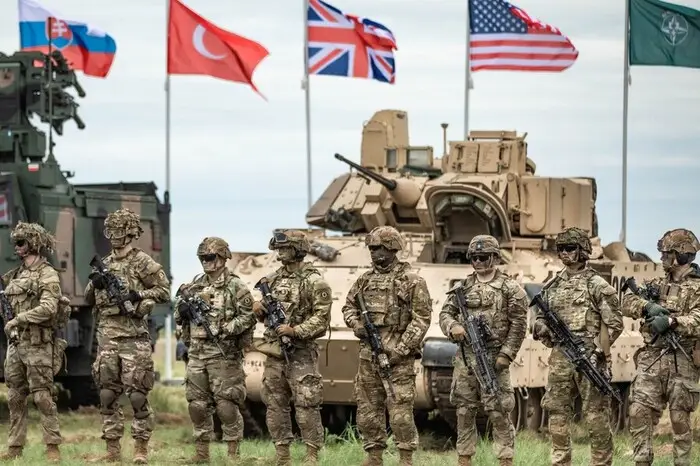
What happened
NATO has announced the launch of a defence and deterrence operation on its eastern flank. The goal is to increase force readiness, strengthen the air/ballistic missile shield and ensure rapid deployment of units to the Alliance's border states.
Key tasks
- Defence of airspace: Enhanced air patrol missions, integration of allied air and missile defence.
- Protection of critical infrastructure: energy, communications, transport corridors and supply hubs.
- Fast amplification: practicing the transfer of reserves and equipment from different regions.
- Joint compatibility: Unification of procedures, communication and management in multinational headquarters.
- Cyber and information security: Increasing resilience to cyberattacks and disinformation.
Scale and composition of forces
The operation will involve multinational land, air, maritime and cyber units. Standby forces, multinational battalion groups, tactical and transport aviation, and ships for patrolling and mine countermeasures will be involved.
Geography and terms
The active phase will take place on the territory and in the air/sea space of the Allied countries on the eastern flank. The timeframe is defined by operational plans; further presence may be extended according to risk assessments.
Command and rules of engagement
Coordination is carried out by NATO's unified commands. The units operate under agreed rules aimed at deterrence, de-escalation and defence of allied territory, The company's operations are conducted in strict compliance with international law.
Logistics and collaboration
- strengthening railway and port capacities for the rapid transfer of equipment;
- joint exercises with member states and partners;
- intelligence sharing, unification of medical evacuation and maintenance procedures.
Civilian security
The priority is to minimise the impact on civilians and the environment: warning of training activities, avoidance of critical facilities, transparent communication with local authorities and communities.
Reaction of allies and partners
The allies call the operation a preventive step to secure the eastern flank and demonstrate unity. Partner states see it as an additional factor of stability and predictability in the region.
What this means for regional security
- Raising the risk threshold for possible provocations against NATO states.
- Faster deployment of forces in the event of a crisis and better interaction between different types of troops.
- Strengthening resilience critical infrastructure and logistics.
Background: how NATO operations work
Allied operations are based on collective defence plans, decisions by Allies and the principle of purely defensive in nature. They combine constant presence, training and rapid response readiness.
What's next
Phased deployments of units are expected, as well as reports on the results of training episodes and the scheduling of further rotations. NATO announces regular briefings on the progress of the operation and the level of readiness of allied forces.



 Ukrainian
 English