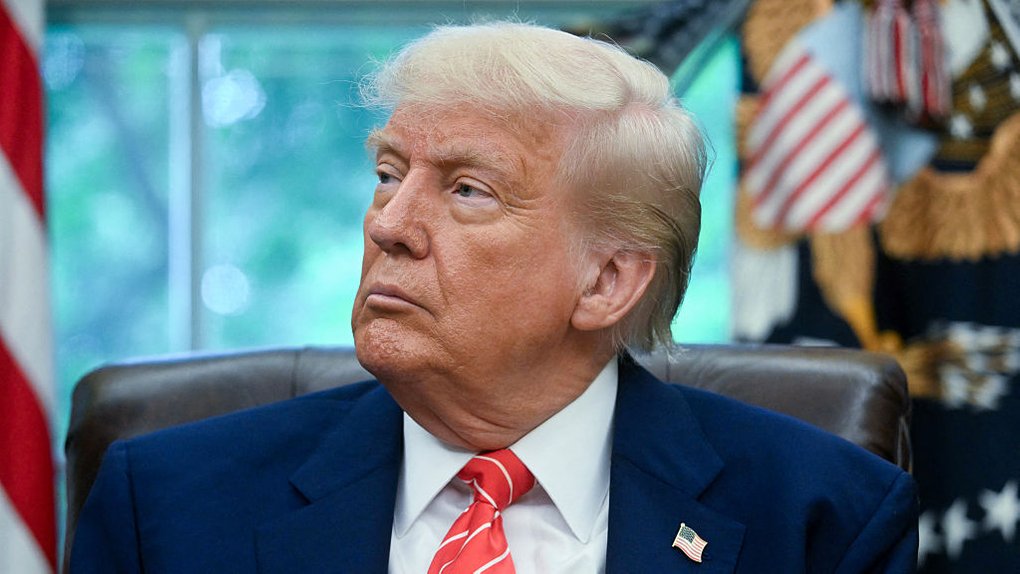
“The US permission for Ukraine to use long-range missiles is a fake” - Donald Trump
President of the United States Donald Trump During a brief briefing, he said that the information about Washington's permission for Ukraine to use long-range missiles on Russian territory is not true.
«The US permission for Ukraine to use such missiles is a fake. The United States has nothing to do with these missiles,» Trump said.
The statement came amid numerous reports in the Western media about a possible easing of restrictions on the use of long-range missiles provided to Kyiv by Western allies.
Context.
Earlier, some media outlets, including the WSJ and Reuters, reported that Washington allegedly lifted restrictions Ukraine's use of long-range missiles, such as Storm Shadow or ATACMS, to strike deep into Russian territory.
Following these publications, the Kremlin stated that it was «closely monitoring the US reaction». At the same time, the White House has not officially confirmed any decision to change Ukraine's policy of using US or allied weapons.
Trump's position
President Trump emphasised that the United States «does not engage in any operations involving the use of such missiles» and that all reports of such authorisation are «fiction and manipulation».
«We support Ukraine, but we have not allowed the use of any long-range missiles that could be used against Russia. These stories are fake,» Trump said.
Analysts' reaction
American experts note that such a statement may be aimed at avoiding a direct confrontation between Washington and Moscow. At the same time, it shows Tighter control of the White House on the use of allied weapons by Ukraine.
Political analyst James Rowling told CNN that «Trump is trying to strike a balance between supporting Ukraine and not wanting to escalate the conflict with Russia».
Conclusion.
US President Donald Trump's statement is actually denies rumours of a change in Washington's policy regarding Ukraine's use of long-range missiles. At the same time, the Pentagon refrains from commenting, citing the «operational sensitivity» of the topic.