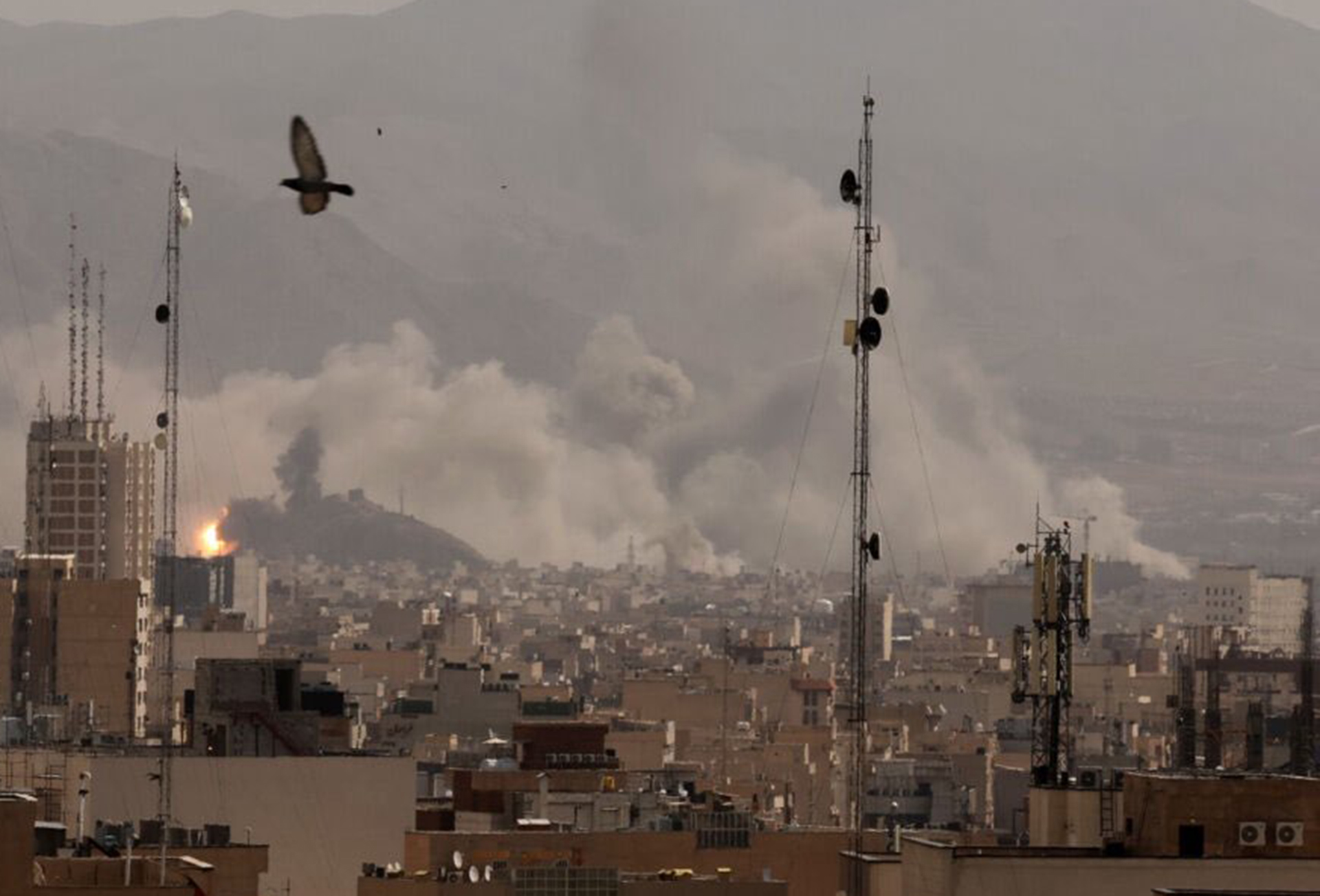
Fighting on the Middle East is rapidly escalating from a regional conflict into a crisis that could change the balance of power in the world. Directly or indirectly involved in the confrontation are USA, Iran, Israel, the Gulf states and a number of international allies.
How the new escalation began
The latest wave of tension began after a series of mutual strikes between Iran and US allies.
Several key factors have dramatically increased the risk of war:
missile attacks and drone strikes on military bases in the region;
Involvement of Iran's allies in the conflict - in particular, the Hezbollah;
intensification of Israeli military operations;
direct US intervention in the hostilities.
President of the United States Donald Trump said that the operation against Iran could last longer than expected if Tehran does not agree to a new deal on security and its nuclear programme.
At the same time, a large-scale redeployment of troops and naval forces began in the region.
Iran's Role and Tehran's New Strategy
Iran is demonstrating its readiness to wage a long war of attrition.
The main elements of its strategy:
use of medium-range ballistic missiles;
massive use of attack drones;
attacks through proxy forces in the region;
strikes on energy infrastructure and sea routes.
Tehran is trying to avoid a direct full-scale war with the United States, but at the same time seeks to inflict maximum political and economic damage on Washington's allies.
Why the conflict is dangerous for the global economy
The Middle East remains a key region of the global oil market.
Approximately 20% global oil supply. Any attack on tankers or oil storage facilities could lead to a sharp rise in prices.
The markets are already reacting to the risks:
oil prices are highly volatile;
The cost of gas is rising;
European countries are preparing for new energy shocks.
Analysts warn that a prolonged war could trigger a global economic crisis.
How the war in the Middle East affects Ukraine
For Ukraine, the new escalation has a double effect.
Negative risks
part of the US military resources could be redeployed to the Middle East;
The international community's attention to Russia's war against Ukraine may decrease;
energy prices may rise.
Potential opportunities
Russia is losing some of its political influence in the Middle East;
demand for Ukrainian anti-drone technology is growing;
Allies can more actively support Ukraine as a key factor of stability in Europe.
Is a diplomatic settlement possible?
Despite the large-scale escalation, diplomatic channels remain open.
Gulf countries - in particular United Arab Emirates and Qatar - are trying to mediate between Washington and Tehran.
Their main goal is to avoid a full-scale war that could destabilise the entire region.
However, experts say that after a series of strikes and political statements by the parties, the level of mistrust is so high that negotiations could take months.
Context: the new geopolitical reality
The current escalation in the Middle East is part of a broader global confrontation between the great powers.
It intersects with several key crises:
Russia's war against Ukraine;
competition from the US and China;
the struggle for control over energy resources.
That is why many analysts call the current situation the most dangerous international crisis in decades.



 Ukrainian
 English