Scientists discover 30 new deep-sea species
Within the expedition The Nippon Foundation-Nekton Ocean Census, carried out in remote areas of the Southern Ocean, scientists have confirmed the discovery More than 30 previously unknown species of deep-sea organisms.
What we found out
Among the most interesting finds:
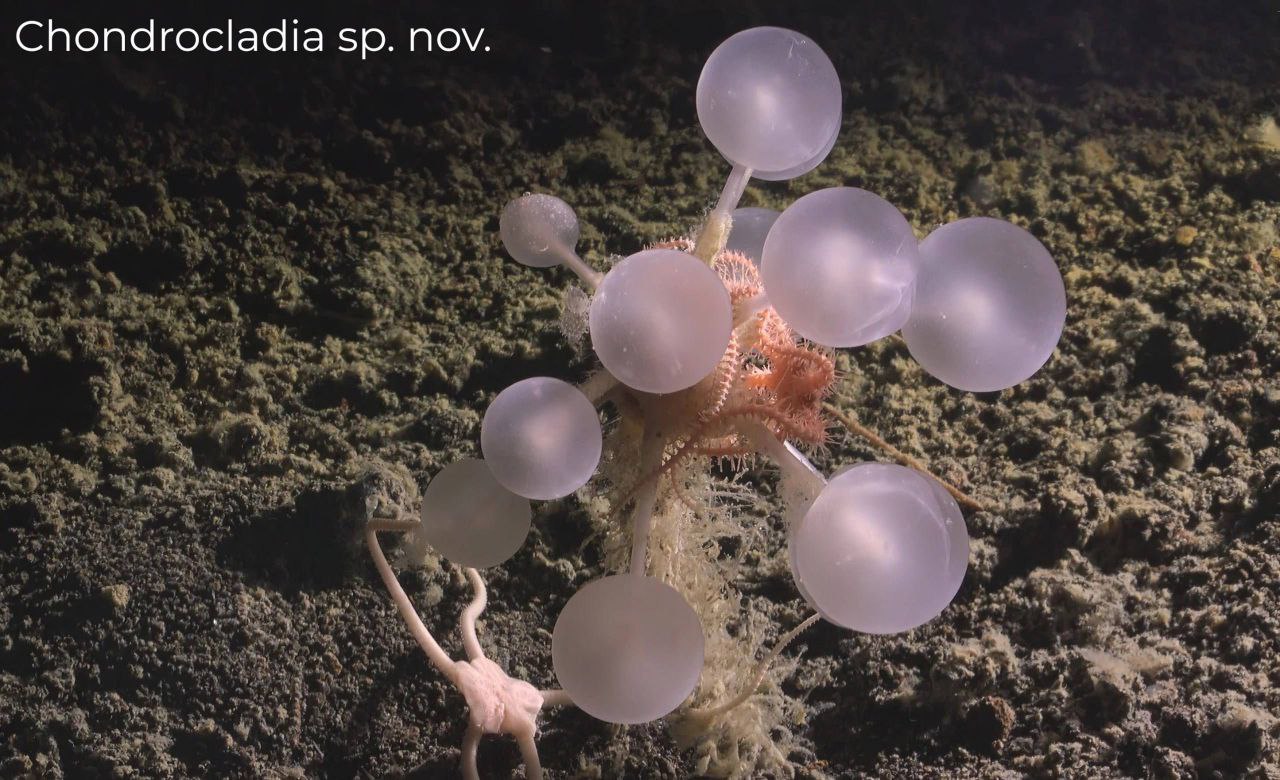
A carnivorous sponge of the species Chondrocladia sp. nov. that feeds not by filtering water, but catches its prey using micro-hooks on the surface of its body.
«The »zombie worm" (genus Osedax), which has no mouth or stomach and feeds on the bones of dead whales through symbiotic bacteria.
New species of starfish, crustaceans (isopods, amphipods), mollusks, corals, and the discovery of hydrothermal vents at a depth of about 700 m.
Where and how the research was conducted
The expedition took place in the South Sandwich Islands chain (in particular, near Montagu and Saunders Islands) and in the South Sandwich Trench. The scientists used remotely operated vehicles with depths of up to 3,600 metres.
Importance for science and the environment
According to scientists, only less than 30 % samples collected have been analysed so far, indicating a huge number of yet undescribed species in the Southern Ocean.
Such discoveries are of great importance for understanding ocean biodiversity, the evolution of deep-sea ecosystems, and the development of effective conservation strategies.
Context.
The Southern Ocean is one of the least explored regions of the Earth. It has now been confirmed that even the deepest depths are home to rich and exotic life. At the same time, this is a signal that many species may be lost or undiscovered due to climate change, pollution or deep-sea fishing.





 Ukrainian
 English