What the Minister said
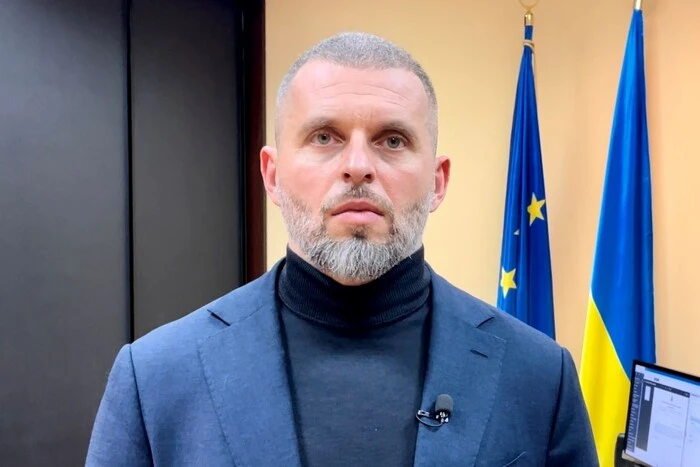
Minister of Youth and Sports Matthew Poor said that the analysis of the movement of people in recent periods does not confirm the existence of a «critical outflow» of young people from Ukraine. According to him, the agency compared two weeks in August and two weeks in September and found no anomalies that would indicate mass emigration.
«Even last year, when there were no relaxations, there were three times as many departures in September. It always intensifies in autumn,» the minister explained. He also reminded that since the beginning of the full-scale invasion, approximately 1.7 million young people, Many of them went to study.
Temporary travel and training as an important factor
Poor emphasised that a significant number of departures have Temporary or training in natureStudents have gone to foreign universities and not all of them could return without risking losing the opportunity to continue their studies. In such circumstances, travel does not always mean a permanent change of residence.
To whom this applies more
The minister noted that the flow of young people is uneven across regions: the highest activity was recorded in Lviv, while in Kharkiv, Dnipro and Poltava There is no significant outflow.
Practitioners' comments: family ties and networks abroad
Co-founder of the National Restaurant Association Nasonova also pointed to regional differences: in some cities, such as Lviv, there are more relatives abroad, so it is easier for young people to leave temporarily or for study. In Kharkiv, Dnipro, and Poltava, there are fewer such networks, so local young people are more likely to stay in Ukraine.
What this means for policy and the labour market
Although the ministry's current estimate does not record a «critical» outflow, the total figure of 1.7 million leaves open the question of the long-term consequences: a shortage of staff in certain fields, changes in the university environment and the need to support young people who plan to return.
Recommended steps
Experts advise monitoring:
the share of those who left temporarily vs. permanently;
impact on key professions (medicine, education, IT);
the effectiveness of regional employment and return programmes.





 Ukrainian
 English