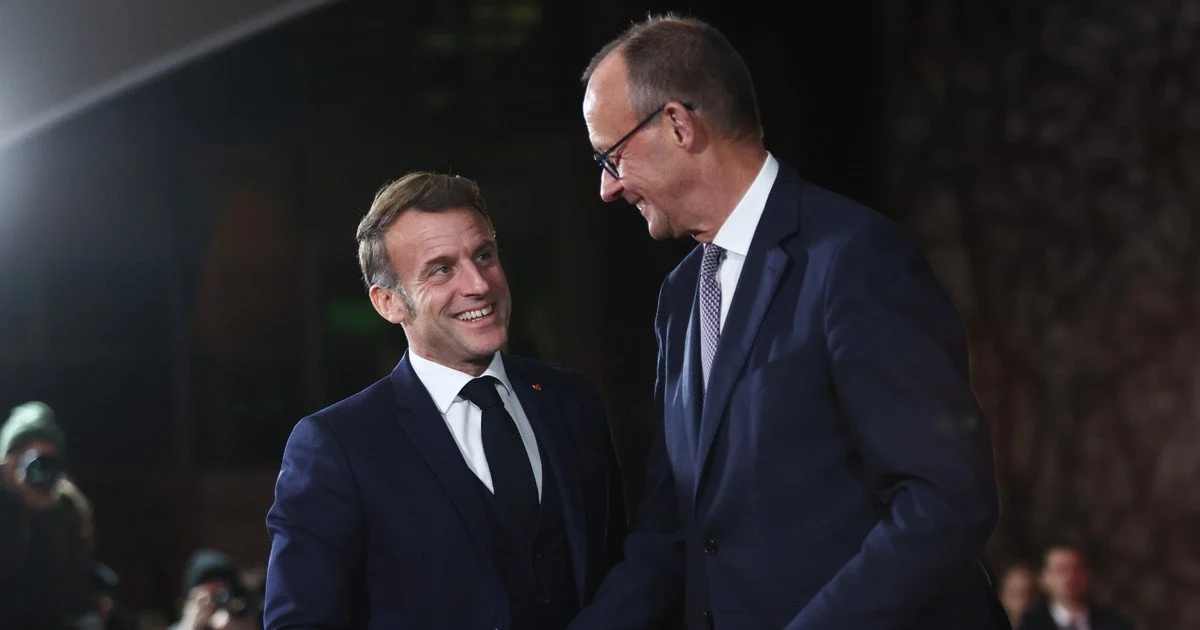
Macron does not support reparations loan to Ukraine and leaves Merz without an ally - Financial Times
President of France Emmanuel Macron did not actually support the initiative of the German Chancellor Friedrich Merz on the creation of a reparations loan for Ukraine at the expense of frozen Russian assets. This is reported by the Financial Times.
Details of Paris' position
On the eve of the EU summit on the future of Russian assets, Merz tried to persuade his partners to support the idea of a loan facility for Ukraine. However, at a crucial moment, he was left without his key ally, France.
According to the FT:
Macron did not publicly oppose the initiative, but his team behind the scenes questioned its legitimacy;
Paris fears that high public debt in France will not allow us to provide reliable guarantees if the assets have to be promptly returned to Russia;
In the end, France joined the opponents mechanism together with the Belgium, Italy and several other countries.
Changing the balance in the Berlin-Paris axis
The Financial Times notes that the situation has revealed Changing political dynamics between Germany and France. After the arrival of Friedrich Merz, Berlin acted more firmly and assertively, while Paris was weakened:
growing debt burden;
internal political instability;
the final stage of Macron's presidential term.
Reaction on the sidelines of the EU
A senior EU diplomat familiar with the negotiations told the FT that the French leader's behaviour was harsh:
«Macron betrayed Merz, and he knows he will have to pay for it. But he is so weak that he had no choice but to hide behind the Italian prime minister Georgia Maloney».
Context.
Discussions on the use of frozen Russian assets remain one of the most heated in the EU. Ukraine and some of its European partners insist on finding a legal mechanism that would allow these funds to be used to rebuild and compensate for the damage caused by the war.




 Ukrainian
 English