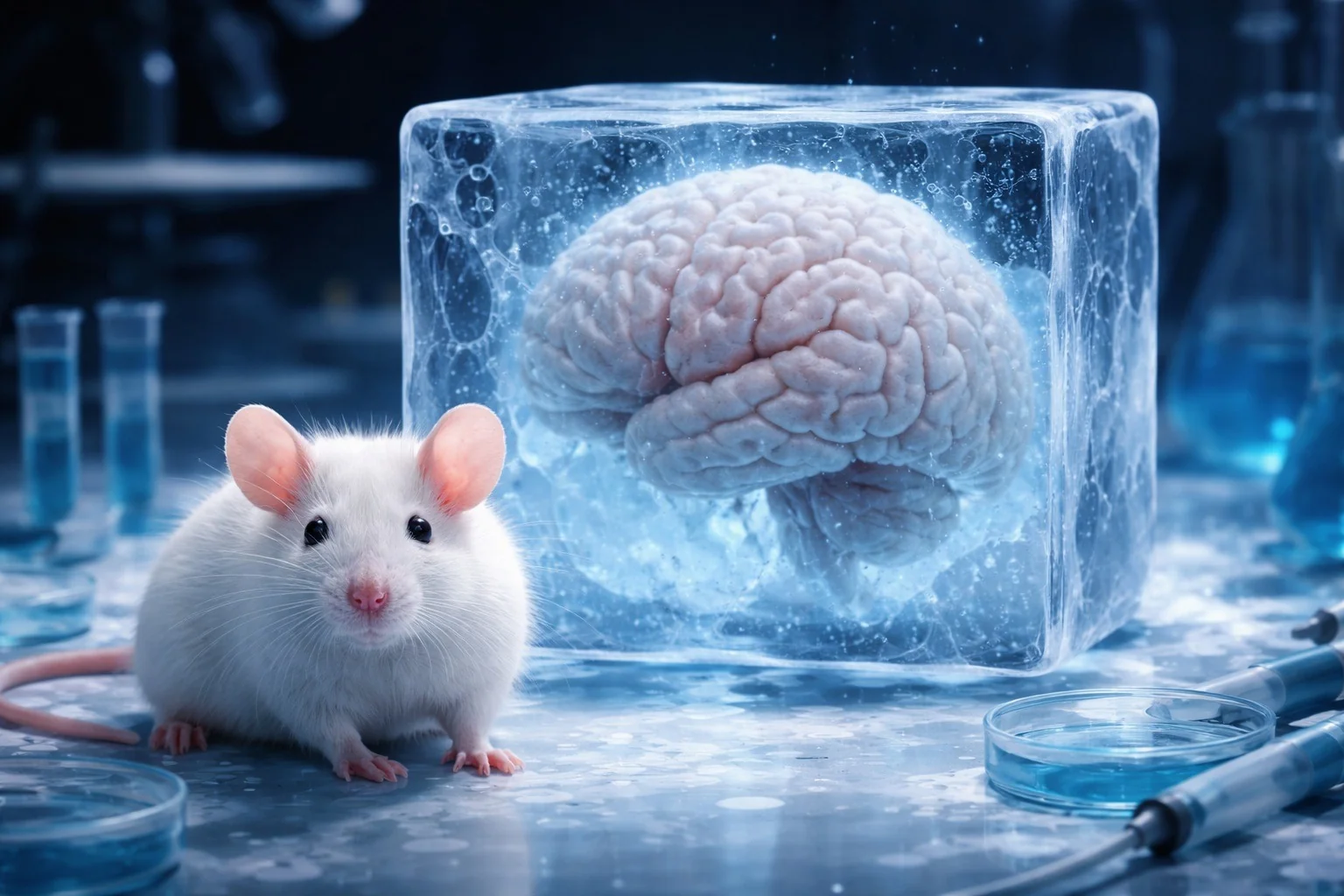
For the first time in history, researchers were able to freeze mouse brain tissue to the state of «glass» and return it to activity after thawing. The brain not only survived, but also restored functions related to memory and learning.
Brain freezing experiment
A group of German scientists has conducted a unique experiment with freezing of brain tissue to a state of «glass», avoiding the formation of ice crystals. After defrosting, the researchers recorded that the brain had resumed its activity.
Scientists have observed the response of neurons to electrical signals. They also confirmed the preservation of synapses and mechanisms associated with memory and learning.
Scientific significance of the discovery
This is the first time that brain tissue has returned to work after complete cryofreezing. The research opens up new opportunities for preserving and restoring complex organs in the future.
According to the researchers, the technology can be used in transplantation, organ preservation and even in the study of ageing mechanisms.
Context.
Previously, organ freezing led to tissue destruction due to the formation of ice crystals. The use of the «glass» state avoids this damage.
The discovery could be a step towards the development of technologies for long-term organ preservation and potentially life extension.






 Ukrainian
 English