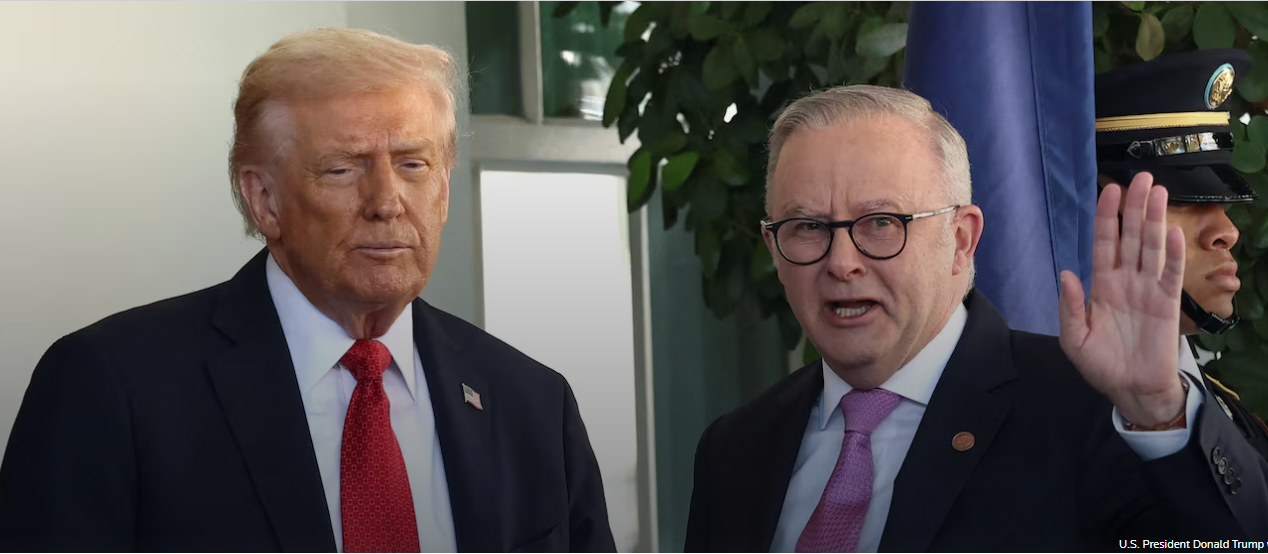
Strengthening strategic partnerships
United States and Australia signed a new cooperation agreement in the field of extraction and supply of rare earth elements - materials that are key to the production of electronics, batteries and defence technologies.
As reported by Reuters, The purpose of the agreement is to Strengthening Australia's role in the global supply chain of critical minerals amid China's growing influence.
An alternative to Chinese dominance
The agreement provides for the expansion of US investment in Australian fields and joint projects for the processing of raw materials.
Australia has some of the world's largest reserves of lithium, nickel, cobalt and rare earth metals, but most production is now controlled by Chinese companies.
Washington seeks to reduce dependence on China, which currently provides over 70% of the global market of the following elements.
Economic and political significance
According to representatives of both governments, the partnership should create a reliable and “democratic” alternative supply chains that depend on authoritarian states.
The document provides for support for joint ventures, technology exchange and financing of processing facilities in Australia.
«It's not just an economic issue, it's a national security issue,» said a White House spokesman commenting on the agreement.
Context.
Rare earth elements are used in military equipment, electric vehicles, smartphones, solar panels and communication systems. Their shortage or political control over supply can have a significant impact on the global economy.
The new move by the US and Australia is seen as part of a broader strategy “dechatisation” of critical supply chains in the energy and high technology sectors.






 Ukrainian
 English