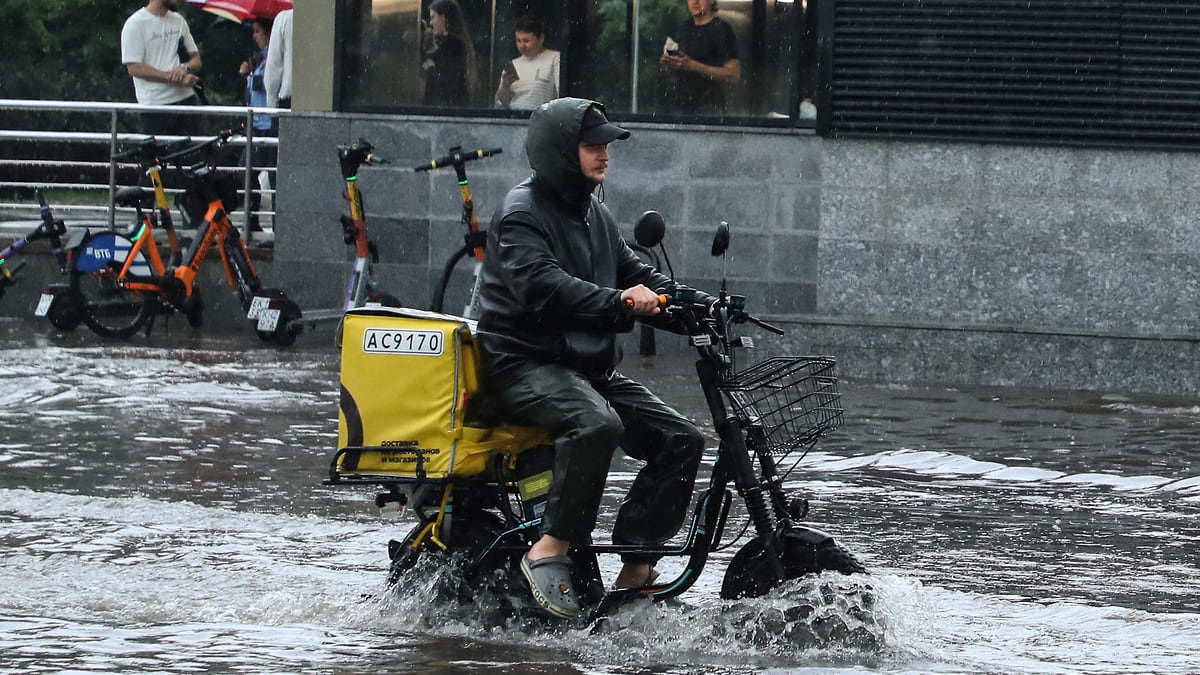
In many European countries, urban residents are required to pay a separate tax for rainwater. The system is in place in the Netherlands, Germany, Denmark, the USA, as well as in cities in France and Belgium. Each year, the amount of the tax reaches €150-200 per household.
How the rain tax works in Europe
In a number of European countries, urban residents pay a special rain tax. It is about the maintenance of storm sewers, which discharge rainwater into the city's sewerage system rather than into the ground. According to local media, the annual amount of this fee is about €150-200 per family.
Similar practices have been implemented in the Netherlands, Germany, Denmark, the USA, as well as in some cities in France and Belgium. The main purpose of the tax is to cover the costs of maintaining and repairing the infrastructure that drains rainwater from urban areas.
Why was there a need for such a meeting?
Urban sewerage networks in Europe are often overloaded due to high rainfall. The government does not always have enough resources to finance the maintenance of stormwater systems, so these costs are passed on to city residents. Thus, every user of the infrastructure is directly involved in its maintenance.
The system of calculating the tax is based on the area of the property and the amount of rainwater that flows into the sewerage system. In some countries, even the type of roof or the presence of green areas near the house is taken into account.
Which countries apply rain tax
The most widespread rain tax is in the Netherlands, where most of the territory is below sea level. Germany and Denmark also have similar systems, while in the US and cities in France and Belgium, the practice depends on local authorities. Funds raised help to modernise stormwater systems and prevent flooding during heavy rains.
All of these countries have a common problem: the high cost of maintaining urban infrastructure. The tax allows the financial burden to be distributed among residents, rather than being passed on to city budgets alone.
Why it matters
For Ukraine, the topic of a rain tax still looks exotic, but the experience of European countries may become relevant in the future. Climate change, increased precipitation and growing urbanisation are putting a strain on old urban wastewater systems.
If the state fails to effectively finance infrastructure maintenance, The likelihood of introducing such fees is increasing. European experience shows that involving residents in co-financing helps to keep sewerage systems in good condition and avoid flooding.
In the context of discussing new taxes or fees in Ukraine, the examples of other countries can serve as an argument for introducing modern approaches to municipal maintenance.