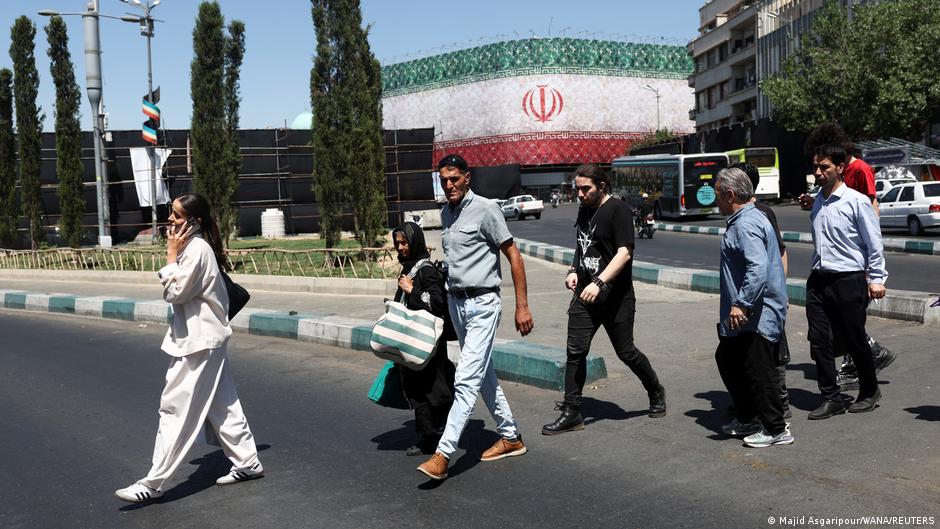
Following the announcement of a ceasefire between Iran, the US and Israel, Iranian society has been plunged into a state of profound uncertainty. Despite statements that the war has ended, the country is beset by conflicting signals: attacks continue, diplomatic negotiations are ongoing, and warnings of new threats are being issued. This has led to growing fatigue, mistrust and psychological strain amongst the population.
Briefly about the main points
- More than 60% Iranians feel hopeless about the future.
- A third of the population is considering emigrating.
- Levels of depression, anger and anxiety are on the rise.
- Young people are particularly affected by uncertainty.
- Society is paralysed by conflicting political signals.
Constant uncertainty and psychological pressure
After truce Amid tensions between Iran, the US and Israel, Iranians are faced with a constant stream of conflicting reports: ranging from announcements of diplomatic progress to warnings of new strikes. This creates an atmosphere in which it is difficult to make plans even for the immediate future.
According to a lawyer from Tehran, who wished to remain anonymous, the main problem is the uncertainty surrounding the end of the crisis. She notes that the inability to plan one’s life exacerbates psychological pressure and discourages people from embarking on any new ventures.
Fatigue, social stagnation and mistrust
Constant tension and economic instability have led to widespread fatigue and social stagnation. Many Iranians feel alienated even in their own cities, and decisions regarding work, family or the future are increasingly being put on hold.
A resident of Isfahan said that the uncertainty between peace and war is undermining people’s psychological and financial confidence. According to him, trust in both sides of the conflict and in the possibility of a lasting peace has all but vanished.
Young people with no experience of war: a new level of disorientation
For young Iranians who have no memory of the Iran–Iraq War, the current situation is their first experience of living under the threat of a protracted conflict. This creates a particular sense of disorientation, as they lack a mental framework for such a period.
A nurse from western Iran notes that people have started living from one day to the next, putting off long-term decisions. She has also observed a rise in irritability and aggression among patients, which she attributes to the general atmosphere of uncertainty.
Survey data: depression, anger and the desire to emigrate
According to Professor Saida Paiwandi, survey results indicate a deterioration in the psychological well-being of Iranians. A survey conducted by the Iranian Ministry of the Interior in May 2026 showed that 60% of the population feel hopeless about the future.
An IranWire survey found that 64% of respondents felt anger, 50% felt hopelessness, 48% felt depression, and 45% felt fear and anxiety. Compared with previous years, these figures have risen by 10–12 percentage points. Around a third of Iranians, particularly young and educated people, are considering emigration.
A lack of prospects and the consequences for society
Experts point out that the current psychological the crisis in Iran goes beyond the scope of military action and diplomacy. It is exacerbated by a prolonged economic crisis, repression and a lack of trust in the authorities.
The daily conflicting messages from politicians make uncertainty a constant feature of life. This makes it difficult to rebuild trust and saps the energy society needs to envisage the future.