Russia is considering several potential directions pressure on NATO, including the Arctic archipelago of Svalbard, the Suwalki Corridor and strategic sea routes of the Baltic region. This is evidenced by analysts' assessments and materials of the Polish Institute of International Affairs (PISM), which are cited by the media.
Svalbard: NATO's weak link in the Arctic
The Svalbard archipelago, which belongs to Norway, has a special international legal status. It is demilitarised, which limits the military presence of Oslo and its allies.
At the same time, Russia maintains its presence there, particularly in the mining settlements of Pyramid and Barentsburg. This creates a unique situation:
- Russia has physical infrastructure on the territory of a NATO country
- Norway's military response is limited
- Any escalation could force the Alliance to make difficult choices
Analysts believe that in the case of a hybrid scenario, Moscow could use this factor to quickly create a «grey zone» without a formal invasion.
Suwalki corridor: the key to the Baltic
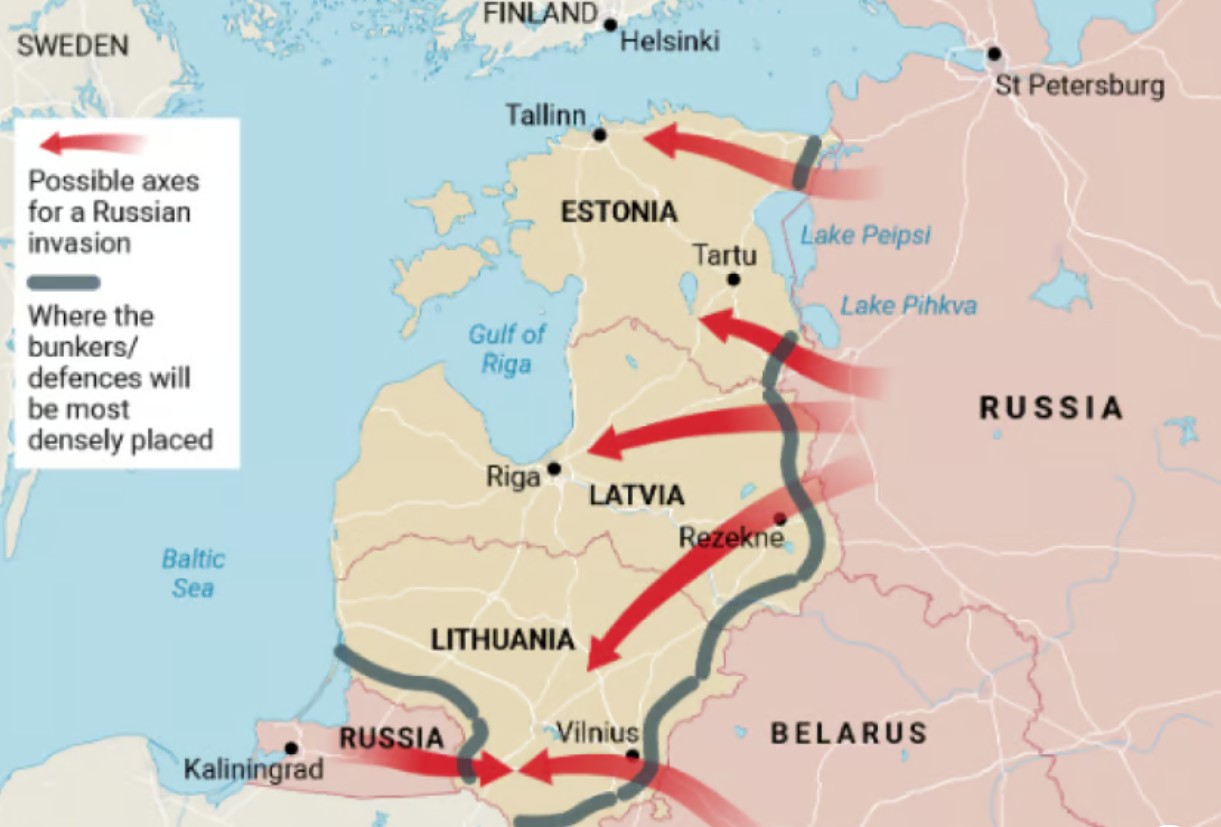
One of NATO's most vulnerable points remains the Suwalki Corridor, a narrow stretch between Poland and Lithuania that separates the Kaliningrad region of Russia from Belarus.
Its strategic importance is as follows:
- It is the only land route between the Baltic states and the rest of NATO
- In the event of a blockade, Lithuania, Latvia and Estonia could be cut off
- Russia could potentially act jointly with Belarus
According to PISM, this area is one of the most dangerous in a scenario of direct conflict with the Alliance.
The Danish Straits: a maritime threat
The Baltic Sea is another critical area. In the event of an escalation, Russia could try to restrict NATO's access to the region through the Danish Straits.
This can have the following consequences:
- Making it harder to redeploy Alliance forces
- Isolation of the Baltic states from the sea
- disruption of logistics and supply
The Russian Navy, despite its losses, retains the potential to create threats in the area, especially in combination with mining and missile strikes.
Why Russia has not attacked NATO yet
Analysts note that there are currently constraining factors:
- The risk of a direct clash with the entire Alliance
- The military and economic cost of the conflict
- nuclear deterrent
At the same time, Moscow can rely on hybrid scenarios - local incidents, pressure or limited operations without a formal declaration of war.
Context.
Since the outbreak of a full-scale war against Ukraine, the security situation in Europe has become much more acute. NATO countries are strengthening the defence of their eastern flank, but a number of geographical and legal features leave certain areas potentially vulnerable.
The Arctic, Baltic and border regions could become key points of tension in the event of further escalation.




 Ukrainian
 English