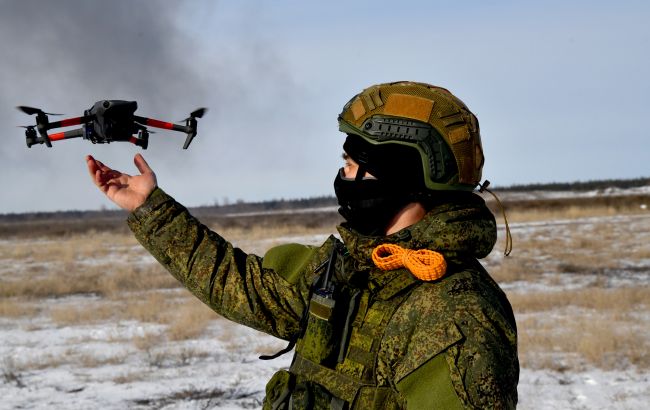
In the temporarily occupied Donetsk region, Russians have set up a laboratory to dismantle Ukrainian trophy drones and assemble their own FPV combat drones. The laboratory, which is part of the Pivden group, produces up to 400 drones in two weeks, which covers about 25% of the Russian army's needs for these devices.
Basic context
In the temporarily occupied territory of Donetsk region, Russians have set up a special laboratory to analyse trophy UAF drones and their transformation into combat FPV drones. This laboratory is part of the occupiers“ ”South" group.
According to analysts, one such facility covers approximately 25% of the Russian army's weekly needs for FPV drones. In 15 days, the laboratory assembles about 300-400 such combat vehicles, using parts from 5-6 captured Ukrainian drones to make one working one.
Technological process and significance for the Russian army
The lab's work is divided into several stages: interception of drones by electronic warfare systems, delivery to the workshop, dismantling of motherboards, engines, housing elements and other suitable parts. A separate team updates the firmware so that the drones can operate on enemy frequencies.
In addition, the specialists assemble ready-made systems and immediately train pilots. This comprehensive approach allows trophy drones to be put into combat use quickly.
Impact on the situation at the front and Ukraine's countermeasures
The Russians launch more than 1,000 attack drones a week, and this laboratory provides a quarter of these vehicles. The assembled drones are difficult to identify, as they contain original Ukrainian components, but operate on enemy frequencies, making them difficult to detect and combat.
The Ukrainian military notes that the enemy is improving its unmanned systems, adopting Ukrainian tactics, In particular, the use of drones to intercept enemy vehicles and remotely mine.
At the same time, Ukraine is introducing the latest types of drones, such as fibre-optic drones, which are controlled via cable, making them impervious to electronic warfare jamming. This allows the Ukrainian Armed Forces to achieve technological parity with the enemy.
The importance of controlling technology and the future
The massive use of trophy components allows Russia to quickly restore and build up its unmanned capabilities, which preserves its strike capability at the front.
At the same time, Ukrainian developers are actively working on creating more complex systems, The latter are harder to identify and destroy. This underscores the importance of technological superiority in modern warfare and affects the strategy of drone use on both sides.
In general, the activities of such laboratories in the occupied territories are one of the key factors that support the combat potential of the Russian army, but at the same time stimulate Ukrainian engineers to innovate in unmanned vehicles.