Regular and precise attacks by Ukrainian drones and missiles deep into the Russian Federation’s rear have led to a serious shortage of a key type of Russian interceptor. According to CBS News sources, the depletion of Russia’s stockpiles of missiles for its air defence systems is taking place in «unsustainable rate». This opens up new opportunities for Ukraine to launch even more effective strikes against Russian military targets and infrastructure, signalling a potential turning point in the war in Kyiv’s favour in the fifth year of the full-scale conflict.
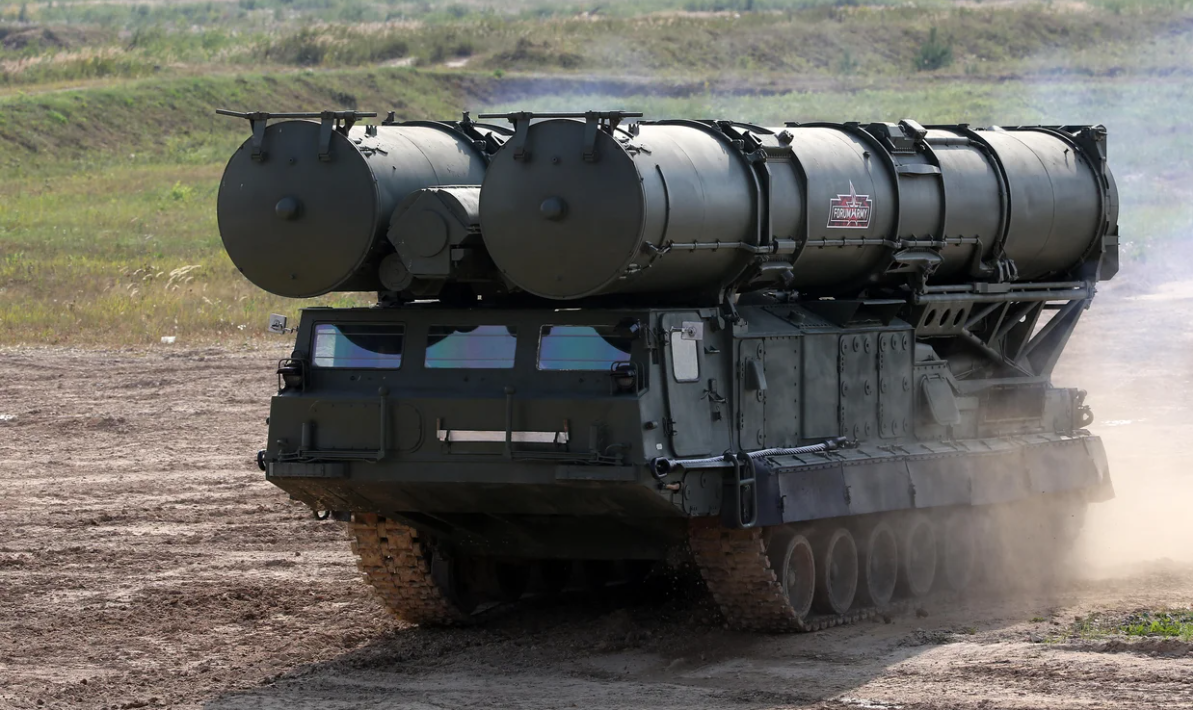
According to Ukrmedia.news, the Kremlin is facing an acute shortage of anti-aircraft guided missiles until S-300 air defence missile systems (ADMS). This system, developed by the Soviet Union in the 1960s and 1970s, has traditionally been, and remains, a cornerstone of the Russian Federation’s air and missile defence system for intercepting cruise and ballistic targets.
Although Moscow has long since integrated more advanced systems into its air defence system, such as S-350, S-400 and «Pantsir-S1», the S-300 systems have so far played a key role in protecting rear areas from Ukrainian drones and missiles.
Why Russia is losing S-300 missiles: three key factors
Analysts and representatives of the Ukrainian security services cite several reasons for the rapid reduction in Russia’s anti-missile arsenal:
1. The use of Russian air defence systems for offensive strikes
The Russian command has redeployed a significant portion of S-300 systems to shell Ukrainian cities. By adjusting the trajectory of the missiles to operate in «surface-to-surface» mode, the Russian Federation is attempting to compensate for the shortage and make up for the lack of ballistic missiles «Iskander-M» and hypersonic «Daggers». However, this strategy led to the unnecessary depletion of defensive missile stocks.
2. Massed attacks by low-cost Ukrainian UAVs
Ukraine is forcing the Russian air defence forces to use up their expensive interceptors on a constant influx of new, more technologically advanced drones. In particular, the Ukrainian Armed Forces are increasingly deploying jet-powered drones, which have high speed and long range. Russia is forced to shoot them down using scarce S-300 missiles, which would otherwise be reserved for defence against more powerful missile strikes.
3. The Ukrainian Armed Forces’ systematic hunt for radars and launchers
Ukraine is conducting a targeted campaign to neutralise the «eyes and teeth» of the Russian defence forces. As a military expert at the Foreign Policy Research Institute (FPRI) points out, Rob Lee:
«Over recent months, Ukraine has destroyed or damaged a large number of air defence systems in the occupied territories — in Crimea, the Luhansk region and other regions. Russia is using up its anti-aircraft missiles far too quickly, at an unsustainable rate, as Ukraine is capable of producing more long-range strike drones than Russia is of manufacturing anti-missile systems.».
Production problems in the Russian Federation and the pressure of sanctions
Tough international sanctions are preventing Moscow from replenishing its depleted stocks. According to senior Ukrainian officials, the Russian military-industrial complex (MIC) is facing a catastrophic shortage of key foreign components to develop new interceptors. Specifically, this refers to homing heads and control modules, which Russia can no longer import freely from Western or even Chinese manufacturers.
At the same time, the acting head of the Main Intelligence Directorate of the Ministry of Defence of Ukraine (GUR) Oleg Chornyi in a comment for CBS News He emphasised that Moscow is currently prioritising the production of missiles for more advanced air defence systems, in an attempt to protect its strategic facilities from Ukrainian attacks as best it can.
Exhaustion parity: challenges for Ukrainian airspace
Despite Ukraine’s clear successes in striking targets on Russian territory, Kyiv is also facing serious challenges in the area of air defence. The need for American interceptors remains the most pressing PAC-3 for systems Patriot, which are the only reliable defence against Russian ballistic missiles.
Fabian Hoffmann from the Norwegian Institute for Defence Studies predicts that Russia could ramp up production of its own ballistic missiles to between 600 and 800 units per year. By way of comparison, the American company Lockheed Martin produced and delivered just 620 PAC-3 missiles over the whole of last year for everyone customers worldwide.
A turning point on the battlefield: Moscow feels Kyiv’s «long arm»
Despite logistical difficulties on both sides, the overall trend points to a shift in the dynamics of the war. Whilst the President of Ukraine Volodymyr Zelenskyy held meetings with the leaders of the «Group of Seven» (G7) in France, Ukrainian long-range drones successfully attacked an oil refinery deep behind Russian lines.
«This time, the Moscow Region has felt the full force of Ukraine’s long-range capabilities,» said Volodymyr Zelenskyy. “Russia must be forced to end this war against our people, and Ukraine’s long-range weapons are one of the most important tools for exerting such pressure.”.
The successful destruction of Russian air defence systems creates so-called «windows of opportunity» for new large-scale attacks by the Ukrainian Armed Forces, forcing the Kremlin either to withdraw air defence systems from the front line to protect its own cities, or to leave its strategic factories and military airfields completely defenceless.