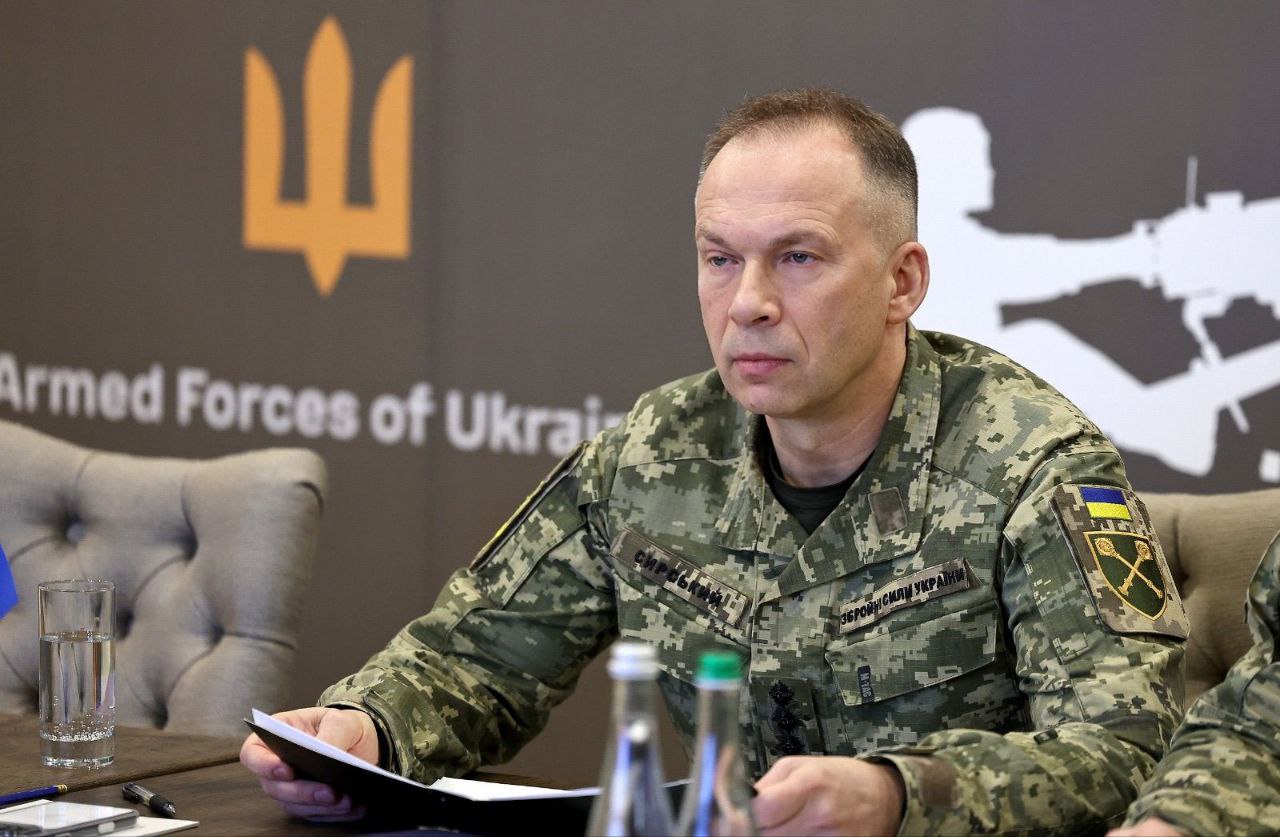
Commander-in-Chief of the Armed Forces of Ukraine Oleksandr Syrskyi held a meeting with Curtis Bazzard, commander of the new NATO security assistance mission. The parties discussed the operational situation on the front line, the critical needs of the Ukrainian army – particularly in terms of air defence systems – and the impact of new decisions by NATO and the US, specifically regarding the production of Patriot missiles in Ukraine. The meeting took place against the backdrop of the launch of the NATO mission and the approval of a new package of military aid.
Briefly about the main points
- Syryskyi met with the commander of the NATO mission, Curtis Bazzard, in Kyiv.
- They discussed the critical needs of the Armed Forces of Ukraine, particularly in the area of air defence.
- The US has granted Ukraine a licence to manufacture Patriot missiles.
- NATO has launched a new security assistance mission and agreed on a new support package.
- The issue of shortages of ammunition and air defence systems remains a pressing concern.
Syrsky’s meeting with the NATO mission commander: key topics
Commander-in-Chief of the Armed Forces of Ukraine Alexander Syrsky held talks with Lieutenant General Curtis Bazzard, who heads the newly established NATO Security Assistance and Training Mission for Ukraine. During the meeting, Syrskyi provided an update on the situation at the front, in particular the intense fighting in the Donetsk region, where the Russian army is suffering significant losses. According to him, the Russians are losing more than 400 soldiers for every square kilometre they capture.
The parties discussed the need to seize the strategic initiative and the importance of active defence. Syrskyi emphasised that the Ukrainian military is doing its utmost to wear down the enemy and curb its offensive capabilities.
Air defence and long-range strikes: how Ukraine is responding to threats
One of the key topics of the meeting was air defence. Syrskyi emphasised that air defence remains a critical requirement for the Ukrainian Armed Forces, particularly in the face of constant missile and air strikes. He noted that Ukrainian defence forces are striking Russian military-industrial targets at ranges of up to 2,000 kilometres, and are also destroying the enemy’s logistical network behind the lines, extending up to 200–300 km from the front line.
These measures are intended to reduce Russia’s offensive capabilities and limit its ability to launch large-scale attacks. As part of the programme Middle Strike These blows to logistics are already having an impact on the situation on the battlefield.
Decisions from the NATO summit: a new mission, aid packages and Patriot
The meeting took place shortly after the NATO summit, at which the Alliance announced the launch of a dedicated security assistance and training mission for Ukraine. Lieutenant General Bazzard became its first commander. Summit participants also agreed on a new package of military aid, which includes additional air defence systems, ammunition and equipment to protect critical infrastructure.
A major development was the US decision to grant Ukraine a licence to manufacture Patriot missiles. The US President Donald Trump described this as a historic step towards strengthening Ukraine’s defence capabilities. According to Western analysts, it may take several months to start production and integrate the Patriot system, but this will significantly strengthen air defence capabilities in the medium term.
In conjunction with the implementation of the list of priority needs agreed with our partners (PURL), new decisions by NATO and the US are laying the groundwork for both short-term and long-term support for the Armed Forces of Ukraine.
The critical needs of the Ukrainian Armed Forces and the response from partners
Syryskyi outlined to the commander of the NATO mission a list of the Ukrainian army’s critical needs, focusing on air defence systems and ammunition. He thanked the US, NATO leadership and allies for their persistent efforts to find ways to promptly supply the Ukrainian Armed Forces with the necessary weapons.
NATO Secretary-General Jens Stoltenberg emphasised that the Alliance is moving towards providing long-term support for Ukraine, rather than merely short-term aid packages. At the same time, the shortage of ammunition and air defence systems remains a pressing issue, and the timing of the actual delivery of new systems is not being disclosed for security reasons.
What does NATO’s new mission and the decision on the Patriot system change?
Launch of a separate NATO mission and approval Patriot production In Ukraine, these developments could significantly alter the balance of power in the air and on the battlefield. The long-term support pledged by Western partners enables Ukraine to plan the modernisation of its air defence systems and to equip its armed forces with modern weaponry.
At the same time, even with the new aid packages, the issue of the speed of delivery and integration of complex systems remains a pressing concern. This means that in the coming months, the Ukrainian Armed Forces will have to continue operating under conditions of limited resources, relying on active defence and long-range strikes against the enemy’s rear.