
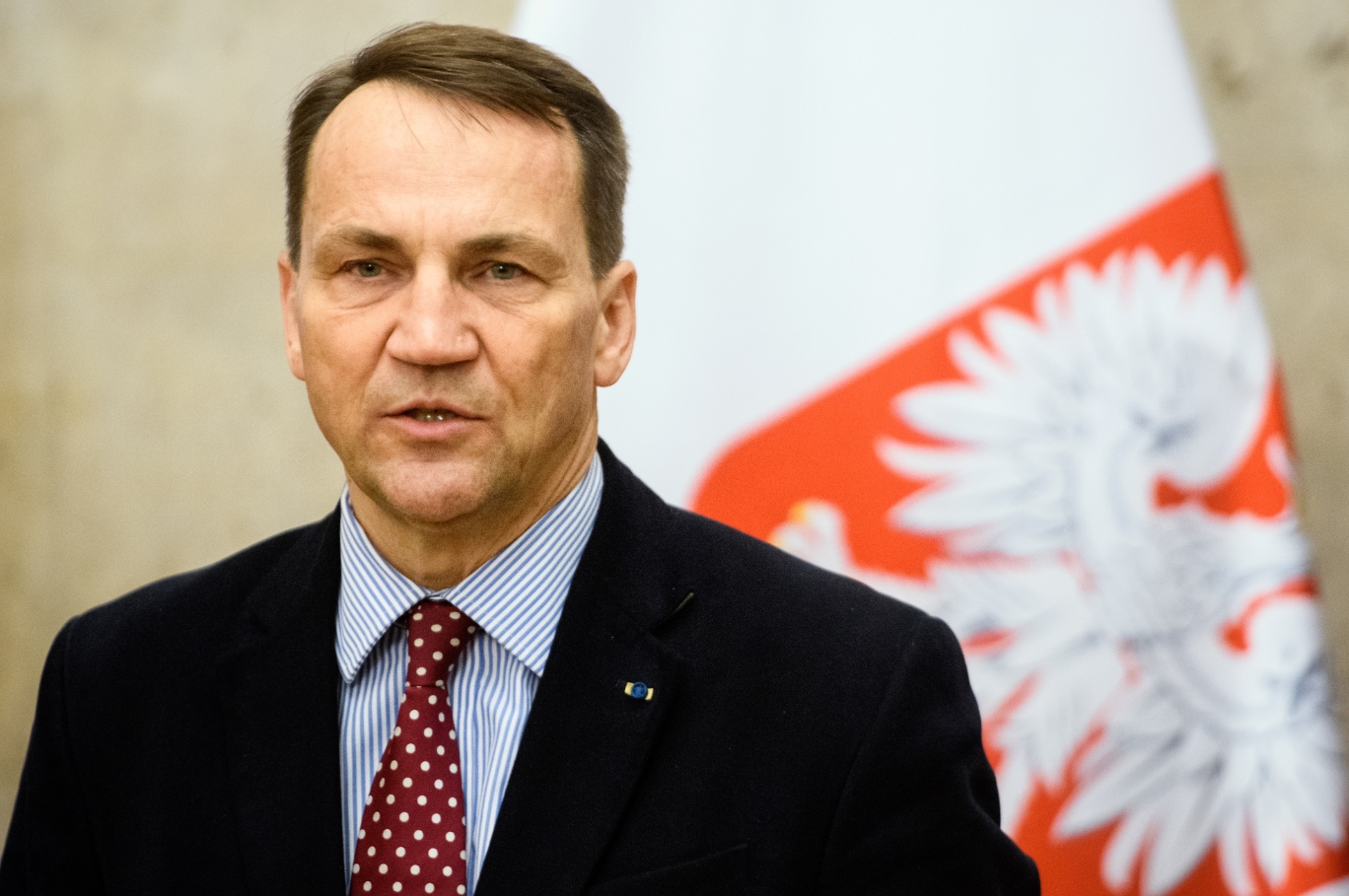
Poland’s Foreign Minister Radosław Sikorski has stated that Russia may attempt to carry out an operation under a false flag using Ukrainian drones. In his view, such a scenario could provide a pretext for Moscow to retaliate against a NATO country or on its own territory. The Polish minister emphasised that this refers to the risk of provocation, rather than a direct attack by Russia on Poland.
Briefly about the main points
- Sikorsky believes a Russian operation under a foreign flag is possible.
- Ukrainian drones may be used in his scenario.
- The Polish minister does not expect a direct attack by the Russian Federation on Poland.
- Public warnings are intended to deter any potential provocation.
- NATO, in Ankara, has confirmed that the collective defence clause remains in force.
The Polish minister’s assessment
Sikorsky During a visit to the US, he said that Warsaw was anticipating a possible Russian provocation. He suggested that Russia might prepare Ukrainian drones and use them to attack a NATO member state or its own territory, and subsequently announce a response to such an attack.
The minister linked these concerns to previous statements Vladimir Putin on Russia’s possible response in the event of an attack by a NATO member state. Sikorski urged the Kremlin not to allow such a scenario to unfold.
Warnings had been issued before
Sikorsky publicly raised the main warning about a possible false-flag operation as early as 25 June in an interview with CBS News. At the time, he spoke of the risk of a staged attack by Russia, which could provide a pretext for a strike against a NATO country.
On 7 July, in a comment to CNN, the Polish foreign minister explained that he was counting on such statements to have a deterrent effect. As an example, he cited the early release of US intelligence on the eve of Russia’s full-scale invasion of Ukraine in 2022.
Sikorski’s latest remarks thus continue a series of public signals from Warsaw to Moscow. The claim that Ukrainian drones in particular are being used is his own speculation regarding a possible scenario, rather than a report of a confirmed Russian plan.
Not a direct attack, but the risk of provocation
On 12–13 July, Sikorsky reiterated that, in his view, Russia currently lacks the military resources for a direct the invasion of Poland. At the same time, he believes that Moscow may carry out certain provocative actions against the country.
In early July, the media also reported that the US had allegedly warned Warsaw of a possible armed provocation aimed at testing NATO’s resolve. There were no public statements from the White House or US intelligence setting out a specific scenario, timetable or any mention of drones.
Drawing a parallel between a possible provocation and the Gliwice incident of 1939, Sikorski emphasised that the Polish side wishes to demonstrate that it understands the possible rationale behind such actions.
The context of NATO’s commitments
On NATO summit In Ankara on 7–8 July, the allies reaffirmed their commitment under Article 5: an attack on one member of the Alliance is regarded as an attack on all. The NATO Secretary-General Mark Rütte described Russia as a long-term threat to the Alliance’s territory.
In this context, Warsaw’s public statements may form part of a strategy of political deterrence: they make it clear in advance that Poland is considering the possibility of a staged attack. This could limit the Kremlin’s scope for denial should such a scenario unfold.