US senators have tabled an updated version of the sanctions bill previously introduced by Lindsey Graham and Richard Blumenthal. The bill proposes to lower the tariff threshold for the largest buyers of Russian energy resources from 500% to 100%, whilst maintaining restrictions on Russia’s financial and energy sectors, according to Reuters and AP.
Briefly about the main points
- It is proposed that the maximum duties for buyers of Russian energy resources be reduced from 500% to 100%.
- The tariff mechanism is set to be applied to the five largest importers of oil or gas.
- Exceptions have been made for certain buyers of Russian gas.
- The project also covers the shadow fleet, the Central Bank of the Russian Federation and energy projects.
The tariffs were capped for the five largest buyers
The original version of the Sanctioning Russia Act of 2025 provided for 500 per cent duties for all countries that purchase Russian oil, petroleum products or uranium. In the updated text, the maximum rate is 100% and applies to the five largest importers of Russian oil or gas.
According to Reuters, the top five buyers of Russian oil are China, India, Slovakia, Hungary and Azerbaijan. The largest gas importers These are China, France, Japan, Hungary and Belgium.
The draft also provides for exemptions for countries that purchase less than 15% of Russian gas exports or are taking significant steps to reduce such imports. According to senators’ aides, Japan, France, Belgium and Hungary may meet these criteria.
Sanctions against the financial sector and energy projects
The updated initiative provides for mandatory sanctions against Vladimir Putin, senior officials of the Russian Federation, Russian financial institutions and energy projects. The Central Bank of the Russian Federation is listed among the financial targets.
The restrictions are also set to apply to tankers that Russia uses to circumvent existing sanctions and which do not use the services of Western companies. Among the energy targets, Reuters names Yamal LNG and Arctic LNG 1, 2 and 3.
Agreement with the White House
Senators tabled a new draft on 14 July — following a political agreement with the administration Trump, as mentioned by Richard Blumenthal, Lindsay Graham, Jean Shahin and Roger Vicker reported on 10 July. According to the AP, the softening of the language was a response to concerns raised by some lawmakers about the overly broad initial version and to the White House’s desire to preserve the President’s room for manoeuvre.
The document allows Trump to suspend sanctions if he considers this to be in the US national interest. Narrowing the scope of those affected and reducing the rate may make the initiative more politically viable, although its potential reach will be smaller than that of the original text.
The path of a document to adoption
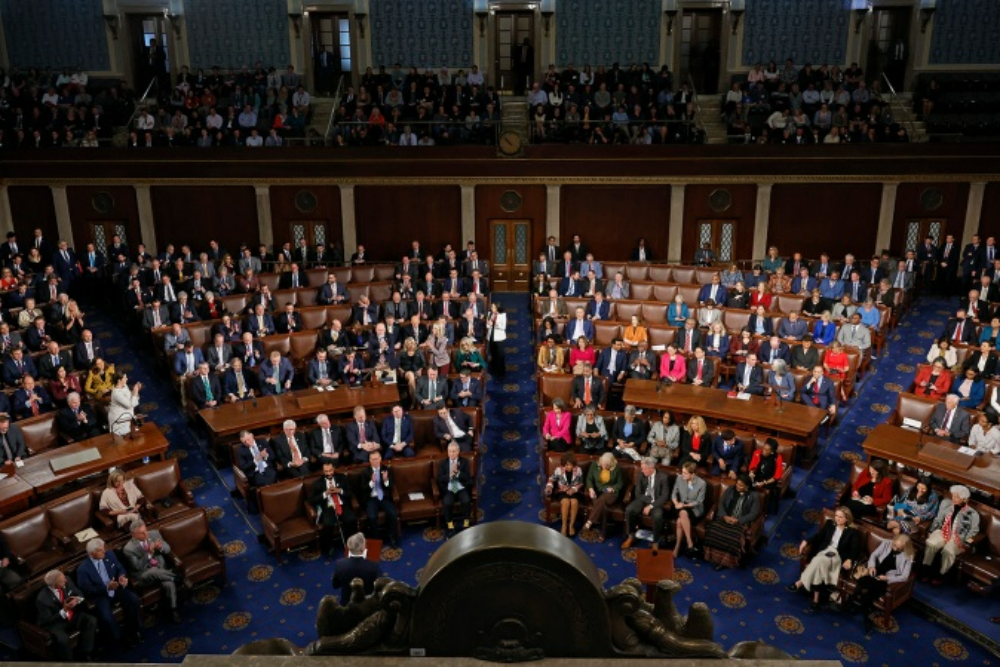
Senators’ aides announced that there were 26 co-sponsors of the revised version. Republican Majority Leader John Thune said he hoped to find a way to bring the bill to a vote; Blumenthal, for his part, stated that Thune was prepared to move it forward provided there were enough votes.
However, the bill has not yet been put to a vote, and no date has been set for its consideration. In June, the House of Representatives approved a different package of aid for Ukraine and sanctions, so for the bill to become law, both houses of Congress must agree on a single text.