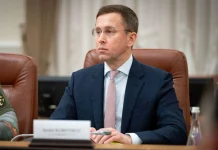
In Kyiv, during the 2026–2027 heating season, internal sewage risers may freeze in high-rise blocks that remain without heating for a prolonged period. Artem Shira, Vice-President of the Ukrainian Water Association, explained that this would prevent waste water from being drained properly from flats. However, experts do not expect a complete breakdown of the sewerage system in the capital.
Briefly about the main points
- The risk arises during prolonged periods of cold weather and frost.
- A frozen riser pipe can prevent waste water from being drained from flats.
- Residents on the lower floors may be the first to feel the effects of the accident.
- Pumping stations are equipped with generators, but require a regular supply of fuel.
- Certain areas of Kyiv’s Left Bank are described as vulnerable.
The problem starts inside the house
The key threat to the sewerage system is not a brief power cut, but a prolonged loss of heating. If the temperature inside the building drops below zero, the internal risers may freeze, he noted Artem Shira.
In such a situation, the waste water will not flow through the pipes, and the network will gradually become blocked. This is an internal problem within the building: the fact that municipal facilities have a backup power supply does not mean that the pipes in a particular unheated high-rise block will be kept warm.
The lower floors may be the first to be affected
A sign of a problem may be water that stops draining from the toilet, bath or washbasin. The water level may then rise as the drainpipe becomes blocked.
The highest risk of flooding caused by sewage occurs in basements, on the ground floor and, to some extent, on the first floor. To prevent this, the water supply to the building must be shut off immediately and the emergency services contacted.
The left bank was identified as potentially more vulnerable
Director of Energy Programmes at the Razumkov Centre Vladimir Omelchenko believes that, should serious problems arise with the heat supply, the situation could be more difficult on the Left Bank. He mentioned Troieshchyna, Darnytsia, Rusanivka and Osokorky.
These arrays are largely dependent on a centralised heat supply large energy facilities; some homes in the area already experienced significant heating problems last winter. However, the mention of these areas does not constitute a prediction of inevitable freezing: for this to happen, a prolonged lack of heat, freezing temperatures and the inability to quickly insulate or drain internal pipework would all have to coincide.
The government and the city are preparing contingency plans for heat supply, in particular for the areas served by the Darnytsia CHPP-4 and some of the customers of CHPP-5. In July, the mayor Vitali Klitschko He also announced plans to allocate funds to a backup heating system and resilience measures.
The city network has a backup mode
Experts do not believe that a city-wide sewerage collapse is inevitable. According to Shyra, water and sewerage facilities are classified as critical infrastructure and have backup power supplies, so pumping stations can operate using generators even during a total blackout.
«In February, »Kyivvodokanal’ announced that it had drawn up operating procedures for sewage pumping stations and treatment works under such conditions. According to city data, 34 pumping stations are responsible for pumping the effluent, after which it is sent to the Bortnytska aeration plant.
The sustainability of this system also depends on a continuous supply of diesel fuel for the generators. Therefore, localised incidents in unheated buildings currently appear to pose a more realistic risk than a simultaneous shutdown of the sewerage system across the whole of Kyiv.