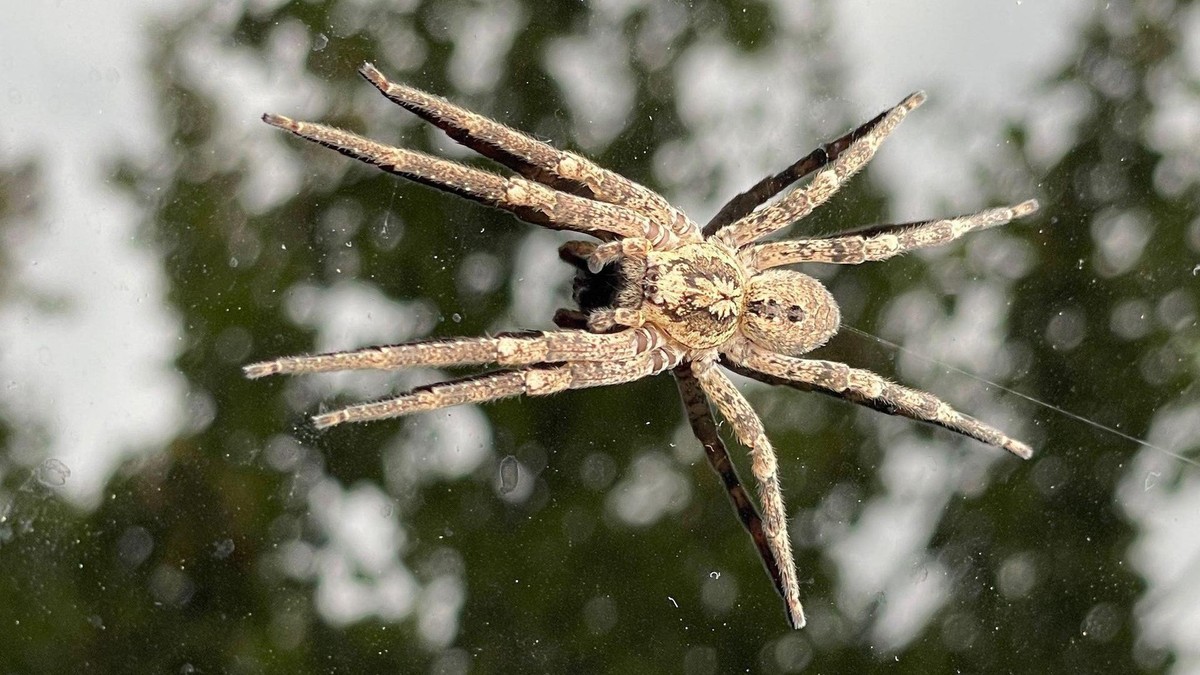
A report has appeared on social media about the discovery in the Lviv region of a large spider, identified as Zoropsis spinimana — the so-called ‘nosferatu spider’. The species is indeed actively expanding its range across Europe; however, there is currently no confirmation of this particular sighting from Ukrainian scientists or official bodies.
• A nosferat spider has been reported in the Lviv region.
• There is as yet no official confirmation of this particular incident.
• Zoropsis spinimana is native to the Mediterranean, but is found as far north as Europe.
• A spider can bite through human skin.
• Its bites usually cause localised pain, redness and swelling.
What is known about the discovery in the Lviv region
A photo of a large spider went viral on Ukrainian social media on 21 September. It is known as Zoropsis spinimana, or a nosferatu spider.
However, as of the time of publication, there is no confirmation in open sources from any scientific institution or arachnologists regarding a specific discovery in the Lviv region. It is therefore too early to speak of the emergence of a large population of this species in western Ukraine.
The species itself is not entirely new to Ukraine. Isolated records of Zoropsis spinimana have previously been documented in scientific and nature reserves, notably in Crimea and Transcarpathia.
Why is it called the Nosferatu spider?
Zoropsis spinimana belongs to the family Zoropsidae. It was given the name «Nosferatu» because of the distinctive dark markings on its upper body, which were seen to resemble the face of the vampire from the silent film *Nosferatu*.
This is a large spider by European standards. The body length of females can be as long as 2 centimetres, and when their legs are included, some individuals appear considerably larger. According to data from various European natural history institutions, the wingspan can reach approximately 5–8 centimetres.
The spider is mainly active at night and does not use a traditional hunting web. It preys on insects and other small invertebrates.
The nosferatu spider is indeed spreading across Europe
The Mediterranean region is considered to be the natural range of Zoropsis spinimana. Over recent decades, the species has been recorded with increasing frequency much further north — in Switzerland, Germany, Austria and other European countries.
Studies of the species’ range show that the population is moving northwards and north-eastwards. Scientists attribute this to several factors: more favourable climatic conditions, the spider’s ability to adapt to urban life, and accidental transport by cars and freight.
The situation in Germany is a case in point. Whilst sightings of the spider were only just beginning to be recorded there around two decades ago, reports of it are now coming in from virtually all over the country. The NABU database has already accumulated more than 30,000 photographs of this type.
Is the nosferatu spider dangerous?
Despite its large size and eerie name, Zoropsis spinimana is not considered dangerous to most people.
It belongs to a group of spiders whose chelicerae are capable of piercing human skin. This usually only happens when the spider is squeezed, picked up by hand, or feels threatened.
In a study of confirmed bite cases in Switzerland, *Zoropsis spinimana* caused predominantly local symptoms — pain, redness and swelling. Systemic reactions were rare, and all patients in whom they were recorded made a full recovery.
The Karlsruhe Museum of Natural History notes that the pain from a bite is usually less severe than that from a wasp sting, although redness or swelling may persist for several days.
There is therefore no justification for describing the spider as deadly or talking about an «invasion of poisonous spiders».
Should we expect them throughout Ukraine?
The expansion of the range of Zoropsis spinimana in Europe is a process confirmed by scientific observations. However, a single photograph taken in the Lviv region does not yet indicate that the species is widespread across Ukraine.
This requires confirmed findings from various regions and long-term observations.
If a spider has appeared in the house, experts advise against picking it up with your bare hands. You can cover it with a container large enough to hold it, place a sheet of paper or a piece of cardboard underneath it, and carry it outside.