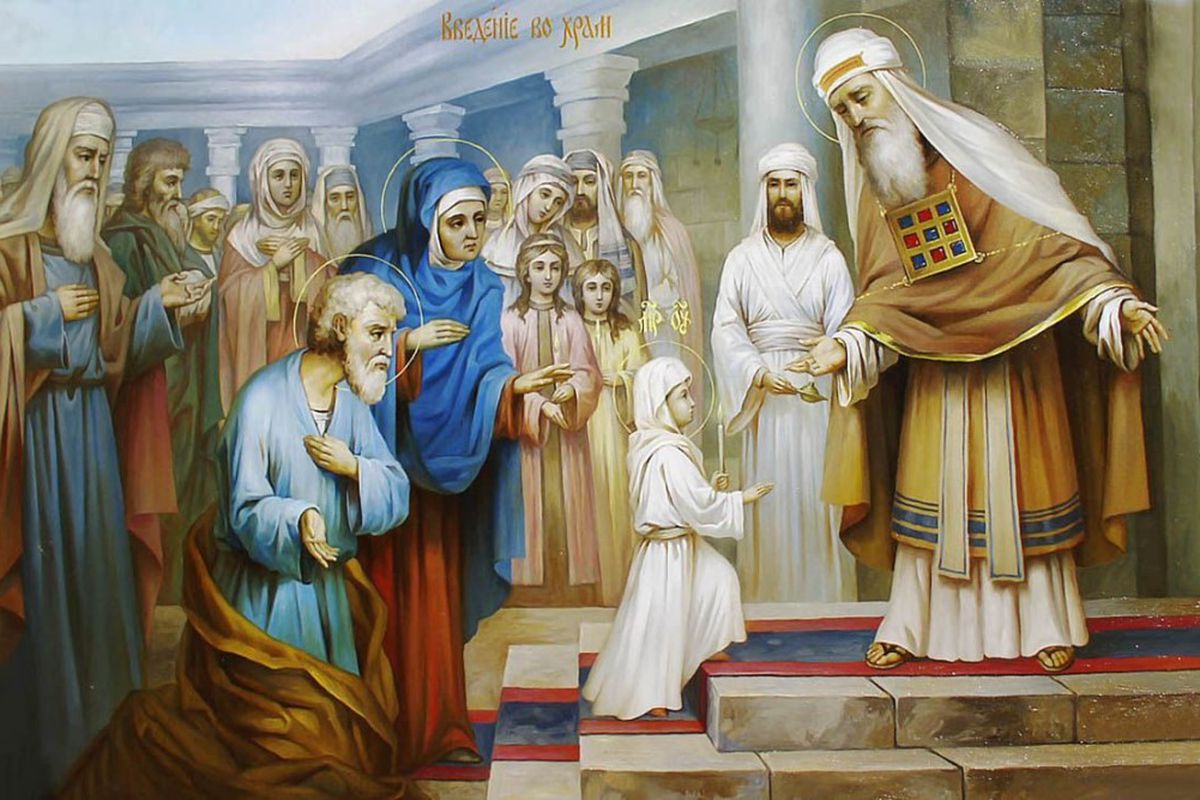
The Presentation of the Blessed Virgin Mary, commonly known as the Third Feast of the Immaculate Conception, is one of the twelve greatest feasts of the Eastern Christian tradition. In Ukraine, it is celebrated on 21 November according to the new church calendar, and on 4 December according to the old style. The feast commemorates the event when the Virgin Mary’s parents brought their three-year-old daughter to the Temple in Jerusalem, dedicating her to the service of God. This day is associated with ancient Ukrainian traditions, folk omens, prayers for children and the well-being of the family. We explain what the Third Feast of the Immaculate Conception means, how it is celebrated and what customs Ukrainians observe.
- The Feast of the Entry into the Temple of the Most Holy Mother of God is celebrated on 21 November according to the new calendar.
- The feast day commemorates the presentation of the three-year-old Virgin Mary at the Temple in Jerusalem.
- It is commonly known as the Third Feast of the Immaculate Conception.
- On this day, it is customary to attend church services and pray for children and the family.
- Ukrainians associated the Feast of the Presentation with the start of the winter festivities and changes in the weather.
When is the Presentation of the Blessed Virgin Mary celebrated?
The Entry of the Most Holy Mother of God into the Temple is one of the fixed church feasts. This means that its date remains the same every year and is not linked to Easter.
Following the transition of the Orthodox Church of Ukraine and the Ukrainian Greek Catholic Church to the New Julian calendar in September 2023 Celebrations to mark the introduction began on 21 November.
Before the calendar reform, most Ukrainian Orthodox and Greek Catholics celebrated this feast day on 4 December. Communities that follow the Julian calendar continue to observe this date.
Both dates refer to the same religious festival, and the difference between them is due to the use of different calendar systems.
The Presentation holds a special place amongst the Twelve Great Feasts, which commemorate the most significant events in the earthly lives of Jesus Christ and the Virgin Mary.
The history of the feast: why three-year-old Mary was brought to the temple
According to Church Tradition, the parents The Virgin Mary — the righteous Joachim and Anna — They had been unable to have children for a long time. The couple prayed for a child and vowed to dedicate her to God. When their daughter Maria was born, her parents decided to fulfil their promise.
When the little girl reached the age of three, Joachim and Anna took her to the Temple in Jerusalem. According to tradition, little Mary was accompanied by girls carrying lit lamps, and she was met at the Temple by the priest Zechariah. The tradition recounts that Mary climbed the steps of the Temple unaided, after which her spiritual upbringing began. It is believed that she devoted the following years to prayer, the study of the Holy Scriptures and service at the sanctuary.
Important: this story is not recounted in the canonical Gospels. It is based on early Christian ecclesiastical Tradition, in particular the «Protoevangelium of James», which is not part of the biblical canon.
In the Christian tradition, the Presentation symbolises the beginning of Mary’s spiritual journey and her preparation for her future motherhood Jesus Christ.
Why is the Presentation known as the Third Feast of the Immaculate Conception?
In the Ukrainian folk calendar, there are three major feasts in honour of the Virgin Mary, which are collectively known as «Prechista».
They are distinguished by the order in which they are celebrated throughout the church year:
-
The First Feast of the Assumption — 15 August. The Dormition of the Most Holy Mother of God.
-
The Second Feast of the Immaculate Conception — 8 September. The Nativity of the Blessed Virgin Mary.
-
The Third Feast of the Immaculate Conception — 21 November. The Presentation of the Blessed Virgin Mary in the Temple.
Such names have been preserved in Ukrainian folk customs and everyday speech.
The Introduction was particularly important for rural communities, as it traditionally marked the end of the autumn farming season and the start of the winter festivities. There was even a saying among the people: «Winter is coming — and with it, the festive season».
This saying meant that, following the Third Feast of the Immaculate Conception, the time for winter religious festivals and family gatherings was drawing near.
What traditions do Ukrainians observe on the Third Feast of the Purification?
The Feast of the Entry into the Temple of the Most Holy Mother of God combines church rites and ancient folk customs. The main tradition remains participation in the festive service. Believers visit churches, pray to the Blessed Virgin Mary and ask for blessings for their families.
Particular attention is paid to prayers for children, their health, upbringing and future. Within families, this festival is also associated with caring for loved ones, reconciliation and good deeds.
Among the customs that have ecclesiastical or folk origins are:
-
Attending the festive liturgy.
-
A prayer for children, parents and other family members.
-
Helping people who need support.
-
A peaceful day without arguments or conflicts.
-
Family gatherings and the preservation of traditions handed down from previous generations.
Customs could vary across different regions of Ukraine. Some of them stem from Christian tradition, whilst others have their roots in ancient beliefs about the arrival of winter.
Things to avoid on the Feast of the Presentation of the Virgin Mary
There are many folk taboos associated with the Third Feast of the Immaculate Conception. In days gone by, people tried to put off heavy household work, avoided arguments and did not lend out items from their homes. There were also beliefs that at the start of the festive day one should not give away money or other possessions, so as not to lose one’s prosperity. However, these beliefs are part of folk culture and are not church prescriptions.
The Church does not impose a general ban on cleaning, cooking, doing the washing or other necessary daily chores specifically because of the Feast of the Entry into the Temple. The main purpose of the celebration lies not in abstaining from household chores, but in prayer, spiritual life and kindness towards others.
It is also worth bearing in mind that, according to the new calendar, the Feast of the Presentation falls during the Nativity Fast. Dietary rules may vary depending on church tradition and personal circumstances.
Folk omens for the Feast of the Presentation: what sort of winter will it be?
Our ancestors kept a close eye on the weather on the Third Day of the Purification, trying to predict what sort of winter lay ahead. Various folk signs relating to snow, frost and warmer weather have been preserved in ethnographic records.
The following superstitions were particularly widespread:
-
If it has snowed before the Feast of the Presentation, it may still melt.
-
If it snows after the festive season, winter is said to linger for a long time.
-
The warm weather on the Feast of the Presentation heralded a warm festive season ahead.
-
People used to try to predict the coming harvest based on the condition of the snow cover and the winter weather.
In some areas, young women used to wash their faces with the first snow, believing that this would help them retain their beauty and a healthy glow.
Such customs form part of Ukraine’s folkloric heritage. There is no scientific evidence to support the claim that these signs can predict the weather.
Why did they focus on the first guest at the Presentation?
One of the most interesting traditions associated with the Third Feast of the Purification concerned the first person to enter the home. It was widely believed that the first guest could symbolically influence the family’s well-being throughout the coming year.
In some regions, a young, healthy man was considered a welcome guest, as he was associated with good luck and prosperity. In other areas, there were different beliefs about who should be the first to cross the threshold.
This belief was linked to what is known as ‘first-day magic’ — the conviction that the beginning of a particular period determines the subsequent course of events. Today, such customs are of mainly ethnographic interest. They reflect the worldview of past generations, but are not religiously binding.
What do people pray to the Virgin Mary for on the Feast of the Presentation?
For the faithful Feast of the Presentation It provides an opportunity to reflect on the spiritual upbringing of children, the responsibilities of parents and the importance of faith in family life.
On this day, prayers to the Blessed Virgin Mary, whom Christians revere as, are heard in churches The Mother of Jesus Christ. Believers can pray for the health of their loved ones, for peace, for family harmony, for the protection of children and for spiritual support.
The significance of this feast for the upbringing of the younger generation deserves special attention. In the Church’s tradition, Joachim and Anna are held up as examples of parental fidelity to their vows, whilst Mary is held up as an example of spiritual purity and trust in God. That is precisely why the Presentation is often referred to as a feast day celebrating Christian upbringing and family values.
Frequently Asked Questions about the Presentation of the Virgin Mary
When is the Feast of the Third Purification celebrated?
21 November according to the New Julian calendar, or 4 December according to the Julian calendar. The date depends on which calendar the church community follows.
Is it possible to work on ‘Introduction’?
Necessary domestic and professional work is not prohibited by general church rules. Believers are encouraged, where possible, to set aside time for prayer and worship.
Is it OK to clean and do the washing?
Yes. Folk taboos regarding cleaning and washing are not binding Church rules.
Is it possible to hold a wedding?
This depends on the denomination, the church calendar and the rules of the specific congregation. As the feast day falls during the Christmas fast, arrangements for a church wedding must be made in consultation with the priest.
What is the main significance of the festival?
The Feast of the Presentation of the Blessed Virgin Mary in the Temple serves as a reminder of the Virgin Mary’s spiritual development, the importance of bringing up children, and faith and devotion to God.
The festival remains an integral part of the spiritual and cultural life of Ukrainians to this day. It combines Christian tradition, family values and folk customs, which are passed down from generation to generation.