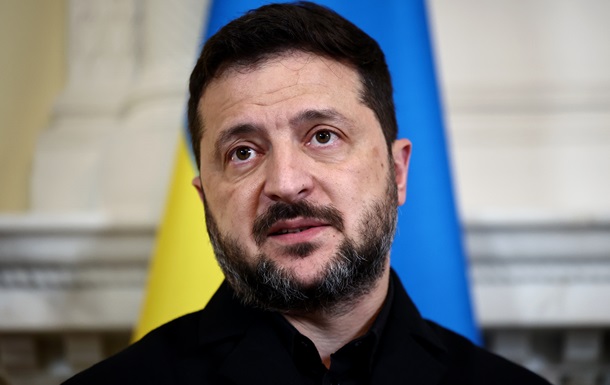
President Volodymyr Zelenskyy has warned of the possibility of Russia deploying additional ballistic missile launchers in Belarus. According to him, this poses a risk of strikes on Lviv, Ternopil, Lutsk and other cities in western Ukraine. Launches from closer positions may leave less time to detect the missile, warn the public and activate air defence systems.
Briefly about the main points
- Zelenskyy described the new installations in Belarus as a potential threat to western Ukraine.
- Launches from the north make it more difficult to detect and intercept ballistic missiles.
- Intelligence reports had identified infrastructure and Russian units linked to «Oreshnik».
- Defence depends on the number of interceptors available and advance warning of launches.
- The report does not confirm any specific attack on the cities mentioned.
Response time determines the risk to the western regions
Additional ballistic missile systems on Belarusian territory could expand Russia’s capabilities to launch attacks on the western regions of Ukraine. There is a particular risk associated with attacks from the north on the Lviv, Volyn, Ternopil and neighbouring regions.
Ballistic missiles are moving at high speed, so the forces AIR DEFENCE have less time to identify the target, issue a warning to the public and attempt to intercept it. At the same time, the mere possibility of a launch does not mean that Russia is already preparing a strike on a specific city.
16 October Zelensky He stated that Ukraine receives information about Russian ballistic missile launches primarily from the United States. He described this cooperation as crucial for the protection of cities.
Russia has been preparing the infrastructure for «Oreshnik» since at least 2025
Russia is already using the territory of Belarus for military purposes. In December 2025, the head of the Ukrainian Foreign Intelligence Service Oleg Ivashchenko reported that Moscow and Minsk are constructing facilities for the «Oreshnik».
According to him, this concerns not only launchers, but also surveillance, command and control, and communications systems. Ivashchenko stated that the aim of the deployment was to increase military and political pressure on European countries and NATO.
In September 2026, the Main Intelligence Directorate reported that units of the Russian 101st Missile Brigade, equipped with the «Oreshnik», were stationed in Belarus. The US Centre for Strategic and International Studies describes it as a mobile medium-range ballistic missile system capable of carrying several warheads, with a claimed range of approximately 3,500–5,470 kilometres. Russia deployed this system during the attack on Lviv in January 2026.
Air defence requires interceptors and advance warning of launches
Ukraine is strengthening its air and missile defences, focusing on systems capable of intercepting ballistic missiles. One of the key challenges remains securing a sufficient number of interceptor missiles, the supply of which depends to a large extent on international partners.
Zelenskyy also linked the effectiveness of the cities’ defence to the timely receipt of information about missile launches. Following the strikes on Kyiv on 12–13 October, he stated that there had been no advance warnings from partners, and that Ukrainian defences had in fact detected some of the missiles only as they were approaching the capital.
As of 17 October, the threat of Belarusian territory being used for Russian missile strikes remains a real concern. The effectiveness of defences in cities depends on interception capabilities and the speed at which launch data is received.