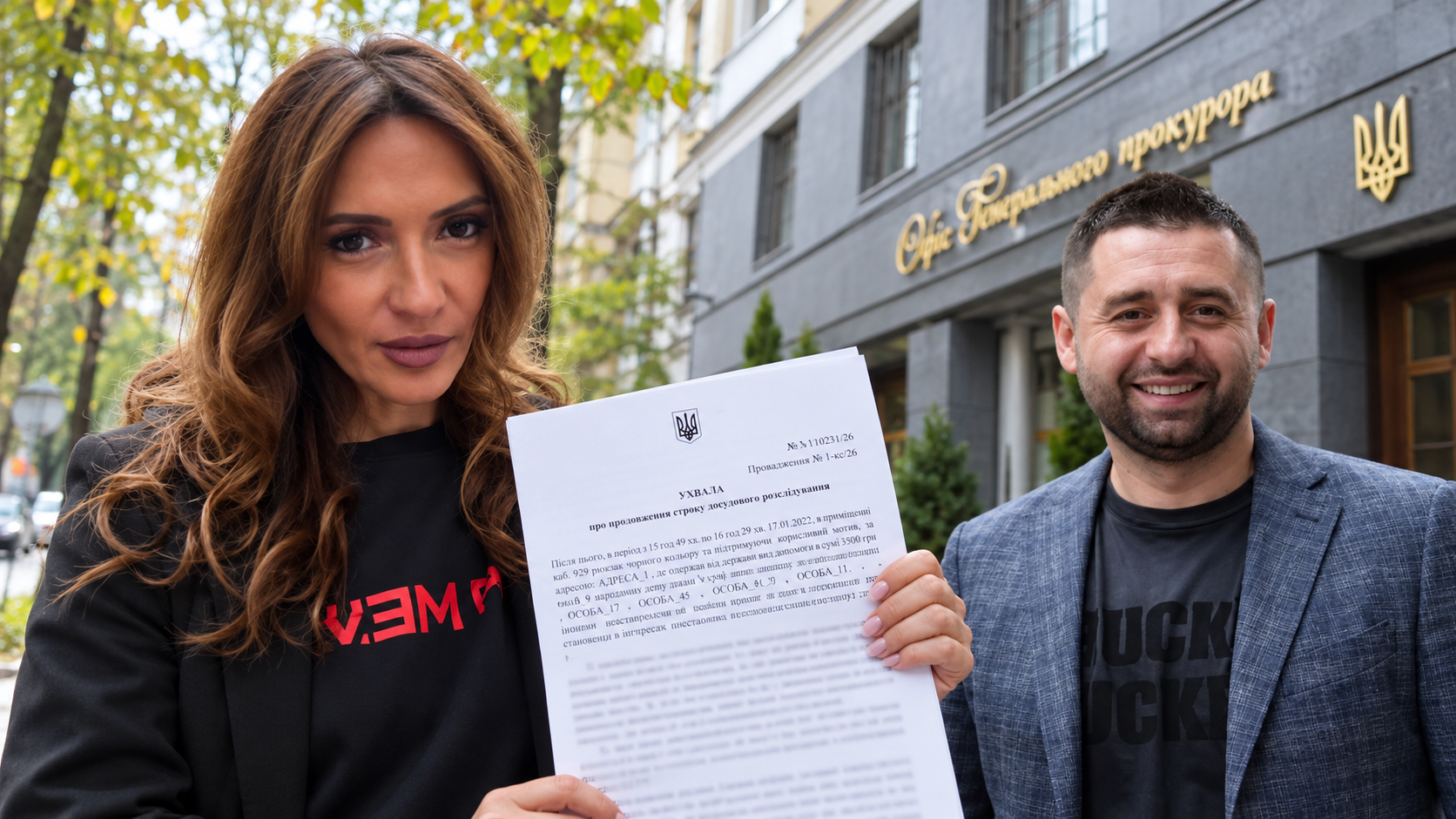
Martyna Boguslavets, head of the «MEZHA» Anti-Corruption Centre, has announced the discovery of a court order which, she claims, reveals the mechanism behind possible bribes paid to MPs in exchange for their votes in the Verkhovna Rada. Activists are calling for an investigation into the possible involvement of Davyd Arakhamia, leader of the «Servant of the People» parliamentary group, in this case. According to the Anti-Corruption Centre (ACC), rulings by the High Anti-Corruption Court mention an unnamed MP from the faction’s leadership who may have received 85,000 dollars for subsequent distribution amongst parliamentarians. Five MPs have already been served with notices of suspicion, but Arachamia has not been notified of any suspicion in this case, and his involvement in the alleged scheme has not been established.
Bohuslavets announced the existence of court documents relating to a corruption scheme
Chair of the «MEZHA» Anti-Corruption Centre» Martyna Boguslavets reported on a court order which, she claimed, described the mechanism by which members of parliament might be bribed.
This concerns a criminal case being investigated by detectives from the National Anti-Corruption Bureau of Ukraine and prosecutors from the Specialised Anti-Corruption Prosecutor’s Office.
According to the CPC, the case files of the High Anti-Corruption Court mention a Member of Parliament from the leadership of the «Servant of the People» parliamentary group, whom the investigation identifies as the organiser of the alleged group.
Anti-corruption campaigners believe that this MP could have been David Arahamia. They attribute this conclusion, in particular, to the searches carried out at his assistant’s premises and the description of the participants’ roles in the investigation files.
In the excerpt from the ruling cited by the CPC, Arakhamia’s surname is not mentioned. Consequently, his identification as a possible organiser is a theory put forward by civil society activists, which requires procedural verification.
How the scheme for paying MPs for their votes might have worked
In December 2025, the NABU and the SAP announced that they had uncovered an alleged organised group which, according to the investigation, had been facilitating the receipt of unlawful benefits by members of parliament.
Investigators described a hierarchical structure with a division of roles amongst the participants. Coordination was carried out by one of the Members of Parliament.
According to the NABU, a dedicated group on WhatsApp was used to organise the voting. Participants were sent the numbers of the draft laws and instructions on how to vote, after which money was passed on to certain MPs.
According to the investigation, the sums involved in the illegal payments for individual votes ranged from 2,000 to 20,000 dollars.
Separately CPC drew attention to information contained in court rulings regarding 85,000 dollars, which a representative of the parliamentary group’s leadership allegedly received at the end of 2025 for subsequent distribution. According to the activists, this matter requires further investigation.
Which Members of Parliament have been placed under investigation?
As part of the investigation, the NABU and the SAP have notified five sitting MPs from the «Servant of the People» parliamentary group that they are under suspicion.
According to Ukrainian media reports, these are:
-
Yuriy Kisel — deputy chair of the parliamentary group;
-
Olga Savchenko;
-
Igor Negulevsky;
-
Mykhailo Labu;
-
Yevgeniya Pivovarova.
In early January 2026, the High Anti-Corruption Court imposed bail as a precautionary measure on all five individuals. The amounts ranged from 16.6 to 40 million hryvnias.
In October, it emerged that the pre-trial investigation had been extended until 27 December 2026. All five remain suspects, not convicted offenders. It is for the court to make the final assessment of their actions.
Why are anti-corruption organisations calling for an investigation into Arakhamia?
On 20 October, the Anti-Corruption Centre released information regarding a new appeal to the acting Prosecutor General Anton Kovalsky.
The application was submitted on 19 October. In it, the civil society organisation requests an investigation into David Arakhamia’s possible involvement in the receipt of unlawful benefits.
Among the circumstances cited by the activists are references to a representative of the parliamentary group’s leadership in court documents, searches carried out at the home of Arakhamia’s assistant, and reports of a possible distribution of funds amongst MPs.
Executive Director of the AntAC Daria Kalenyuk She emphasised that the organisation is calling for a full investigation. It is the task of the law enforcement agencies to identify the possible organiser, determine their role and trace the source of the funds.
As of 22 October, there is no confirmation that Davyd Arakhamia has been notified of the charges against him in this case.
Why questions have been raised about former Attorney General Kravchenko
Martyna Bohuslavets reported that the «MEZHA» Anti-Corruption Centre had contacted the Office of the Prosecutor General as early as February 2026 to report a possible offence committed by Arakhamia. According to her, no separate case was registered. The Office of the Prosecutor General explained this by stating that the relevant circumstances were already being investigated by NABU.
Representatives of «MEZHI» disagreed with this reasoning and accused the then Prosecutor General Ruslana Kravchenko in obstructing the investigation.
At the same time, the allegations regarding possible personal agreements between Kravchenko and Arakhamia have not been corroborated by the facts established by the investigation. The mere fact that information was not entered into the register does not, in itself, prove the existence of such agreements.
The Centre for Political Analysis emphasises that the Prosecutor General is authorised to initiate criminal proceedings against a Member of Parliament, and calls on the new head of the Prosecutor General’s Office to give due consideration to the appeal.
Which questions remain unanswered?
The investigation must now establish exactly who may have organised the payment scheme, where the money came from, and whether other officials were involved in the alleged scheme. The role of an unnamed MP from the leadership of a parliamentary group, who is mentioned in the High Anti-Corruption Court’s documents, requires a separate investigation.
Court orders issued during the pre-trial investigation may set out the prosecution’s version of events, but do not in themselves constitute a conviction.
So far, the only confirmed procedural outcome is the notification of suspicion served on five MPs. The possible involvement of other officials, notably Davyd Arakhamia, remains the subject of calls from anti-corruption organisations for a further investigation.