Russia has proposed holding a possible meeting between Vladimir Putin, Donald Trump and Xi Jinping in China in November. As of 25 October, there is no agreement on the summit, no public consent from China and no agreed agenda, whilst a Guardian columnist has warned of the potential geopolitical consequences of such a format.
Briefly about the main points
- Putin has proposed a meeting with Trump and Xi Jinping in China.
- The APEC summit in Shenzhen in November is being cited as a likely venue.
- The Kremlin described the idea as hypothetical; no agreements have been reached as yet.
What we know about the initiative
News of the proposal to hold a trilateral meeting emerged on 19–21 October. The Washington Post, Axios and the Associated Press reported that Putin suggested Trump to meet with Xi Jinping in China next month.
Shenzhen is cited as a likely venue, where the APEC summit is due to take place in mid-November. According to Axios, Trump has expressed openness to such a format and has cited denuclearisation as a desirable topic for discussion.
Why the meeting cannot be regarded as a scheduled one
It is the proposal itself that has been confirmed, not the holding of the summit. According to *The Washington Post*, a Kremlin spokesperson Dmitry Peskov He described this idea as hypothetical and stated that there were no concrete proposals, agreements or an agreed agenda.
The Chinese authorities have not publicly stated that they are prepared to host the meeting. Nor is there any confirmed information regarding the list of topics: Russia’s war against Ukraine could be among them, but this has not been officially confirmed.
What exactly did *The Guardian* write?
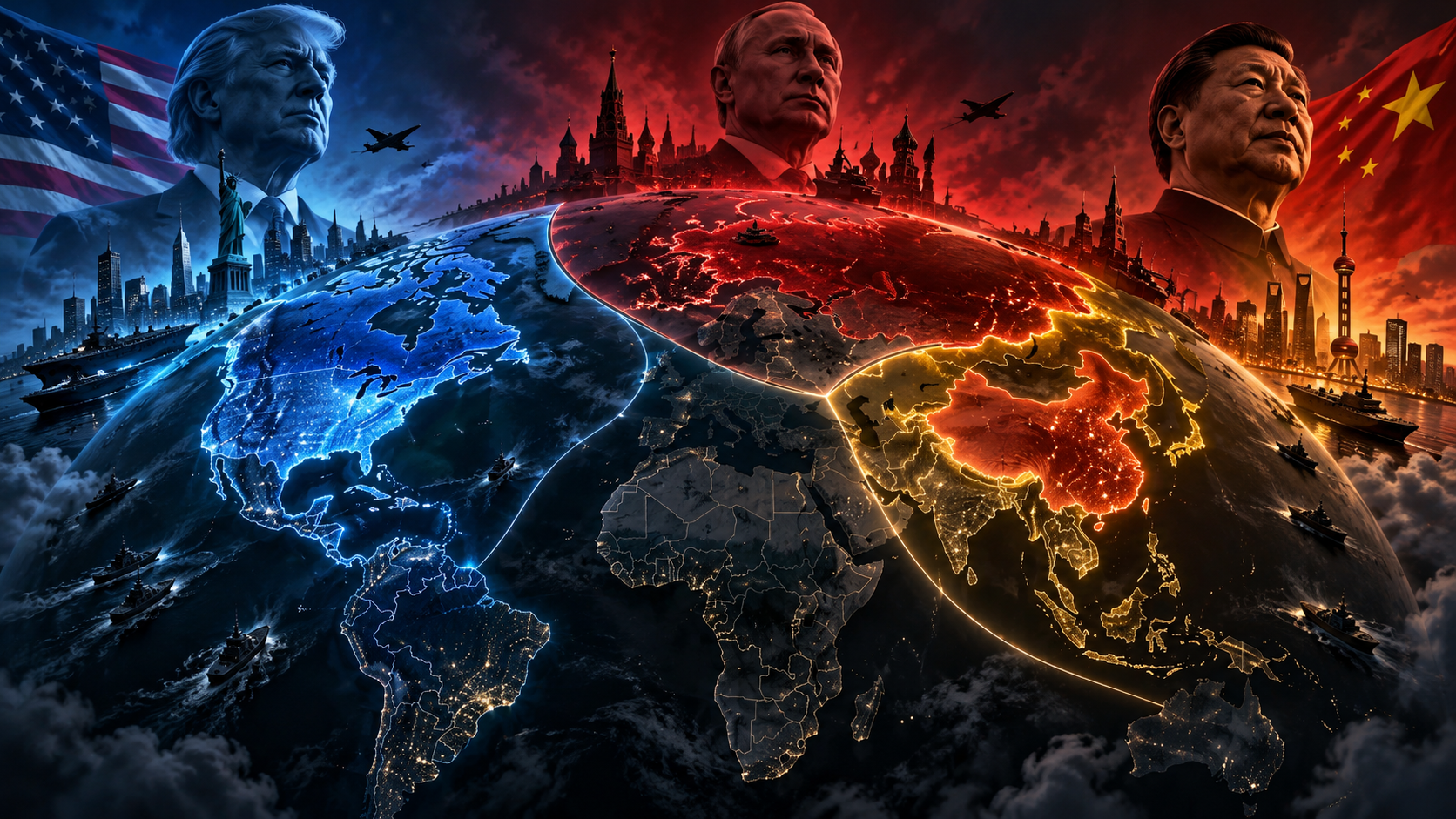
On 24 October, The Guardian published a column in its Opinion section Steve Bloomfield, the former international editor of *The Observer*. The author suggested that the summit, should it take place, could intensify the trend towards the division of the world into spheres of influence controlled by the US, Russia and China.
Bloomfield links a possible weakening of US support for Europe to risks for Ukraine and other European states. Changes to US security guarantees in East Asia, in his view, could create additional risks for Taiwan, South Korea, Japan and Australia.
This is the columnist’s assessment, not a coordinated plan by the three states or a forecast backed by decisions taken by Washington, Moscow and Beijing.
What context does the US strategy provide?
In the US National Security Strategy 2025, deterrence the conflict over Taiwan identified as a priority. The document also provides for a strengthening of the US military presence in the western Pacific and calls on Japan and South Korea to increase their defence spending.
The strategy sets out the need for stability in Europe’s relations with Russia and for a swift end to hostilities in Ukraine. At the same time, it does not state that the US will abandon its commitment to defend its allies in East Asia or Taiwan.
At present, this is a proposed summit, not one that has been agreed upon. The possible consequences of the meeting described by *The Guardian* remain the author’s interpretation, based on the scenario for how it might unfold.