Parliamentary elections are taking place in Israel on 27 October; these are the first since the Hamas attack on 7 October 2023 and the subsequent conflicts in the Gaza Strip, Lebanon and Iran. In the first five hours, 31.5% of voters cast their ballots — the highest turnout for this time of day since 1977. The main political contest is between Prime Minister Benjamin Netanyahu and the former Chief of the General Staff of the Israeli Defence Forces, Gadi Eizenkot.
Voter turnout in the Israeli elections broke a long-standing record
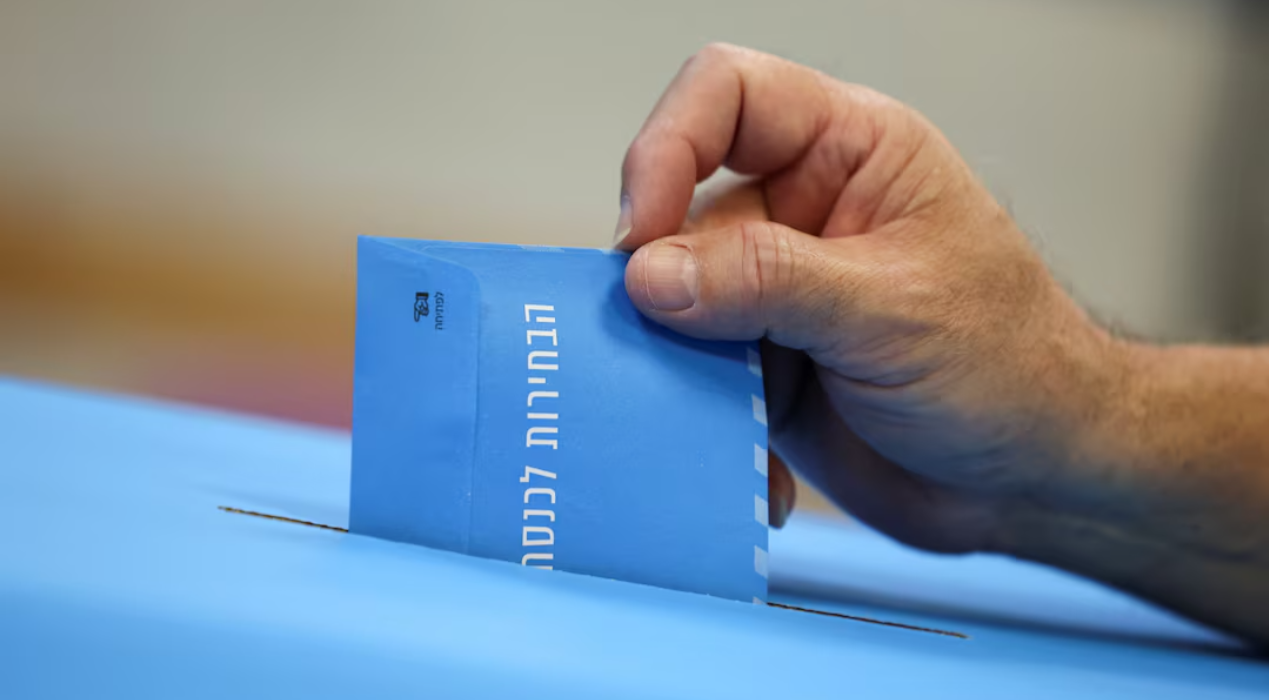
Polling stations opened at 7.00 am local time. Queues had already formed outside them by early morning, and the pace vote exceeded the figures from the previous parliamentary elections.
According to the Central Electoral Commission, 31.5% of voters had cast their votes by 12:00. The last time such a high turnout was recorded in the first five hours was during the 1977 elections, which resulted in a historic change of government and the rise of right-wing forces.
More than 7.3 million citizens are eligible to vote. There are over 12,000 polling stations across the country.
Voting will continue until 22:00. Once the polling stations have closed, Israeli television channels will broadcast the exit poll results.
Netanyahu urged his supporters to head to the polling stations immediately
The current Prime Minister Binyamin Netanyahu, who has been in power for 19 years in total, is trying to retain control of the country amidst criticism of his actions following the Hamas attack.
During the election campaign, he emphasised military operations against Hamas, Hezbollah and Iran, as well as his support for US President Donald Trump.
Following the release of the first figures indicating a high turnout, Netanyahu called on his supporters to vote more actively.
He stated that opponents of his government, in particular left-wing groups and Arab citizens of Israel, were turning out in large numbers at polling stations. The Prime Minister called on his supporters to match this level of turnout.
His political stance is supported, in particular, by the far-right minister Itamar Ben-Gvir, who cast his vote in the settlement of Kiryat Arba in the occupied West Bank.
Gadi Eisenkot calls for an investigation into the security breach on 7 October
Netanyahu’s main rival is the former Chief of the General Staff of the Israel Defence Forces Gadi Eisenkot, which brings together some centre-right and centrist voters.
One of the key points of his campaign is the establishment of a state commission to investigate the circumstances of the Hamas attack on 7 October 2023.
According to Israeli figures, around 1,200 people were killed at the time, and 251 were taken hostage. Netanyahu’s opponents believe that his government must be held accountable for the security failures that preceded the attack.
On polling day, Eisenkot visited the kibbutz of Nir Oz in the south of the country, which had been attacked by Hamas. He was accompanied by Gadi Moses, one of the former hostages.
Eisenkot stated that political change was necessary after three years of war and pledged to work towards dismantling Hamas’s military and administrative structures in Gaza within 18 months of the formation of the government.
He had previously been a member of Netanyahu’s defence cabinet, but left it due to differences over the conduct of the war.
Arab voters could influence the formation of a coalition
The participation of Arab citizens of Israel, who make up around a fifth of the country’s population, is particularly noteworthy during the voting process.
A representative of the Arab political community Ahmad Tibi reported an exceptionally high level of voter turnout.
Ahead of the elections, Arab parties called on their supporters to turn out in large numbers to vote, in an effort to influence the composition of the future parliament.
At the same time, Eisenkot had previously ruled out the possibility of forming a coalition with Arab parties, citing political differences. Nevertheless, the support of such parties during parliamentary votes could prove significant in the formation of a minority government.
None of the political blocs has a guaranteed majority
In Israel, voters cast their ballots for party lists rather than directly for the Prime Minister. To form a government, a party must secure the support of at least 61 of the 120 members of the Knesset.
Pre-election polls indicated a close contest between Netanyahu’s bloc and the political forces calling for a change of government.
However, even after the votes have been counted, forming a government may require lengthy coalition talks.
If none of the political leaders manages to form a majority, Israel may face a new period of political uncertainty and a repeat election.
Until a new government is formed, Netanyahu may remain acting Prime Minister.
The final allocation of parliamentary seats will be announced once the votes have been counted. The first exit polls are expected after the polling stations close at 22:00 on 27 October.