In Poland, the long-standing conflict surrounding the Constitutional Tribunal has escalated. Following the suspension of its leadership, police were deployed to the tribunal’s building, whilst President Karol Nawrocki cut short his trip abroad and returned urgently to Warsaw. The opposition accuses Donald Tusk’s government of attempting a coup, whilst the Prime Minister describes his actions as restoring the rule of law.
- The judicial crisis in Poland has been ongoing since 2015, when the PiS party began making changes to the Constitutional Tribunal.
- The European Court of Human Rights has found that there were irregularities in the appointment of judges.
- Donald Tusk’s government is attempting to reform the tribunal, but its president, Karol Nawrocki, is blocking some of the appointments.
- On 30 October, the tribunal’s leadership was temporarily suspended, after which protests broke out outside the court.
- The opposition is claiming a «coup d’état», whilst the government describes its actions as a restoration of the rule of law.
How the Constitutional Tribunal crisis began
The conflict dates back to 2015, when the Law and Justice (PiS) party came to power Yaroslava Kaczyńska.
The new parliamentary majority appointed judges to the Constitutional Tribunal, some of whose posts had already been lawfully filled by the previous Sejm. Subsequently, the party implemented a series of judicial reforms, which led to the Polish authorities facing criticism from the European Union.
In 2021, the European Court of Human Rights found that irregularities had occurred in the appointment of one of the tribunal’s judges. The Court concluded that the participation of the unlawfully appointed judge had infringed the applicant’s right to have his case heard by a court established by law.
During his eight years in office PiS The Constitutional Tribunal came under significant political influence from the party, which became one of the main causes of Poland’s conflict with the European institutions.
Why Tusk and Navrotsky cannot reach an agreement
Upon returning to power in 2023 Donald Tusk promised to restore the independence of the judiciary and reverse the effects of the previous government’s reforms. However, the new administration has faced resistance from the president Karol Navrotsky, which supports the PiS political camp.
In 2026, parliament elected eight new judges to the Constitutional Tribunal. Navrotskyy refused to administer the oath of office to five of them, citing doubts regarding the appointment procedure and the candidates’ compliance with the established requirements.
Despite this, the judges took their oaths in parliament, but the tribunal’s leadership refused to allow them to take up their posts.
The European Court of Human Rights had previously demanded that the four newly elected judges not be prevented from carrying out their duties.
What happened outside the court in Warsaw
On 30 October, the judge Anna Korwin-Piotrowska announced the temporary suspension of the President of the Constitutional Tribunal Bogdan Svienchkovsky and his deputy Bartłomiej Sohanski.
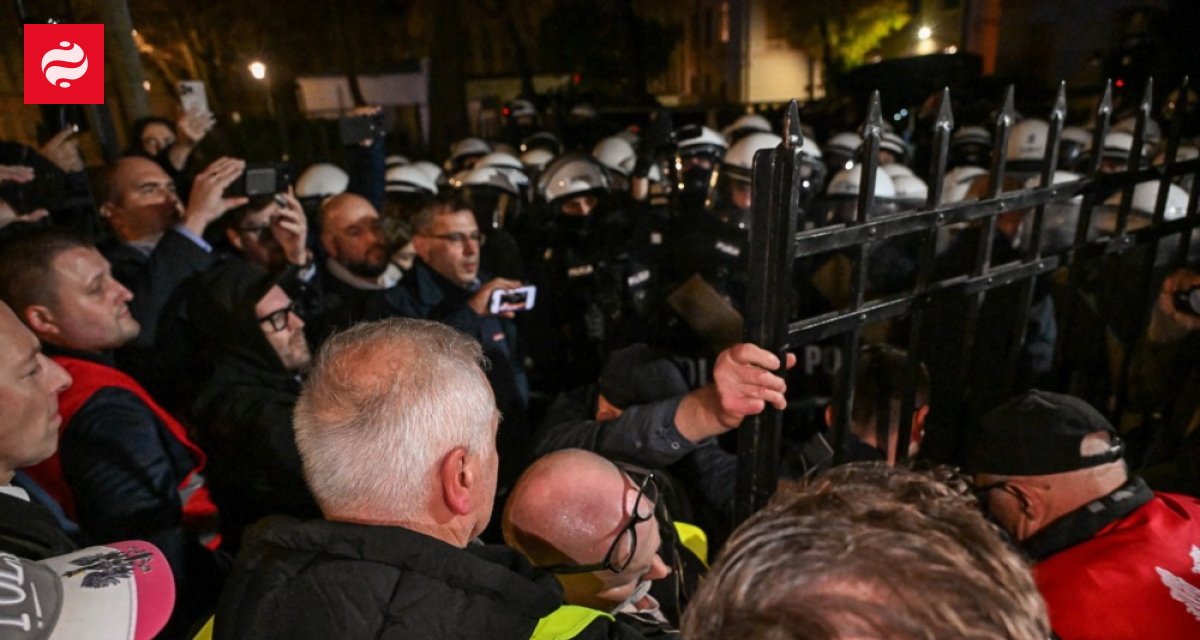
Following this, opposition supporters gathered outside the building, whilst the police stepped up security at the premises. The police explained that their presence was due to reports of a possible threat to the judges and staff of the tribunal.
Świenczkowski and representatives of PiS described the suspension as unlawful and accused the government of «a coup d’état».
On the night of 31 October, President Navrotsky returned to Warsaw. He arrived at the tribunal, where a scuffle broke out as he made his way into the building; he subsequently claimed that constitutional order had been violated.
At the same time, the legality of the removal of the tribunal’s leadership has sparked controversy even amongst lawyers who had previously criticised the PiS’s judicial reforms.
Tusk insists that his government is acting to restore the rule of law and the independence of the courts. The opposition, however, regards the change in the tribunal’s leadership as unlawful interference by the executive in the work of a judicial body.