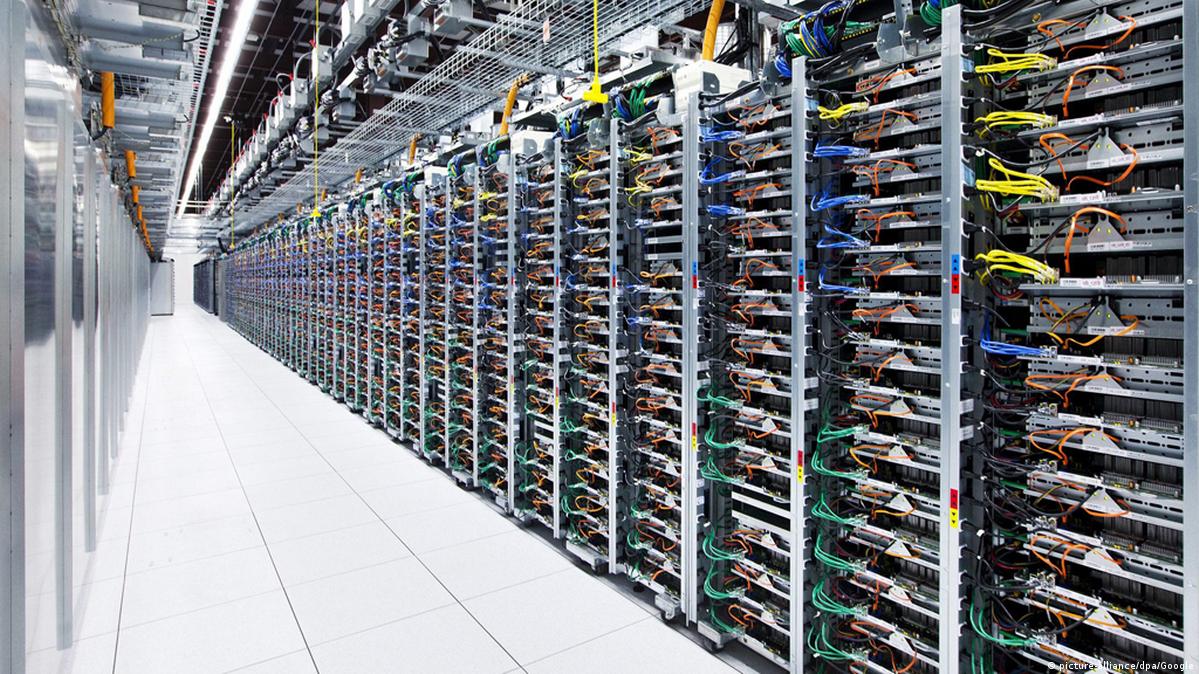
The American company Google has announced a $17 billion investment in the construction of its first data centre in the state of Wyoming. To power the facility, a large-scale energy infrastructure will be built, including a 702 MW fuel cell power station. The project is being carried out against a backdrop of growing demand for computing power for artificial intelligence and increasing opposition to the construction of data centres in the US.
- Google is investing $17 billion in its first data centre in Wyoming.
- Electricity will be partly supplied by a 702 MW fuel cell plant.
- The project involves carbon capture and air cooling of server equipment.
- In the US, opposition to the construction of large data centres for artificial intelligence is growing.
Google is to build a data centre near Cheyenne
The new facility will be located in Laramie County, near the town of Cheyenne. Google’s partners will include the energy companies Tallgrass Energy, Black Hills Energy and American Electric Power (AEP), as well as the developer Related Digital. The investment is intended to support long-term infrastructure development, although the company has not yet announced an exact completion date for the data centre.
A key feature of the project will be a power supply system utilising Bloom Energy fuel cells, which convert natural gas into electricity without the traditional combustion process. The plant’s planned capacity is 702 MW, and AEP’s investment in its construction is estimated at approximately $4 billion. The plant is expected to become fully operational by the end of 2028.
Google. It also plans to use carbon capture and underground storage technology. A significant proportion of the emissions are set to be channelled to the Tallgrass storage facility in eastern Wyoming. An air-cooling system will be used to cool the servers in order to reduce water consumption.
The construction of data centres is sparking protests in the US
Google’s announcement came in the wake of the mid-term elections in the United States, during which the issue of expanding artificial intelligence infrastructure became a subject of political debate. According to Ballotpedia, out of 41 local referendums relating to data centres, 40 resulted in decisions against the projects in question or in favour of restrictions on their development.
Opponents of large-scale construction projects are concerned about rising electricity prices, the strain on local power grids and increased water consumption. In Texas and Georgia, candidates who advocated restricting the expansion of data centres were successful in the elections.
Google has given assurances that it will cover the full cost of the electricity consumed and the infrastructure required to operate the new complex. The company also expects the project to generate hundreds of millions of dollars in tax revenue for local authorities.
Investors are reassessing the prospects for the artificial intelligence market
Political opposition to the development of data centres has heightened investors’ concerns about the pace of expansion of AI infrastructure. Against this backdrop, shares in Bloom Energy, which is set to supply fuel cells for the Google project, fell by more than 14 per cent.
At the same time, Microsoft has declined to extend its agreement with cloud provider Nscale regarding the data centre in Texas. According to Bloomberg, the company also plans to tighten its oversight of certain infrastructure projects undertaken by its partners, notably Nebius and IREN.
Despite market uncertainty, Google continues to make substantial investments in computing capacity. The project in Wyoming involves not only the construction of a new data centre, but also the development of a dedicated energy infrastructure to meet its needs.