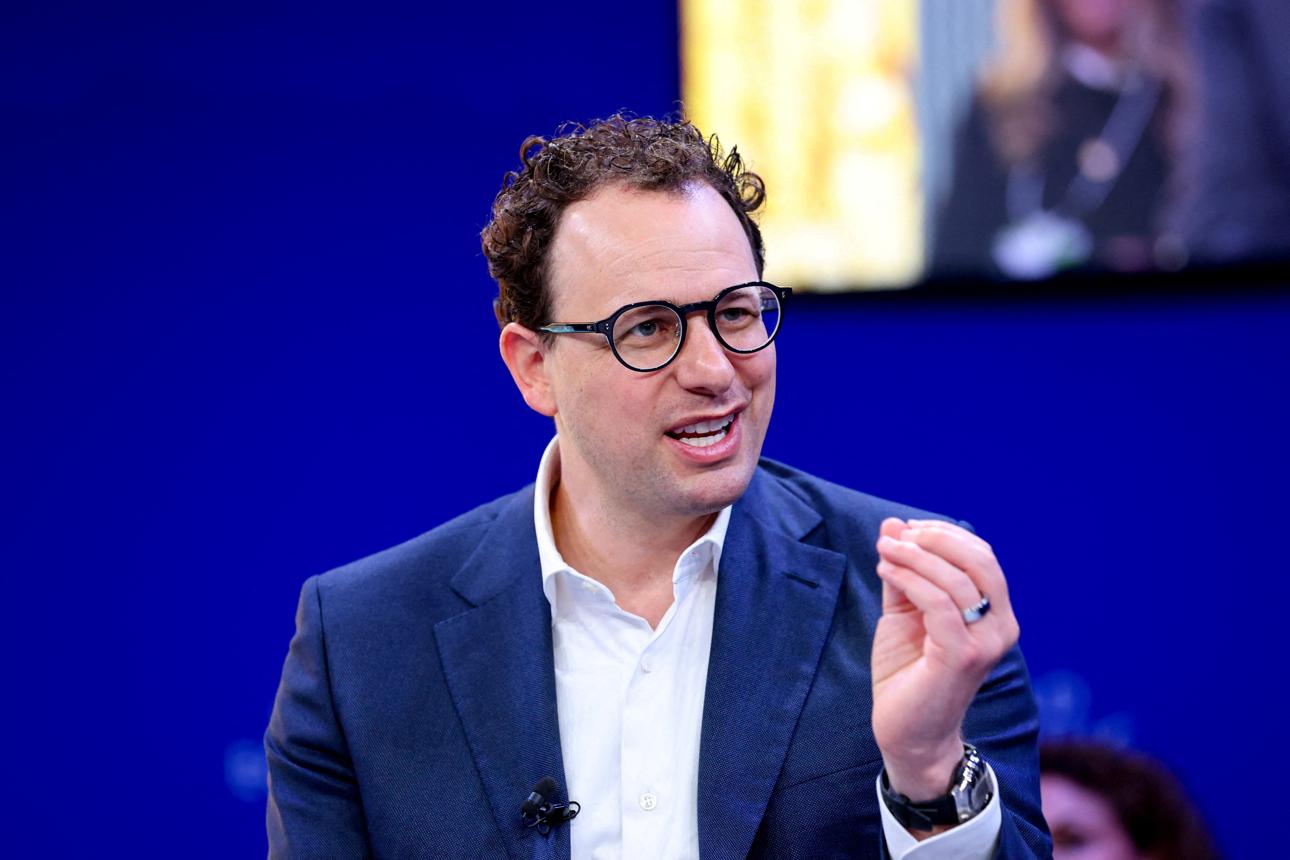
Dario Amodei, Chief Executive of Anthropic, has stated that, thanks to advances in artificial intelligence, cancer, Alzheimer’s disease, cardiovascular diseases and mental health disorders could cease to be a serious threat to humanity in less than ten years. He made this prediction in a presentation video for the company’s potential investors ahead of its stock market flotation. The statement was reported by NDTV on 11 November 2026. Amodei is convinced that AI will help scientists discover new treatments, develop medicines and investigate complex biological processes much more quickly. However, his words are a prediction, not a scientifically proven guarantee of a complete cure for the diseases listed.
- Dario Amodei, CEO of Anthropic, predicts a significant breakthrough in medicine in less than 10 years.
- These include cancer, Alzheimer’s disease, heart disease and mental health conditions.
- In his view, artificial intelligence will play a key role in accelerating medical discoveries.
- Anthropic is already collaborating with six organisations involved in drug development.
- Scientists and representatives of the pharmaceutical industry warn that clinical trials remain complex and time-consuming.
What exactly did the head of Anthropic say?
Towards the end of the approximately 41-minute presentation to investors Dario Amodei expressed his belief that the development of artificial intelligence could radically transform modern medicine.
«Cancer, Alzheimer’s disease, heart disease, mental health disorders — I think that in less than a decade, all of this will be a thing of the past», said the head of Anthropic.
In his view, if the technology is used correctly, humanity will be able to solve problems that medicine has been grappling with for centuries.
This is not the first time Amodeo has made such a prediction. In September 2026, he published an essay entitled «We Must Pace the Frontier», in which he suggested that over the next 5–10 years AI will help us find treatments for most serious illnesses.
At the same time, the company’s director acknowledges the risks posed by the rapid development of artificial intelligence and advocates for measures to ensure its safe use.
How artificial intelligence is already helping to develop medicines
Anthropic does not limit itself to predictions. On 27 October 2026, the company published the results of its first research projects using a language model Claude in the pharmaceutical sector.
The company has announced partnerships with six organisations, including Bristol Myers Squibb, BigHat Biosciences, Enveda and Generate Biomedicines.
In particular, Claude has been used to design antibodies, refine potential anti-tumour drugs and automate the preparation of documentation for clinical trials.
In a joint project with Divergence Labs, AI helped to generate around 35,000 antibody variants in a month. Following laboratory testing, the researchers identified promising molecules for further work on treatments for food allergies.
Another project with Generate Biomedicines focused on improving CAR-T therapy — a method of treating cancer using modified immune cells. The results obtained in the laboratory demonstrated the potential of the approach, but do not yet prove its effectiveness for patients.
Why do scientists have doubts about the 10-year forecast?
Despite the advances in artificial intelligence, representatives of the pharmaceutical industry remain cautious about the prospects of finding a quick cure for the most complex diseases.
According to The Wall Street Journal, as of early November 2026, no drug developed using AI had yet been approved by the US Food and Drug Administration (FDA) as a medicine developed entirely by artificial intelligence.
Experts explain that even the successful discovery of a new molecule does not mean that a finished medicine is available. Every medicine must undergo safety testing, clinical trials and regulatory assessment.
An additional complication is that cancer, cardiovascular diseases and mental health disorders encompass a wide range of conditions with varying causes and mechanisms of development. Consequently, there may be no single, universal approach to treating them.
As of 11 November 2026, Anthropic is in the early stages of implementing AI in pharmaceutical research. The company plans to expand its scientific partnerships; however, there is currently no evidence to suggest that the listed diseases can be overcome in less than ten years.