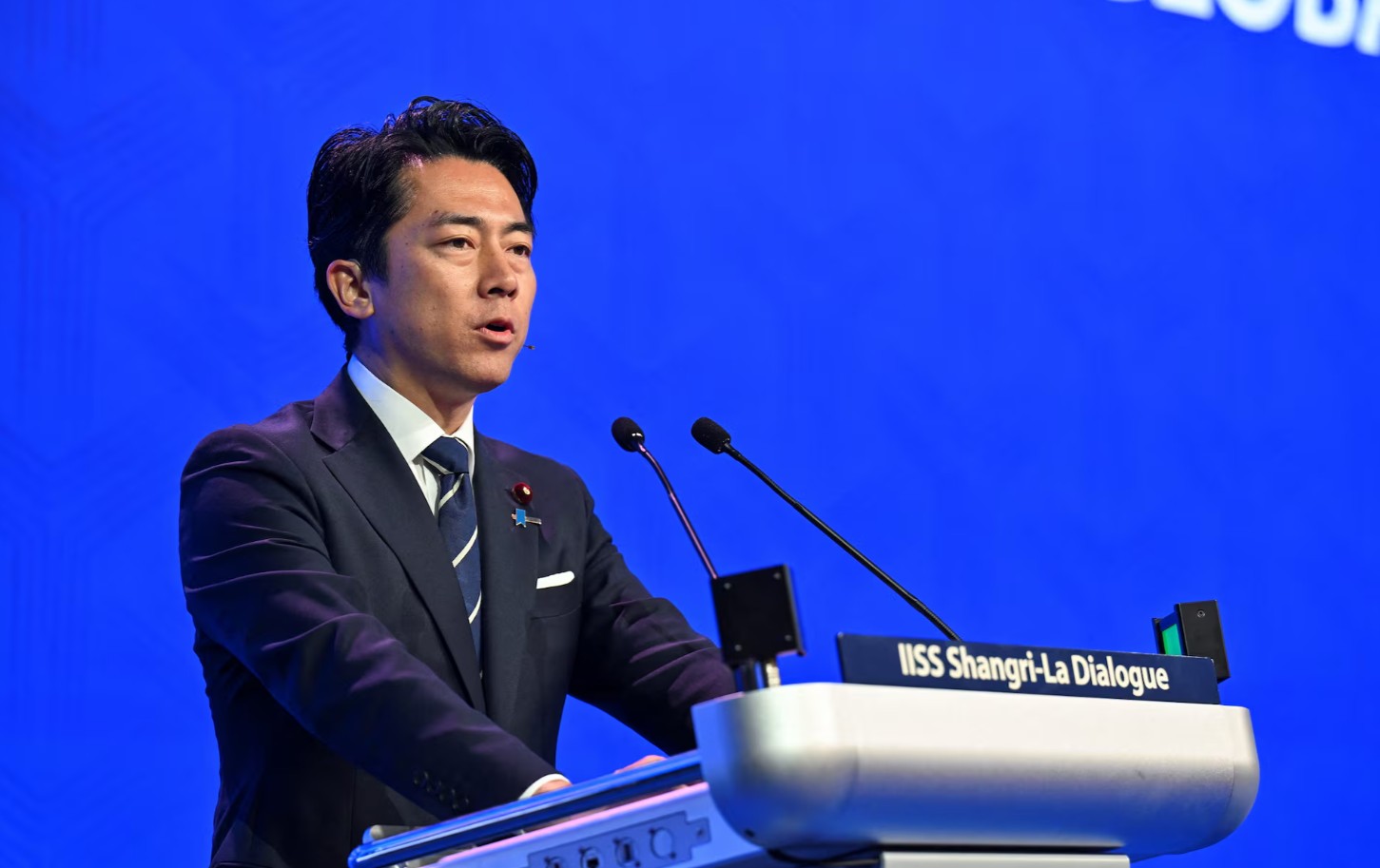
At the Singapore Security Summit, Japanese Defence Minister Shinzo Koizumi rejected accusations of Tokyo's new militarism. He stressed the rapid growth of China's military capabilities, which is a matter of serious concern to Japan and the international community. Koizumi reiterated Japan's readiness to engage in dialogue for the sake of stability in the region.
- Japanese Defence Minister Koizumi denied accusations of new militarism.
- Koizumi criticises China for its rapid and non-transparent military build-up.
- Japan has no nuclear weapons or strategic bombers.
- Japan remains open to dialogue to maintain regional stability.
Japan rejects accusations of new militarism
Minister of Defence of Japan Shinzo Koizumi rejected accusations that Tokyo is allegedly demonstrating a “new militarism”. He stressed that Japan does not have nuclear weapons or strategic bombers, while China possesses a large nuclear arsenal. Koizumi cited Japan's adherence to international law and its obligations under the UN Charter, which confirms its peaceful course since World War II.
Criticism of China's military buildup
Koizumi stressed that China continues to increase its military spending at a high level and acts with low transparency. He pointed out that such actions are of serious concern not only to Japan but also to the international community. At the Singapore summit, Chinese delegate Gen. Meng Xianqing also expressed criticism of Japan, doubting its ability to gain trust in the region due to its historical legacy of militarism.
Worsening of relations between Japan and China
Relations between the two countries deteriorated significantly after the statements of the Japanese Prime Minister Sanei Takaychi last November about a possible military response from Japan in the event of an attack China's attacks on Taiwan. China considers Taiwan to be its territory, which causes tension in the region. Koizumi expressed regret that he was unable to meet with his Chinese counterpart at the forum, but confirmed that Japan remains open to dialogue.
Japan's position on regional stability
Despite the criticism, Japan reaffirmed its commitment to maintaining a “free and open international order” and its willingness to negotiate with China and other regional players. Koizumi stressed that dialogue remains a key tool for ensuring security in the Asia-Pacific region. This position reflects Japan's attempts to balance its defence policy and diplomatic efforts in the context of growing military tensions.