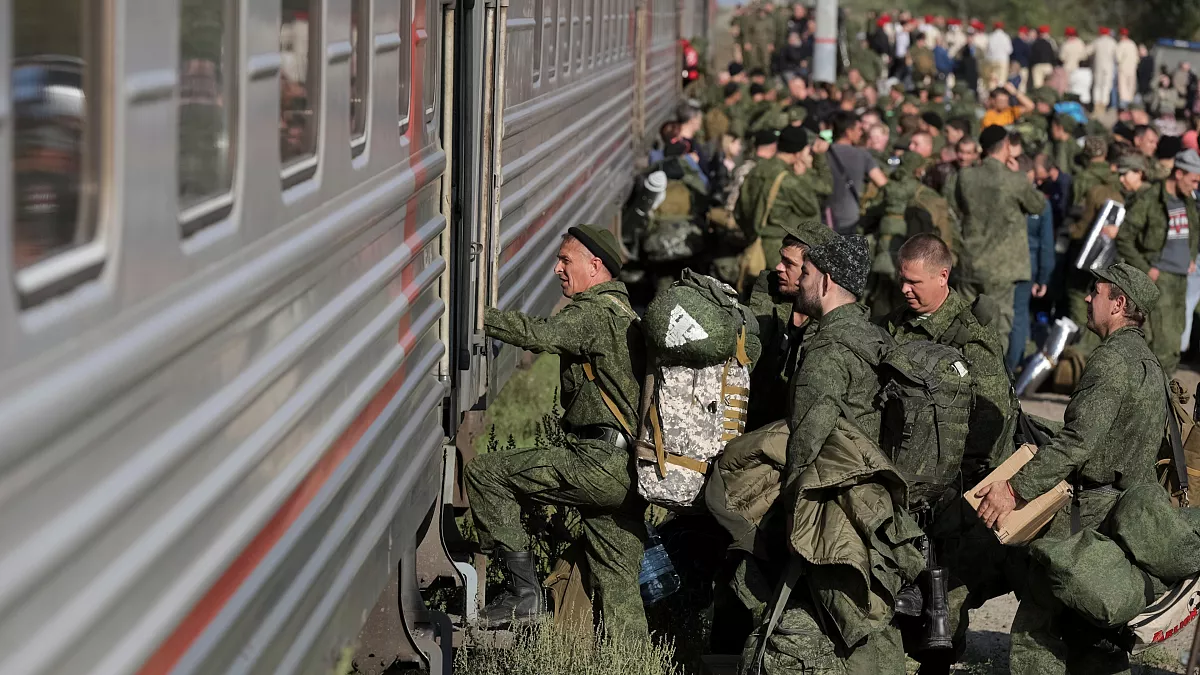
Despite the lack of official statements, Russia is systematically preparing for a mobilisation in the autumn of 2026. Analysts claim that this is a response to the heavy losses of personnel on the front line, as well as a new means of countering the ban on citizens leaving the country.
Briefly about the main points
- The Kremlin officially denies that a mobilisation is taking place, but the evidence suggests otherwise.
- New degree programmes at universities are incorporating military skills.
- Mobilisation plans in the occupied territories of Ukraine are continuing.
- No official announcement has been made regarding the closure of the borders, but the legal framework for this is already in place.
- Mobilisation will not change the strategic situation on the front line; it will merely replenish the ranks.
Kremlin disinformation and reality
Russian officials, such as, for example, Dmitry Peskov, insist that there will be no mobilisation. However, according to the Centre for Countering Disinformation at the National Security and Defence Council of Ukraine, the Russian authorities are already actively preparing for a new wave of conscription.
Education and militarisation: a new strategy
From 1 September 2026, Russian universities will introduce compulsory courses on the operation of unmanned systems, focusing more than 250,000 students on the study of military technologies. This demonstrates the Kremlin’s intention to adequately train personnel for the army.
Occupied territories: a focus of mobilisation efforts
Russia’s plans to mobilise nearly 11,600 men in the occupied territories of Ukraine extend its mobilisation efforts beyond the borders of the Russian Federation. Ukrainian government officials are warning citizens to avoid these territories due to the risk of being forcibly conscripted.
The legal basis for closing the borders
Although no ban on leaving the country has been imposed, Russian legislation effectively helps to restrict freedom of movement through the issuing of electronic summonses. This allows Russia to quickly close the “window of opportunity” for potential conscripts when necessary.
The effectiveness of mobilisation is in doubt
Even if carrying out mobilisation In the autumn, analysts believe that it will not alter the strategic balance on the battlefield. It is primarily a compensatory measure in response to personnel losses that cannot be made up through voluntary recruitment alone.