Venezuela is experiencing one of the most devastating natural disasters in the country’s history. Following two powerful earthquakes on 25 June, the death toll has risen to nearly 1,500, whilst thousands of people remain missing.
- Almost 1,500 people have died as a result of the earthquakes in Venezuela.
- More than 3,100 people were injured, and 12,721 were left homeless.
- Rescue workers are continuing the search for the missing; dozens of people have already been rescued.
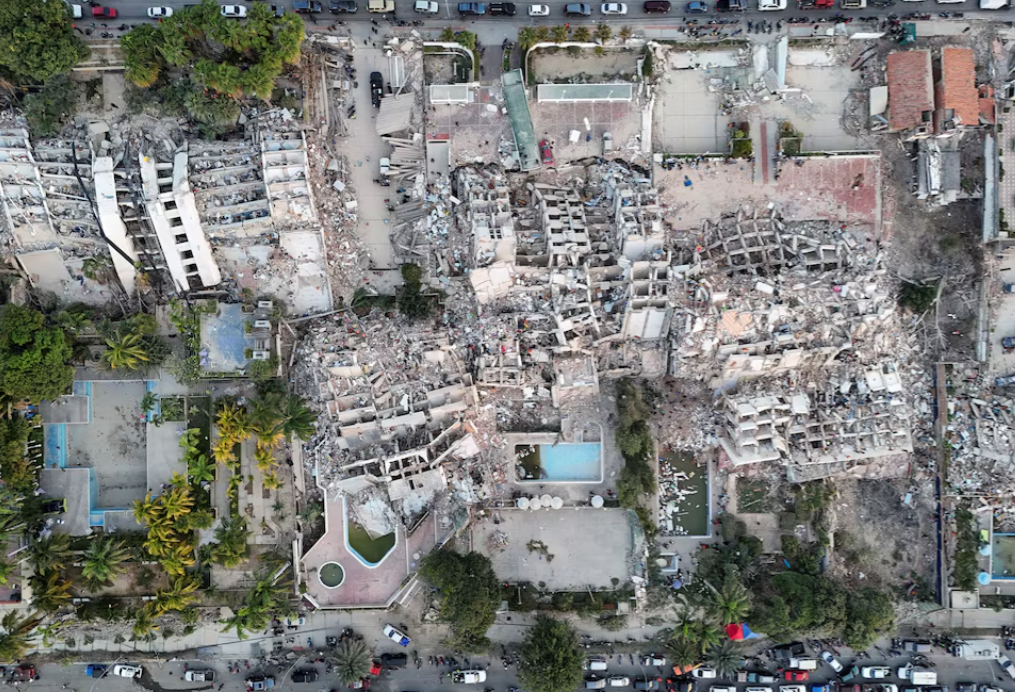
- In La Guaira state, 774 buildings have been destroyed; the situation remains critical.
- The humanitarian situation in the country is deteriorating, and schooling has been suspended.
A large-scale rescue operation is underway
A large-scale rescue operation is underway in Venezuela following two powerful earthquakes, which occurred on 25 June. According to the latest official figures, the death toll has risen to almost 1,500, whilst tens of thousands of people are still missing. Rescue workers from various countries continue to find survivors, despite hundreds of aftershocks.
The state of La Guaira, located approximately 40 kilometres from Caracas, suffered the most damage. Here, dozens of high-rise buildings were reduced to rubble following two powerful earthquakes measuring 7.2 and 7.5 on the Richter scale. According to the acting president Delcy Rodriguez, rescue operations are continuing, as people are still being found alive under the rubble.
The scale of the tragedy
According to official information, almost 1,500 people were killed, 3,150 people were injured, 12,721 were forced to leave their homes, and 774 buildings were completely destroyed. Meanwhile, opposition sources report that nearly 50,000 people are still missing.
Over the weekend, international rescue teams managed to save dozens of people. Among those pulled out alive were a baby rescued by American rescue workers and an 11-year-old boy found by a Colombian team using a special scanner. Another 11-year-old boy was freed by Mexican rescue workers. Swiss experts note that after the first 72 hours, the chances of finding survivors under the rubble decrease rapidly, but search operations are continuing.
Consequences for the country
Due to the natural disaster in Venezuela, schools have been closed for a further week, whilst electricity supply in La Guaira state has been restored to approximately 75%. In addition, the country’s largest oil refinery, Amuay, which has a capacity of 645 thousand barrels of oil per day, has halted operations due to a widespread power cut. The earthquakes in Venezuela have already become one of the most devastating natural disasters in Latin America in recent decades. The US Geological Survey (USGS) had previously warned that the death toll could exceed 10,000. International rescue teams are continuing to work in the worst-affected areas, whilst the humanitarian situation remains extremely difficult.