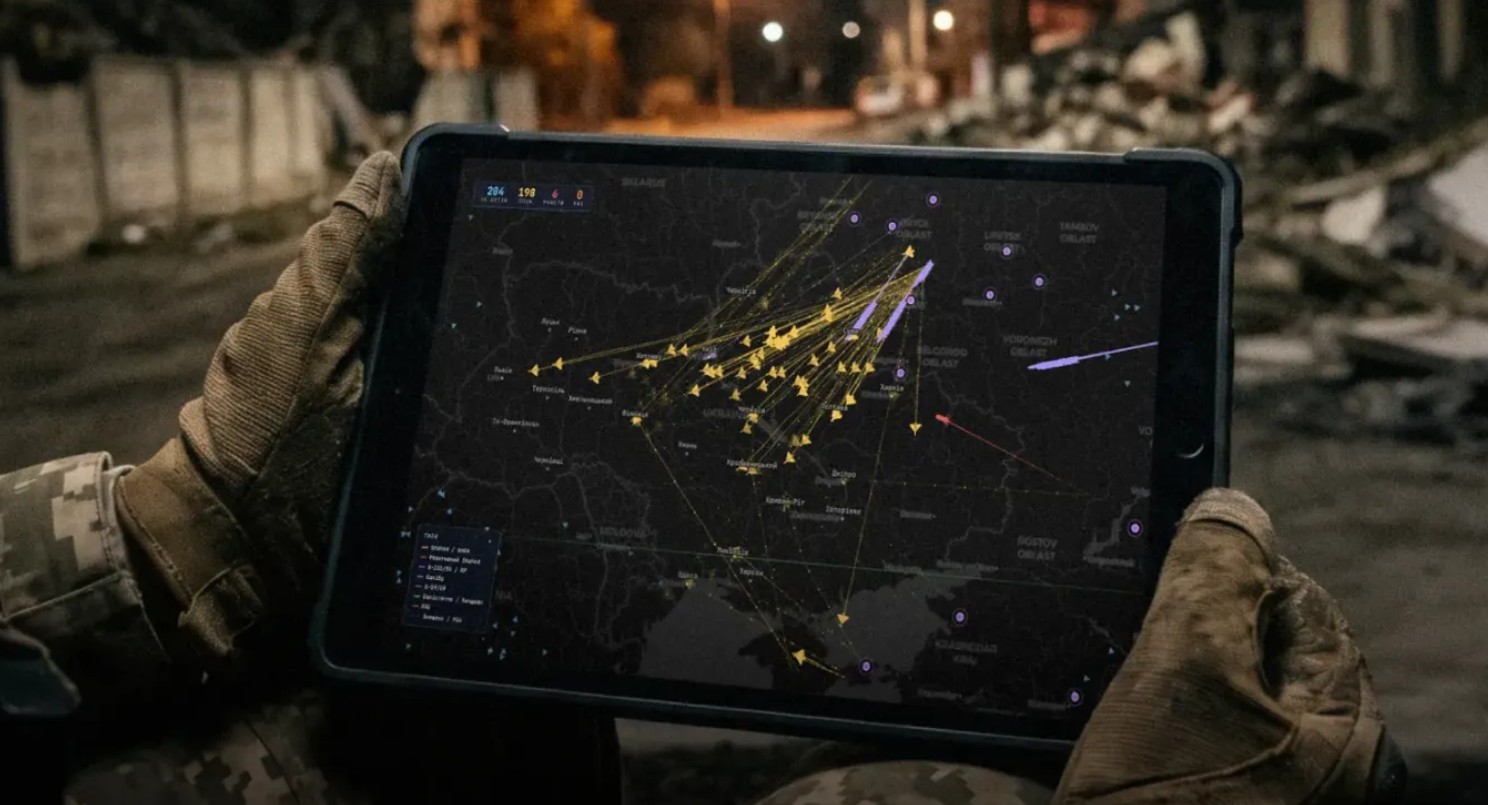
The massive Shahed attacks forced Ukraine to actually rebuild the logic of modern air defence. New solutions are already being adopted by NATO and EU countries.
Ukraine's combat experience shapes new air defence architecture
The massive attacks by Shahed/Geran kamikaze drones forced Ukraine not only to adapt its air defence system, but to actually create a new logic for detecting and responding to air threats. The Ministry of Defence of Ukraine explains that in modern warfare, updating sensors and detection networks has become as critical as increasing the number of missiles or anti-aircraft systems.
Ukraine's combat experience is already influencing NATO and EU approaches to modernisation of air defence systems. The key conclusion that Western analysts are increasingly voicing is that a modern air defence system is primarily a matter of detection architecture, data transmission speed and response flexibility.
Why old radars can't detect modern drones
For decades, most radars were designed for the Cold War. Their main task was to detect large strategic bombers, cruise and ballistic missiles flying at high altitudes and along predictable routes.
But modern Shahed drones work according to a completely different logic. They fly at an altitude of only 20-50 metres, bend around terrain, use buildings and natural obstacles, and have low speed. This is what creates a serious problem for classical radars.
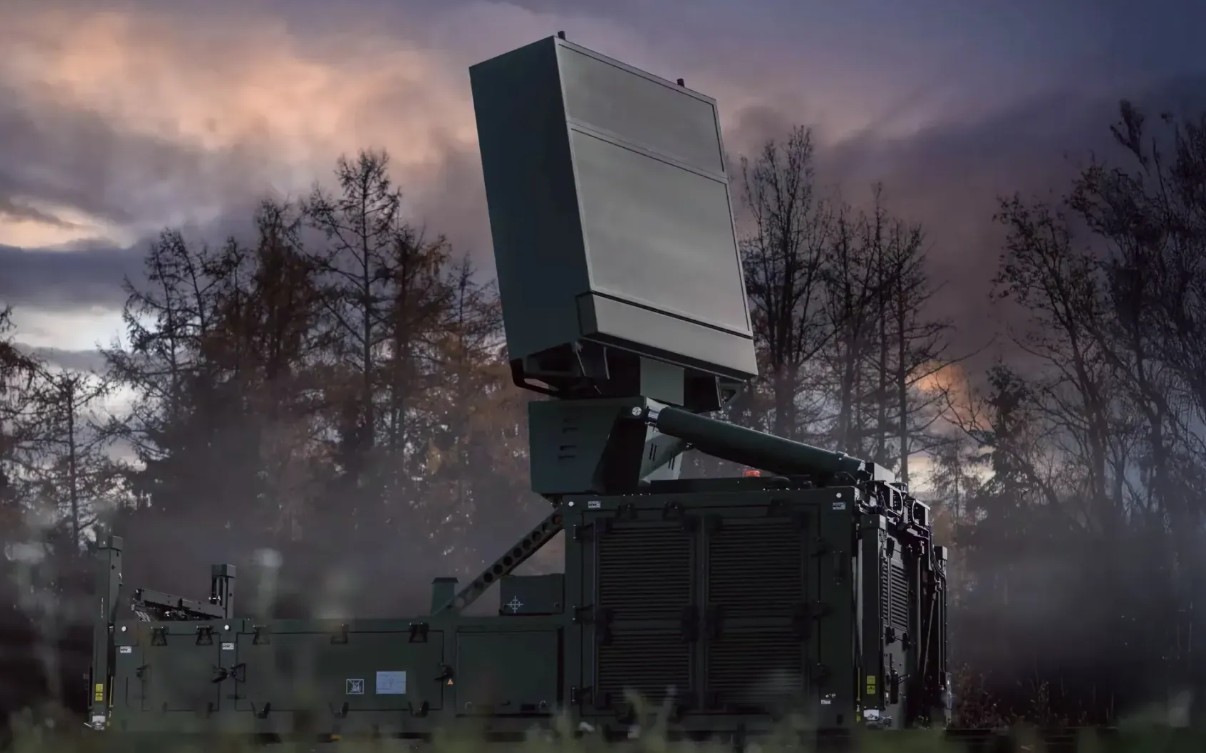
The main reason is the physics of radar. A radar station «sees» only in a straight line. Any hill, forest, or urban development between the station and the drone forms the so-called radio horizon, beyond which the target becomes invisible.
The second factor is the low speed of drones. Most traditional radars use the Doppler effect to separate an aerial target from background noise. A slow drone produces a minimal Doppler shift, so the system can perceive it as an obstacle such as trees, cars, or air traffic.
The third problem is the speed of data updates. Rotating mechanical radars update information about a particular sector only once every few seconds. During this time, a swarm of drones can change altitude, direction, or reorganise. As a result, the operator receives an outdated picture of the air situation.
«Crisis of old eyes»: the main problem of modern air defence
Defence analysts increasingly refer to this situation as the «old-eye crisis». It's not about the lack of missiles or the weakness of individual anti-aircraft systems. The problem lies in the very logic of building a sensor system that remains in the paradigm of the last century.
Even the most advanced anti-aircraft system is unable to hit a target that it cannot physically see. The system's own radar provides accurate missile guidance, but cannot detect an object beyond the radio horizon.
That is why New logic of air defence requires the creation of a dense network of distributed sensors. Their task is to provide constant situational awareness and transmit data about the threat before it enters the direct detection sector of the anti-aircraft system.
Ifri's February 2026 analytical report, based on field research in Ukraine and NATO countries, clearly indicates that in today's high-intensity warfare, software integration and information management are becoming key factors in combat effectiveness.
How Ukraine created a new threat detection system
Ukraine was forced to develop a new air defence architecture during the war. Its main principle is the transition from a centralised model of «see far - react centrally» to a decentralised system of «see everywhere - react locally».
Acoustic networks instead of classic radars
One of the most important solutions was the creation of large-scale acoustic drone detection networks.
Ukrainian engineers have deployed the system Sky Fortress, which already has more than 20 thousand nodes across the country. It uses acoustic sensors connected via a mobile network.
In parallel, the Zvook system operates according to a different logic, focusing on key entry routes for air threats along the border.
Both systems use machine learning algorithms to recognise the sound signature of drone engines and propellers. Even after the enemy attempted to change the acoustic profile of Shahed, the systems remained effective by retraining the models with new data.
Two-level digital control system
Ukraine has also created a two-tier digital air defence management architecture.
The first layer provides general situational awareness. It combines large military long-range radars and acoustic networks to create a broad picture of the air situation.
The second level is Sky Map tactical system, integrated with mobile fire teams and interceptor drones. It works in real time and transmits the target's coordinates directly to the operators' tablets.
In fact, the cycle from drone detection to opening fire has been reduced to a few minutes. At the same time, decisions are made locally, without the need for long chain of command.
AFAR radars as a new standard of warfare
Another key element of the upgrade was the transition to radars with active phased array radars (APAR).
Unlike classical mechanical radars, airborne surveillance allows for electronic beam control and much faster airspace scanning.
The systems already in use in Ukraine include TRML-4D, GM-200 and RPS-42/82/202. They are capable of simultaneously tracking dozens of targets and updating airborne information much faster.
Particular attention was drawn to the TRML-4D radar manufactured by Hensoldt, which has undergone combat testing in the context of real massive attacks in Ukraine.
NATO and the EU are beginning to adopt Ukraine's experience
Ukraine's combat experience has already begun to influence Western defence programmes.
Lithuania has signed a contract to integrate the Sky Fortress system into its air defence architecture. French company Thales and Polish Advanced Protection Systems are developing their own acoustic solutions.
The EU is also exploring the possibility of creating an acoustic sensor layer to protect NATO's eastern flank.
The European Sky Shield Initiative (ESSI) programme, which includes 24 countries, is expanding separately. Orders for modern TRML-4D airborne surveillance radars are increasing within its framework.
However, analysts point out that despite these changes, most allies are still focusing mainly on procuring fire systems - Patriot, IRIS-T SLM, NASAMS or SAMP-T - while the dense, low-altitude sensor layer has not yet become a top priority.
Ukraine is shaping the air defence of the next decade
The Ukrainian experience is gradually changing the very idea of modern air defence.
Today, the effectiveness of air defence is determined not only by the number of missiles or the range of destruction, but also by the system's ability to quickly detect a threat, transmit data in real time and respond under massive load.
Acoustic networks, digital command and control systems, decentralised mobile teams and new AFAR radars have already become elements of the architecture of future warfare.
No other country in the world has ever undergone such a large-scale combat test of air defence systems under continuous drone and missile attacks. That is why Ukraine's experience is increasingly seen by its allies as the basis for a new model of air defence in the next decade.