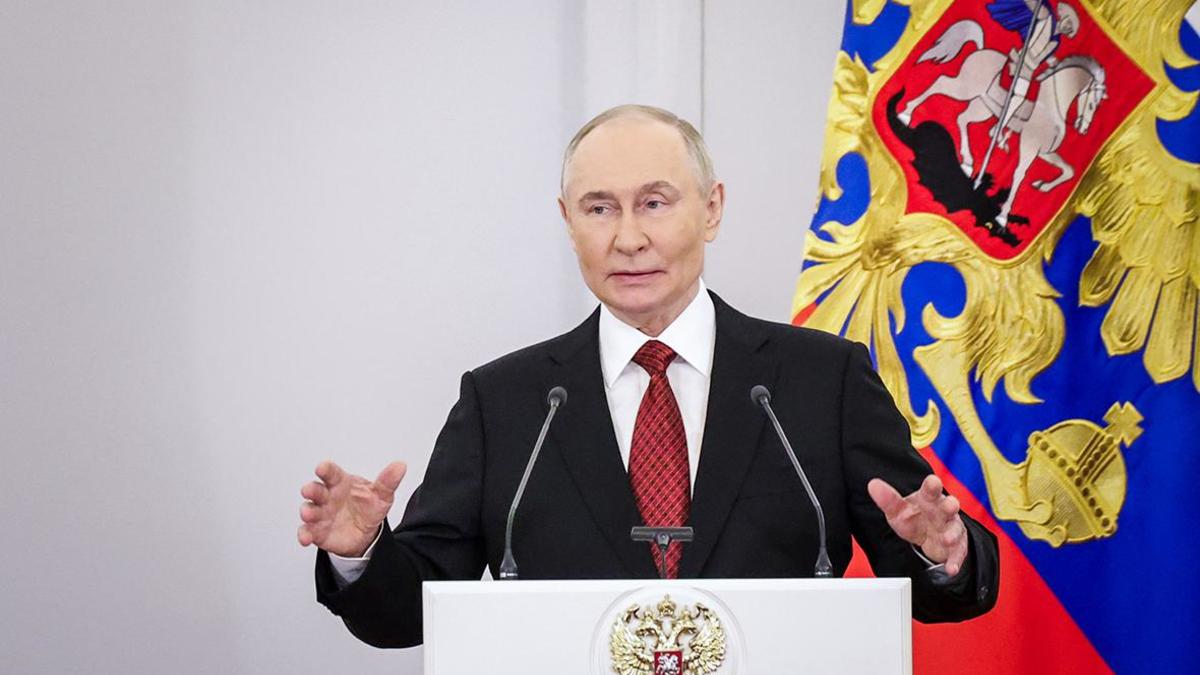
Russian President Vladimir Putin has openly threatened Armenia with war for its attempts to move closer to the European Union. He admitted that the aggression against Ukraine was a response to its European integration course.
Putin's threats against Armenia
President of Russia Vladimir Putin declared that Armenia's European integration course without Moscow's approval was unacceptable to the Kremlin. He demanded a referendum on this issue and threatened to repeat the «Ukrainian scenario». In his speech, Putin acknowledged that invasion of Ukraine was caused by Kyiv's aspirations to join the EU.
According to him, everything that is happening on the Ukrainian direction began with Ukraine's course towards the EU, which, according to the Russian leader, led to the events of 2014, the annexation of Crimea and the war in eastern Ukraine.
Kremlin's demands to Yerevan
Putin noted that the Kremlin considers it unacceptable Armenia's movement towards the EU without Moscow's approval. He is demanding a referendum on the country's foreign policy course. Such statements increase pressure on official Yerevan and may affect political stability in the region.
Putin's rhetoric is indicative of the Kremlin's attempts to maintain control over post-Soviet countries. Such demands on Armenia are reminiscent of Russia's actions towards Ukraine on the eve of the 2014 war.
Parallels with Ukraine
In his speech, Putin directly compared the situation in Armenia to the events in Ukraine. He emphasised that Kyiv's attempt to join the EU caused further turmoil, including a «coup d'état», the annexation of Crimea and the fighting in Donbas. Thus, Russia is openly demonstrating its readiness to use force in response to its neighbours' European integration aspirations.
Such statements could be a signal to other countries in the region that are considering rapprochement with the European Union. The Kremlin's open threats pose additional security risks in the Caucasus and the entire post-Soviet space.
Why it matters
Putin's threats against Armenia have far-reaching implications for regional security. Open blackmail and references to the «Ukrainian scenario» could provoke a political crisis in Yerevan and influence the government's decision on its European course.
The Russian leader's statements also confirm that the aggression against Ukraine was a deliberate reaction to the EU aspirations, and not just on NATO or security issues. This is an important signal to the international community about the real motives of Russian policy.
The development of the situation around Armenia may become a new challenge for European security and a test for the EU's solidarity with countries seeking European integration.