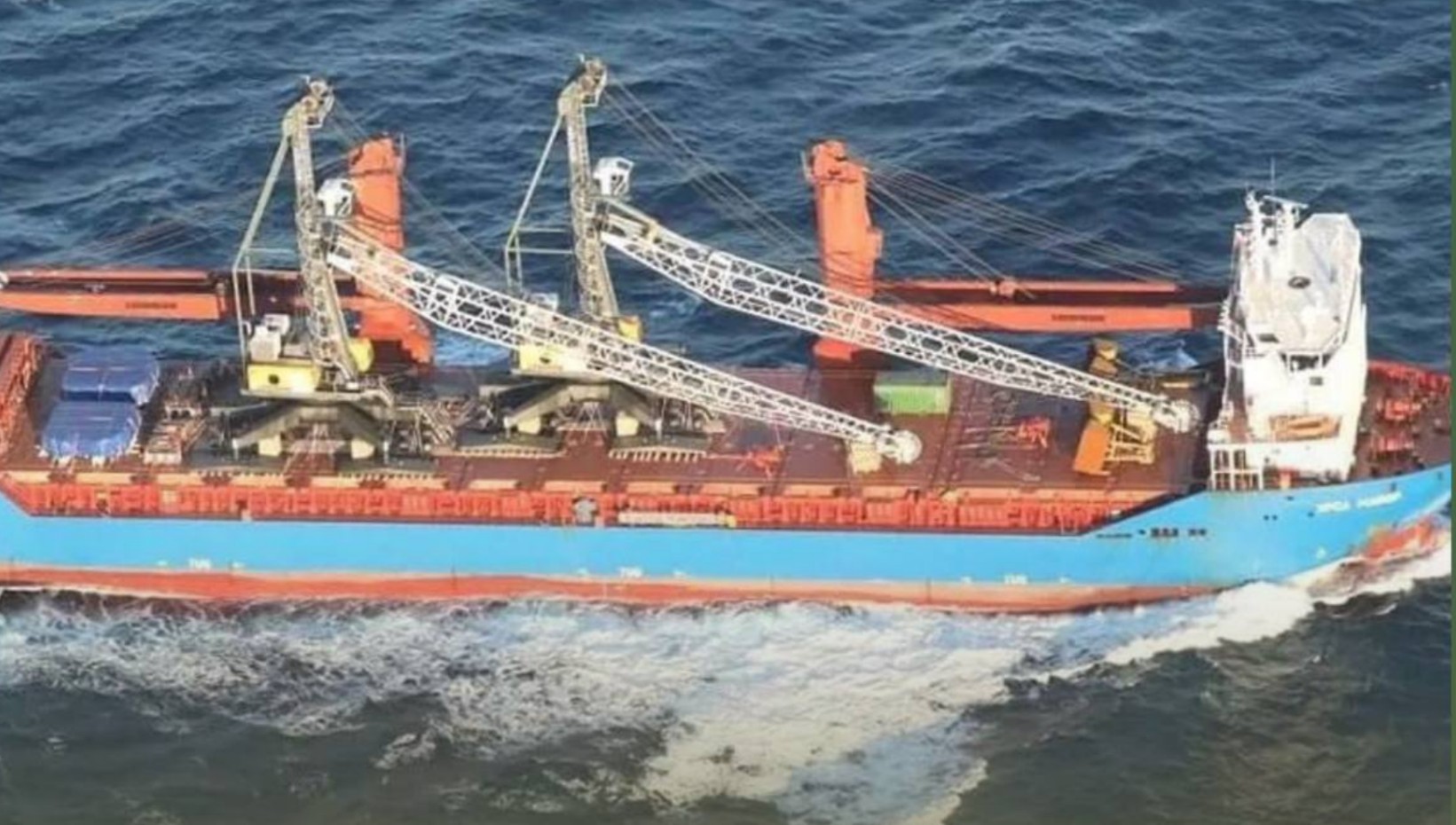
The Russian cargo ship Ursa Major, which sank off the coast of Spain in December 2024, could have been carrying two nuclear reactors for submarines. According to CNN, the route's destination was likely Vladivostok, with North Korea as the final recipient.
Details of the CNN investigation
Investigation CNN sheds light on the circumstances surrounding the sinking of the Russian vessel Ursa Major on 23 December 2024. By. information sources, the ship was carrying components for two nuclear reactors similar to those used on submarines. This was confirmed by the Russian captain during interrogation by Spanish investigators, although he initially avoided answering directly for fear of his own safety.
CNN reports that since the incident, the story of the Ursa Major has remained shrouded in mystery. However, the sequence of events and the involvement of the Western military may indicate an attempt to prevent Russia from transferring the latest nuclear technology to its ally, North Korea.
Strange sequence of events and military intervention
The ship set sail two months after Kim Jong-un sent DPRK troops to support Russia in the war against Ukraine. «The Ursa Major arrived in Ust-Luga, then in St Petersburg, and after loading, it set sail for the Far East. It was carrying two large manhole covers, 129 empty containers and two Liebherr cranes. Video footage of the loading, analysed by CNN, showed that space was left in the hold for these »hatch covers« - the alleged reactor components.
After passing the French and Portuguese coasts, the ship was escorted by the Russian warships Ivan Gren and Alexander Otrakovsky. The Portuguese Navy followed it until 22 December, after which the Ursa Major slowed down sharply in Spanish waters. A day later, there was a sharp course deviation, several explosions, the death of two crew members and the evacuation of the remaining 14 Russians.
During this period, American nuclear detection aircraft flew over the crash site twice, and a week later, a Russian spy ship inspected the wreckage. Subsequently, four more explosions were recorded, coinciding with the appearance of a Russian warship and the launch of flares. Spain's seismic network confirmed the characteristic underwater explosions.
Government response and security implications
The Spanish government has hardly commented on the situation, limiting itself to a brief statement under pressure from the opposition. All that is known is that the captain admitted the presence of nuclear reactor components, but assured that they were not carrying nuclear fuel. At the same time, the exact cause of the sinking remains unclear - the Spanish investigation does not rule out the use of a rare torpedo to pierce the hull.
The investigation points to a possible precedent for the intervention of Western military forces to prevent Russia from transferring sensitive technologies to the DPRK. In addition, the incident highlights the depth of cooperation between Moscow and Pyongyang amid the war in Ukraine and the international isolation of both regimes.
Why it matters
This story reveals a new level of threats to global security. If CNN's speculation is confirmed, this would be the first documented case of Russia attempting to transfer nuclear technology North Korea by sea. Such actions could lead to a further increase in tensions between Russia, the West and Asian countries, as well as create new risks for the nuclear non-proliferation regime.