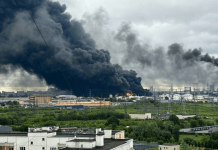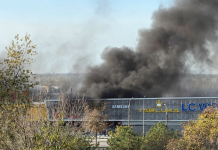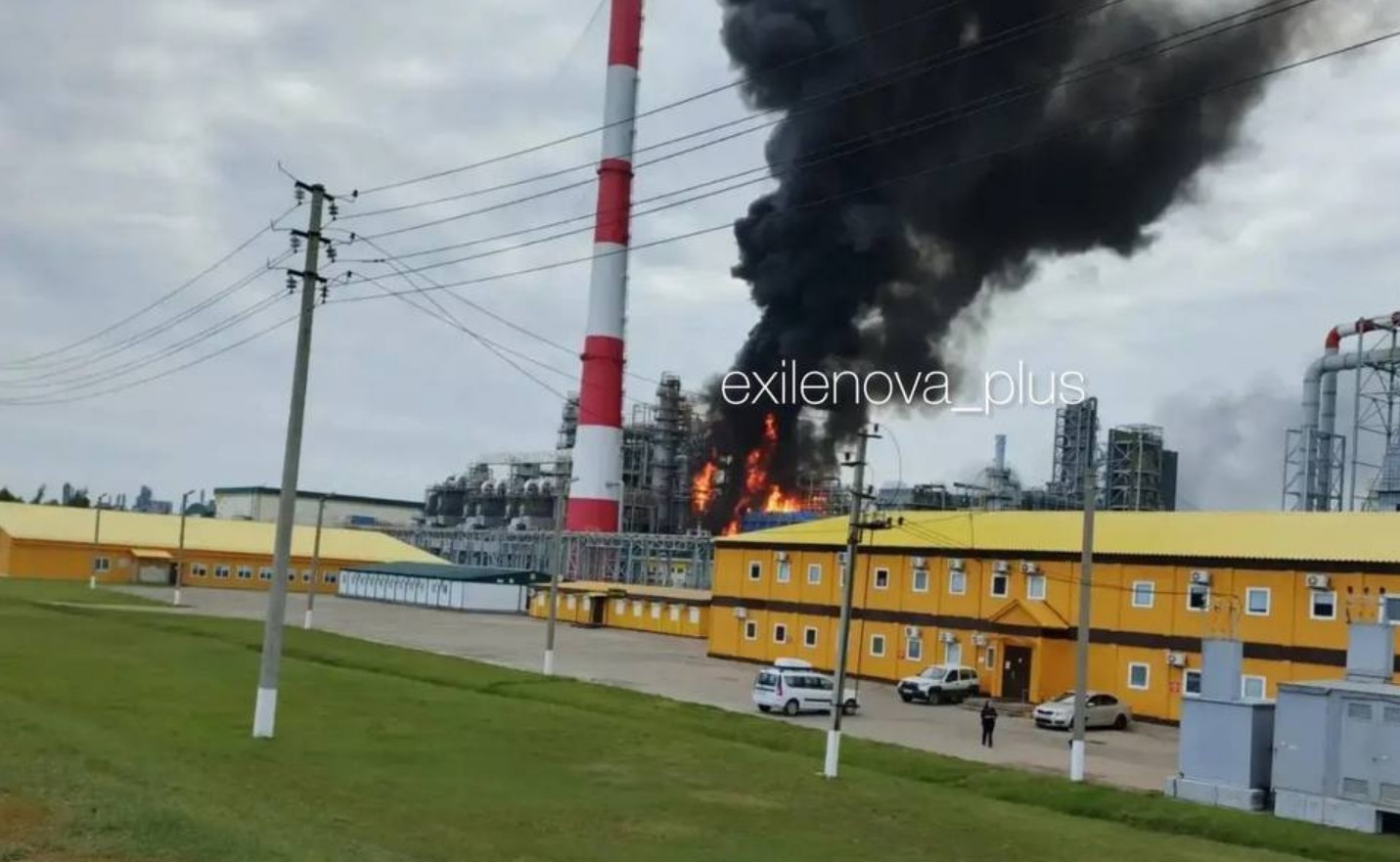
Ukrainian drones have dealt a heavy blow to the Nizhnekamskneftekhim plant in Tatarstan, a key facility within Russia’s military-industrial complex. The attack caused a massive fire on the plant’s premises, highlighting the vulnerability of the aggressor’s rear. This operation disrupts the supply chains for critical materials for the Russian army.
- Ukrainian drones struck the Nizhnekamskneftekhim plant in Nizhnekamsk.
- A major fire broke out at the factory, producing thick black smoke.
- The factory supplies critical materials to the Russian army.
- The strike is undermining the Russian Federation’s production capacity and logistics for military equipment.
Drone attack on a strategic facility in Tatarstan
Ukrainian drones have struck the Nizhnekamskneftekhim plant in the city of Nizhnekamsk, in the Republic of Tatarstan. Photos released show a massive fire with thick black smoke and open flames on the factory premises. This incident highlights the Ukrainian forces“ ability to achieve strategic objectives more than a thousand kilometres from the front line.
The role of Nizhnekamskneftekhim in the Russian military-industrial complex
The plant is a key supplier synthetic rubber, which is essential for the production of automotive and aviation tyres used in military vehicles – from lorries and armoured personnel carriers to fighter aircraft. In addition, the plant produces special lubricants and polymers for military electronics and protective equipment, making it critical to the supply of the occupying army.
The ineffectiveness of Russian air defence and electronic warfare
Despite claims by local authorities that the attack was «successfully repelled» using electronic warfare (EW) capabilities, the facts suggest otherwise. Electronic warfare likely affected the plant’s infrastructure, leading to a large-scale fire. This incident demonstrates the weakness of Russian air defences against modern unmanned aerial systems.
Impact on military logistics and the Russian Federation’s capabilities
The attack on the petrochemical plant deals a serious blow to production and logistical support of the Russian army. The loss or damage of such a facility reduces the capacity for rapid repairs and the maintenance of military equipment, which could have long-term consequences for the aggressor’s combat capability.
A new level of threat to the aggressor’s rear
This operation demonstrates a shift in the nature of hostilities, with Ukrainian forces now capable of striking critical targets far from the front line. Such attacks not only inflict material damage but also undermine the enemy’s morale and logistical stability, which is of key importance in a protracted war.