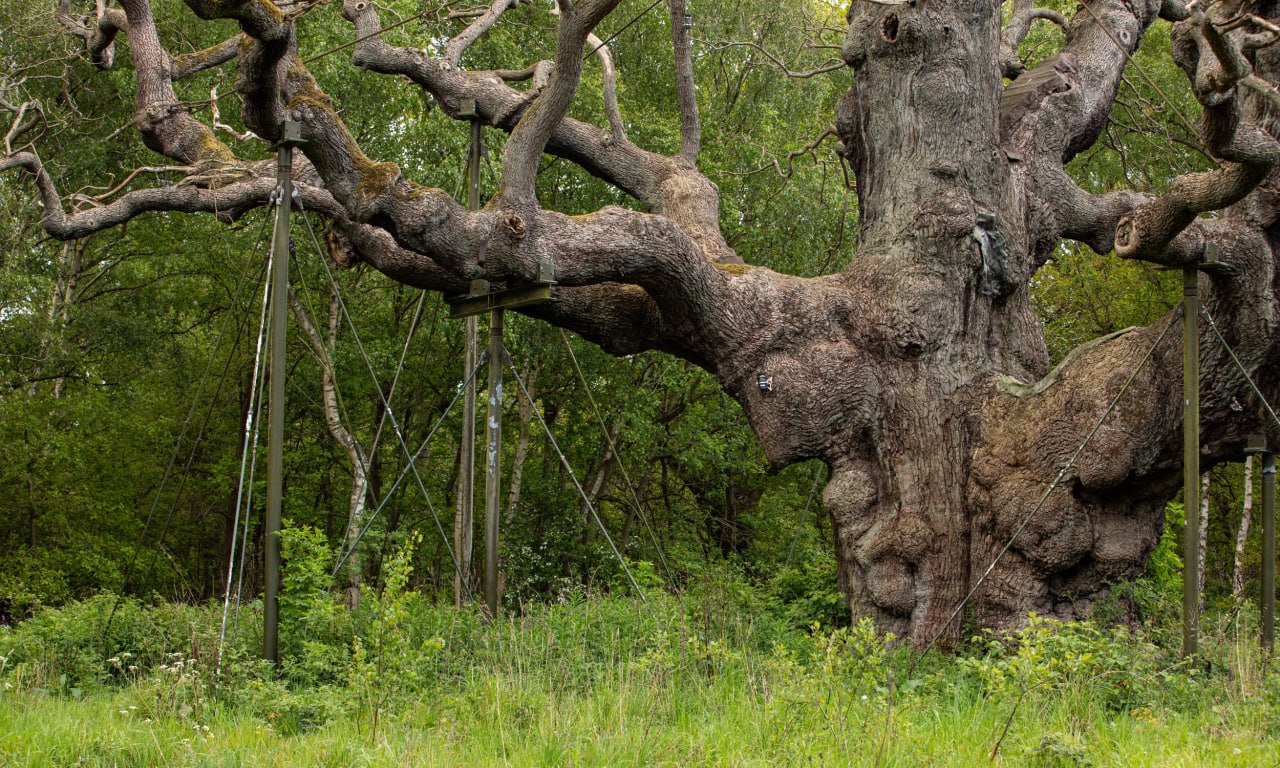
The 1,200-year-old oak, known as Robin Hood’s Great Oak, has failed to put out leaves for the first time in its thousand-year history and has effectively died. Extreme droughts and pressure from tourists have prevented the roots from obtaining oxygen and water. The oak will be left standing, transformed into a habitat for hundreds of species of birds and insects.
- Robin Hood’s 1,200-year-old oak tree in Sherwood Forest has lost all its leaves.
- Global climate change and droughts were the main causes of death.
- The flow of tourists has compacted the soil and damaged the tree’s roots.
- The oak trees will remain standing as a vertical ecosystem for birds and insects.
- People come to the forest to pay their respects to the legendary tree.
The Story of Robin Hood’s Great Oak
Large the oak tree in Sherwood Forest, which is over 1,200 years old, has become a symbol of English folklore. According to legend, it was in the spacious hollow of this enormous tree that a robber used to hide Robin Hood along with its entourage. The oak has outlived dozens of kings, wars and changing eras, becoming not merely a botanical landmark but a national symbol.
Causes of tree death
This spring, for the first time in its history, the oak tree did not produce a single green leaf, which signifies its de facto biological death. The main causes were irreversible global climate change, in particular the extreme droughts of recent years, which have proved too much of a challenge even for such a long-lived species.
In addition to natural factors, human activity also played a significant role. Millions of tourists visiting Sherwood Forest compacted the soil around the oak, preventing its roots from receiving a normal supply of oxygen and water. Special metal supports had been propping up the tree’s crown for years, but were unable to prevent its death.
Life after death and its ecological role
Conservationists have decided not to remove the tree after it died. The large oak will be transformed into a vertical ecosystem, providing a home for hundreds of species of birds, rare insects, mosses and fungi. In this way, the tree will continue to support life in the forest even after its biological death.
Cultural and tourist significance
Sherwood Forest remains a place of pilgrimage for people from all over the world. Visitors stage symbolic funerals for the oak, arriving in medieval costume with bows and arrows to honour the memory of the legendary tree. The atmosphere around the oak is filled with a sense of gentle melancholy, and the Great Oak itself will live on forever in legends, books and the collective memory.