Kyiv, 7 July (Ukrmedia) — The Economist Intelligence Unit (EIU) has published its annual Global Liveability Index for 2026. This year’s ranking has revealed tectonic shifts on the global map of attractiveness for expats: the established European leaders are consolidating their positions, China is making rapid strides in healthcare, whilst the Middle East is experiencing an unprecedented decline due to security crises.
The ranking assesses 173 of the world’s major cities across five key categories: healthcare, culture and the environment, education, infrastructure and stability. The main aim of the index is to help HR departments in multinational corporations calculate remuneration for overseas staff working in challenging conditions.
Europe’s triumph and the trap of «megacities»
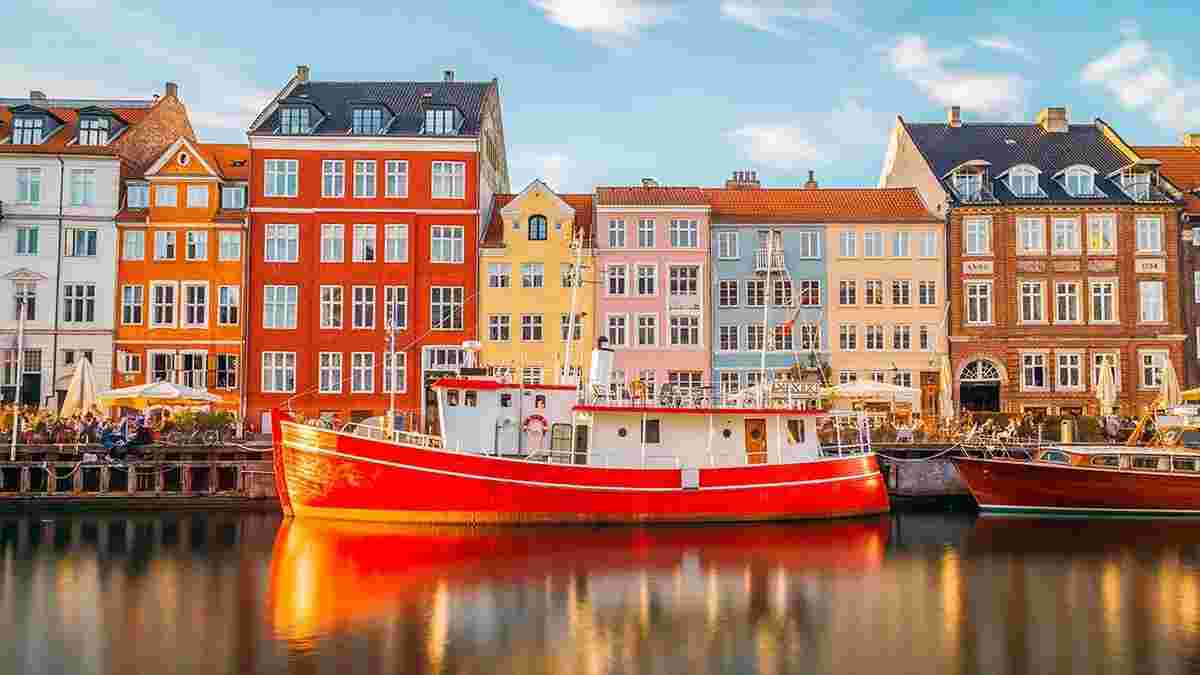
For the second year running, the global leader in quality of life is Copenhagen. The Danish capital has struck a perfect balance between a high level of social stability, well-developed infrastructure and environmental sustainability. Vienna and Melbourne are hot on its heels.
It is interesting to note that large metropolises are traditionally «penalised» by the index’s criteria. Due to chronic traffic congestion, high crime rates and overcrowding, these global giants find themselves outside the top ranks. Tokyo (10th place) was the only megacity in the top ten, whilst Vancouver (9th place) was the only city from the whole of North America to make it into the top ten.
The top 10 most liveable cities in the world in 2026:
-
🇩🇰 Copenhagen (Denmark)
-
🇦🇹 Vienna (Austria)
-
🇦🇺 Melbourne (Australia)
-
(Places 4 to 8 — European and Australian cities with high scores)
-
🇨🇦 Vancouver (Canada)
-
🇯🇵 Tokyo (Japan)
The Middle East: from a paradise for expats to a high-risk area
The biggest disappointment of the year was the Persian Gulf region. Until recently, cities such as Dubai offered foreigners everything: from luxurious, air-conditioned shopping and entertainment centres and excellent schools to zero taxes and absolute safety. However, the outbreak of the war involving Iran and the sharp deterioration in the security situation instantly negated these advantages.
No other region in the world has suffered such a devastating blow to its quality of life as the Middle East. Due to a series of air strikes and geopolitical instability, cities are rapidly losing ground. The situation is worst in Damascus (Syria) — the capital, ravaged by years of war, has consistently ranked last since 2013. Tehran (Iran) has dropped a further two places this year and now sits at the bottom of the list.
Table: Biggest drops in the rankings (Middle East)
| City. | Country. | Current location | Loss of ground (trends) | The main reason |
| Muscat | Oman | 123 | -14 | Iranian drone strikes, a threat to security |
| Doha | Qatar | 108 | -7 | General destabilisation of the region |
| Dubai | UAE | 79 | -4 | Increasing military risks for expats |
| Abu Dhabi | UAE | 76 | -4 | Security risks, reduced stability |
A Chinese medical breakthrough against total control
The main driver of positive change in 2026 was China. Thanks to massive government investment, absolutely every Chinese city featured in the index has significantly improved its score in the «Healthcare» category.
Key achievements of the People’s Republic of China:
-
Comprehensive medical cover: A significant expansion of the range of free and subsidised healthcare services available to the public.
-
The «15-minute accessibility» concept: The government programme has almost achieved its goal — every city resident now has a healthcare facility (a clinic or hospital) within a 15-minute walk of their home.
-
Consumption infrastructure: Modern Chinese shopping centres are now every bit as good as Dubai’s legendary shopping centres.
Analytical commentary by Ukrmedia: Despite obvious progress in infrastructure and healthcare, China’s cities are unlikely to attract a mass influx of Western professionals seeking low taxes. The country’s ranking is severely hampered by a pervasive culture of digital surveillance, strict social control and chronic environmental problems. Furthermore, China remains among the lowest-ranked countries in the EIU Democracy Index.
Trend analysis: a comparison of viability poles
If we were to visualise the ‘comfort curve’ for 2026, we would see a clear pattern: stability and security carry more weight than infrastructural luxury.
Classification of cities by level of comfort and stability in 2026
| Level of comfort | Cities / Regions | Key factors contributing to competitive advantage | Main constraints / Risks |
| 🟢 High | Copenhagen, Vienna, Melbourne, Vancouver | Maximum stability, exemplary environmental standards, a high level of civil liberties and a well-developed infrastructure. | The traditional problems of large cities (traffic congestion, the cost of housing) have been avoided thanks to sound urban planning. |
| 🟡 Medium | Cities in China (Beijing, Shanghai, etc.) | A rapid breakthrough in medicine (the ‘15-minute accessibility’ concept), and massive investment in infrastructure. | Total digital surveillance, low scores on the democracy index, environmental problems. |
| 🟡 Medium | Cities of the Persian Gulf (Dubai, Abu Dhabi, Doha) | State-of-the-art infrastructure, low taxes, high standards of private education, and a comfortable lifestyle for expats. | A sharp rise in military risks due to geopolitical instability in the region and the threat of air strikes. |
| 🔴 Low | Tehran, Muscat, Damascus | Not available | Areas of active hostilities or in the immediate vicinity of a conflict, destruction of infrastructure, and a constant threat to security. |
Implications for business: In 2026, geopolitical risks became the main factor driving the relocation of capital and people. International companies are increasingly choosing the predictable and safe environment of Northern Europe for their employees, foregoing tax incentives in Asia or the Middle East.