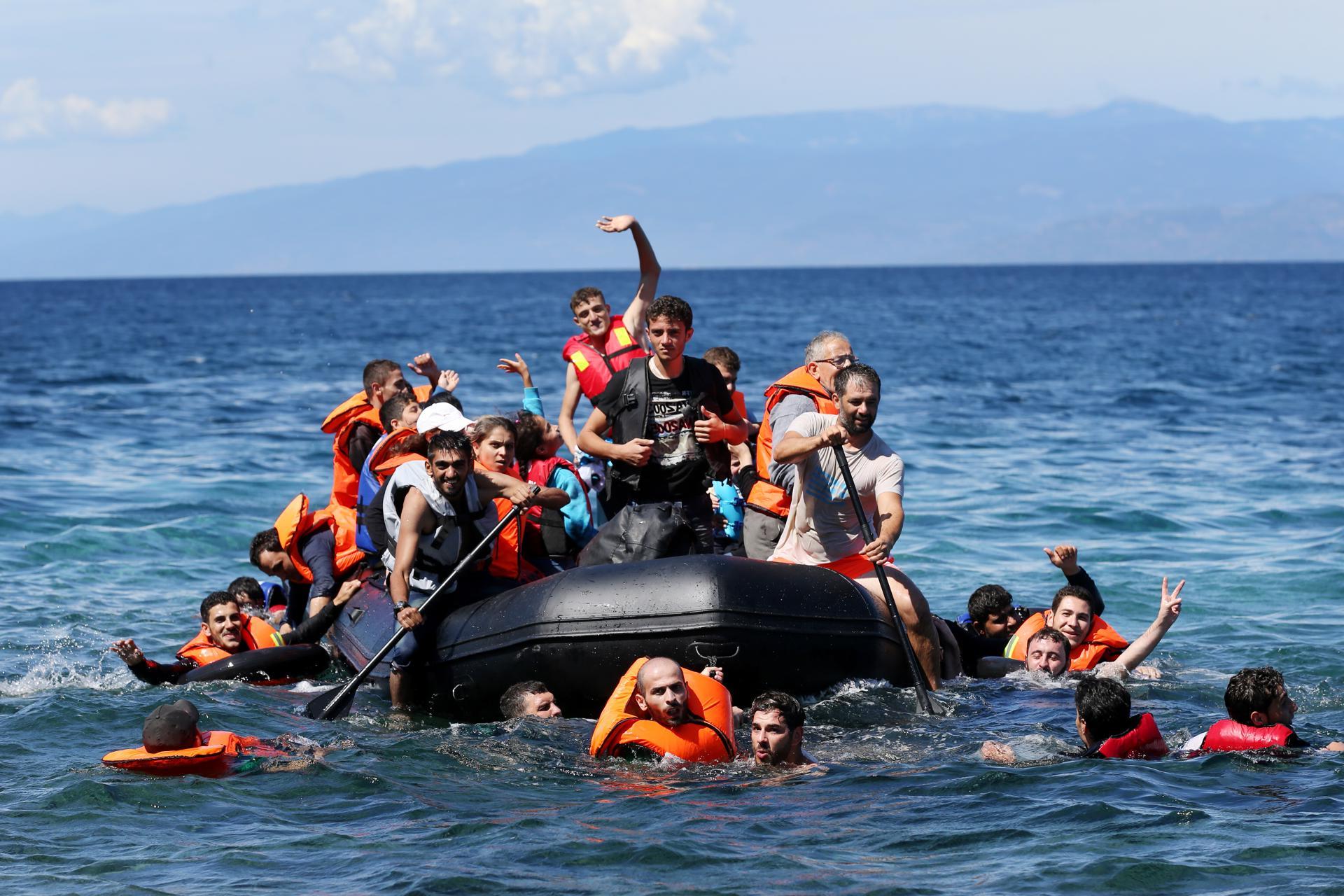
After more than a decade of growth, the number of refugees and asylum seekers in the European Union and the UK stabilised in 2025. The total figure remained virtually unchanged at 9.59 million, whilst the number of asylum applications fell for the second year running. At the same time, contrasting trends were observed in individual countries: the number of refugees fell in Germany and Italy, whilst it rose in France, Spain and the UK.
- The number of refugees and asylum seekers in the EU and the UK in 2025 will be 9.59 million.
- Asylum applications fell to 770,000, compared with 1.01 million in 2024.
- In Germany and Italy, the number of refugees has fallen, whilst in France, Spain and the UK it has risen.
- A significant drop in applications from Syrians following the collapse of the Assad regime in 2024.
- Ukrainians account for almost half of the refugees and asylum seekers in the EU and the UK.
Stabilisation of refugee numbers in Europe
The number of refugees and asylum seekers in the European Union and the United Kingdom in 2025 stood at 9.59 million, which is virtually unchanged from the figure of 9.58 million in 2024. Centre for Migration Research and Analysis Rockwool Foundation A report from Berlin noted that, after more than ten years of growth, this figure has stabilised. Asylum applications during this period fell to 770,000, down from 1.01 million in 2024 and 1.1 million in 2023.
Different trends across Europe
Germany, as the country hosting the largest number of refugees in Europe, recorded a 4.7% decrease in the number of refugees and asylum seekers. Italy saw an even more significant drop — 17.9%. At the same time, France, Spain and the United Kingdom reported an increase in the number of refugees. The decline in Germany is attributed to a lower influx of new refugees and the naturalisation of groups who arrived earlier, in particular Syrians and Iraqis.
Changes to the structure of asylum seekers’ organisations
Applications from Syrians have fallen by more than 70% following the fall of the regime Bashar al-Assad at the end of 2024. At the same time, the number of applications from Venezuelans rose by 24% to 91,000. Ukrainians remain the largest group among refugees and asylum seekers, accounting for almost half of the total number in the EU and the UK.
Political and social context
The issue of migration remains a pressing issue in many European countries, where the influence of right-wing and populist parties has grown. A stabilisation in refugee numbers could influence political discourse and future migration policy in Europe. A decline in asylum applications may ease the pressure on the social welfare systems of individual countries, but requires careful monitoring of future trends.
Although the total number of refugees in Europe has stabilised, differences between countries point to varying migration flows and reception policies. Analysing further changes in the composition of migrants and government responses will be key to understanding future challenges and opportunities in the field of migration in Europe.