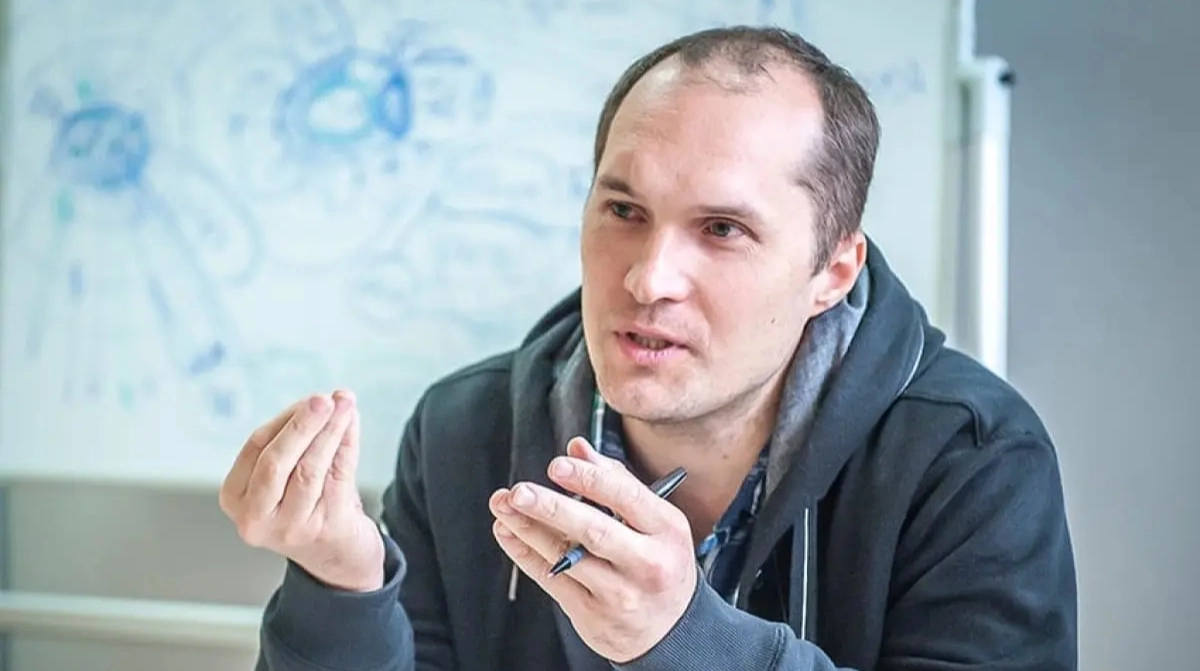
Yuriy Butusov, a journalist and commander of a UAV company, believes that the main problem with mobilisation in Ukraine is the lack of systematic accountability and the failure to involve commanders who are trusted on the front line. In his view, reforms should be guided not by political PR but by the real needs of the armed forces; otherwise, mistrust and tension within society will grow.
Briefly about the main points
- Butusov believes that mobilisation should be based on commanders who are trusted.
- The lack of accountability is hampering the recruitment of troops.
- The reforms of the TCC remain merely declaratory, with no real changes.
- Corruption and inequality in conscription are undermining trust in the army.
- Effective mobilisation requires motivation and supervision, not just coercion.
A lack of systematic accountability in mobilisation
Yuriy Butusov, who volunteered for mobilisation in 2025 and now commands a UAV company, emphasises that the main problem with mobilisation lies not in society’s tolerance, but in the lack of a clear system of accountability. According to him, the current mobilisation is piecemeal: officers at the Territorial Recruitment Centres are responsible for meeting recruitment targets, but have no real influence over the quality of the recruits. Commanders of combat units often receive recruits without taking their abilities and training into account, which leads to discontent and casualties.
Butusov emphasises that mobilisation In a large-scale war, conscription is always compulsory, but its effectiveness depends on the involvement of commanders who command respect and trust amongst their troops. The absence of a clear chain of command from the moment of conscription through to the execution of a combat mission renders the system unmanageable.
TCK reforms: declarations remain unchanged
Butusov is sceptical about the announced reforms of the TCC, noting that they remain mere declarations. According to him, no real changes have taken place in the mobilisation process, and politicians’ statements are often not backed up by concrete actions or accountability for the outcome.
He emphasises that the real beneficiaries of the reform are the commanders of military units, who must receive high-quality reinforcements to carry out combat missions. Without their involvement and accountability for mobilisation, the system will remain ineffective.
Corruption and inequality in conscription
Butusov acknowledges that there is a whole industry of evading conscription — among both the wealthy and the less well-off. He points to corrupt schemes involving the acquisition of fake medical certificates and exemptions, which undermine trust in military service and create class inequality.
In his view, punitive measures alone will not solve the problem: what is needed is motivation, trust in commanders and tighter control at every stage of mobilisation. Coercion and motivation must go hand in hand; otherwise, discipline will not be effective.
Challenges for the army and society
Butusov highlights strategic challenges, in particular attacks on fuel infrastructure and a shortage of air defence systems. He predicts that Russia will intensify its attacks on critical infrastructure and calls for preparations to ensure the self-sufficiency of cities, the armed forces and society.
Regarding the situation on the front line, the commander stresses the need to acknowledge the problems rather than gloss over them enemy advance. He believes that only systemic solutions, based on trust and the accountability of commanders, can turn the situation around for the better.
What could change the approach to mobilisation
Editor’s note: Yuriy Butusov’s experience suggests that involving commanders in the mobilisation process on a basis of trust can enhance its effectiveness and reduce social tension. Openness to problems, accountability at all levels and a combination of compulsion and motivation are key conditions for strengthening defence capabilities and public trust in the army.