The FREYJA system could become one of Europe’s most important defence projects in recent decades. This involves not only the development of a new interceptor missile, but also the creation of a joint missile defence architecture designed to integrate Ukrainian combat experience, European radars, command systems, launchers and industrial capabilities.
On 13 July 2026, Ukraine, the United Kingdom, Denmark, France, Germany, Italy, the Netherlands, Norway, Spain and Sweden announced the formation of an integrated anti-ballistic coalition. Its main technological focus is set to be the FREYJA project — a system designed to detect, track and intercept ballistic missiles.
The developers make no secret of the fact that one of their main objectives is to create a cheaper and more scalable complement to the American Patriot system. At the same time, FREYJA is not being positioned as a complete replacement for the Patriot, SAMP/T or other existing systems. It is intended to be integrated into Europe’s multi-layered air and missile defence system.
The FREYJA system: what is it?
The FREYJA system — is a future anti-ballistic defence system being developed on a modular basis. Rather than developing all the components from scratch, the participants aim to integrate technologies from various countries that are already available or partially developed into a single system.
That is why FREYJA It should not be viewed merely as a single missile. A fully-fledged anti-missile system must include:
- early-warning radars;
- precision target tracking systems;
- command post;
- software for calculating trajectories;
- a secure data transmission network;
- launchers;
- interceptor missiles;
- an air object identification system;
- measures for monitoring the results of interception.
The Ukrainian company Fire Point has been appointed as the project’s key industrial integrator. It will be responsible for FREYJA’s overall architecture and the production of missiles FP-7, launch and control systems, as well as the integration of key components. The German company HENSOLDT will be responsible for the manufacture, testing and supply of the radars.
FREYJA is therefore not designed as a single, closed system from a single manufacturer, but as an open system to which technologies from various European companies can be integrated.
Why is Europe launching its own missile defence system?
Russia’s full-scale war against Ukraine has shown that stocks of modern interceptor missiles are insufficient for a prolonged, high-intensity conflict.
A ballistic missile is one of the most challenging targets for air defence. It travels several times faster than the speed of sound, climbs to a considerable altitude, and then strikes its target along a steep trajectory. From the moment it is detected to a potential strike, only a matter of minutes may elapse.
Ukraine relies on a limited number of Western systems capable of effectively engaging ballistic targets. First and foremost, this refers to the Patriot system with its interceptors PAC-3. However, the production of such missiles is complex, expensive and does not meet the scale of potential demand in Ukraine and across Europe.
Reuters reported that the shortage of ammunition for anti-missile systems is already significantly limiting Ukraine’s defence capabilities. It is against this backdrop that the members of the new coalition have agreed to develop a joint solution that will complement existing systems and reduce dependence on a single supplier.
For Europe, this is not merely a question of providing aid to Ukraine. Russian «Iskander» systems, «Kinzhal» aeroballistic missiles, North Korean KN-23s and other types of weaponry pose a threat that NATO countries may also face.
European countries have state-of-the-art radars, missiles, sensors and software. The problem is that these components were often developed separately, are owned by different companies and do not form a single, comprehensive missile defence solution. FREYJA is set to change this approach.
FP-7.X — the foundation of the future FREYJA system
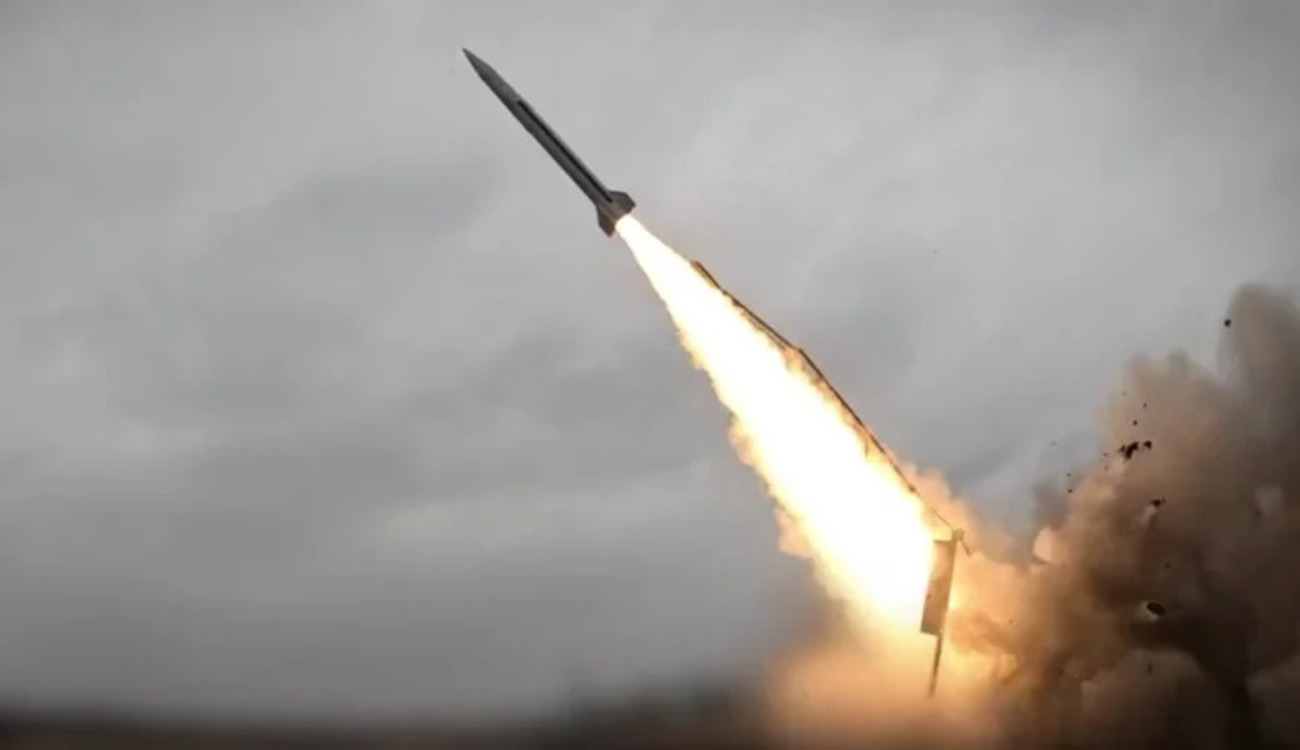
The FP-7.X — a Ukrainian guided missile being developed by Fire Point as an anti-ballistic interceptor — is set to become the system’s central component.
In June 2026, the company announced that it had successfully completed the FP-7.X controlled manoeuvring flight. Reuters He clarified that this missile is an interceptor variant of the FP-7 platform, which is also being developed in a version designed to engage ground targets.
The fact that a test has been carried out does not yet mean that the finished system is already capable of intercepting operational ballistic missiles. A guided flight confirms the operation of the engine, the guidance system and the aerodynamics, as well as the missile’s ability to manoeuvre. However, a real-world anti-missile interception requires a much more complex test programme.
The rocket must:
- to obtain precise target coordinates from ground-based radar;
- to start at a specified time;
- enter the calculated trajectory;
- receive in-flight corrections;
- to capture the target independently in the final phase;
- withstand high overloads;
- to approach the warhead of a ballistic missile;
- destroy it or cause it to deviate significantly from its trajectory.
According to Defense News, the stated interception altitude of the FP-7.X may be approximately 15 miles, or around 24 kilometres. Fire Point also put the estimated cost of a single launch at around 700 thousand dollars. By way of comparison, the same article estimated the approximate cost of a PAC-3 at $3.8 million. These figures should, for the time being, be regarded as the developer’s target parameters rather than confirmed specifications for a production-ready system.
How ballistic missile interception works
At first glance, the task of missile defence seems simple: the radar detects a target, and a missile is then launched to intercept it. In reality, it is one of the most complex processes in modern military technology.
A ballistic missile does not move in the same way as an aeroplane or a cruise missile. After acceleration, it gains altitude, and then the warhead flies towards the target along a ballistic trajectory. In the final stage, its speed can reach several kilometres per second.
First, the radar must detect the launch or the warhead at the greatest possible distance. The computer analyses the speed, altitude and direction of travel, and then predicts the future point of impact.
The command centre does not guide the interceptor directly to the missile’s current location. It calculates exactly where the target will be after a certain amount of time. The interceptor and the ballistic missile must arrive simultaneously within an extremely small area of space.
Once launched, the ground-based system can transmit correction data to the interceptor. During the final phase, the homing head is activated, adjusting the flight path immediately before the intercept.
Even a minor radar error, a delay in transmitting information or an error in trajectory prediction can result in a miss of hundreds of metres. Therefore, the missile is merely the visible part of the system. Equally important are the radars, computing systems, algorithms and communication channels.
The TRML-4D radar as part of FREYJA
Fire Point has already signed a memorandum of cooperation with the German company HENSOLDT. Radar is set to play a key role in the future system TRML-4D.
This is a modern, multi-purpose radar station equipped with an Active Electronically Scanned Array (AESA). According to the manufacturer, the radar is capable of simultaneously detecting and tracking around 1,500 airborne targets of various types.
AESA technology utilises a large number of individual transmit-receive modules. This makes it possible to electronically adjust the beam direction without mechanically rotating the entire antenna, to switch quickly between sectors, and to track multiple targets simultaneously.
The TRML-4D is already in use in Ukraine, notably as the radar component of the IRIS-T SLM systems. However, for use in FREYJA, its software and operating modes will need to be adapted to meet the requirements of missile defence.
Detecting a conventional aircraft or a drone and ensuring the interception of a high-speed ballistic target are two very different levels of difficulty. For a missile defence system, the following are required:
- high refresh rate for coordinates;
- accurate speed measurement;
- ballistic trajectory prediction;
- real-time data transmission;
- resistance to electronic jamming;
- combining information from several sensors.
HENSOLDT emphasises that the TRML-4D’s software adaptability allows it to be used as part of a future anti-ballistic system. However, the final configuration of the FREYJA sensor network is still subject to change.
Why one radar is not enough
A single radar has a limited field of view, coverage sector and range. Its performance is affected by the terrain, the curvature of the Earth, electronic interference and the direction of attack.
A fully-fledged missile defence system must therefore receive data from several sources. These may include ground-based radars of varying ranges, early-warning aircraft, satellite systems, reconnaissance assets and allied radars.
If FREYJA is to become a truly pan-European architecture, its greatest advantage may not be the rocket itself, but its ability to utilise a distributed network of sensors.
For example, one radar might be the first to detect a launch, a second might refine the trajectory, and a third might provide data for final guidance. The launcher may, in this case, be located some distance away from the sensor that first detected the threat.
This approach is known as network-centred. Each component does not operate in isolation, but becomes part of a shared information system.
How does missile defence differ from conventional air defence?
The terms ‘air defence’ and ‘missile defence’ are often used interchangeably, although there is a fundamental difference between them.
Air defence is primarily designed to counter:
- by aeroplane;
- by helicopter;
- drones;
- cruise missiles;
- guided aviation munitions.
Missile defence specialises in interception:
- ballistic missiles;
- aeroballistic missiles;
- certain types of hypersonic targets;
- missile warheads during the terminal phase of flight.
Some modern systems are capable of performing both tasks, but not all of them air defence system may automatically prove effective against ballistic threats.
The IRIS-T SLM and NASAMS are highly effective against aircraft, drones and cruise missiles, but were not designed as the primary means of countering high-speed ballistic targets. The Patriot with PAC-3 and the latest SAMP/T possess specialised anti-missile capabilities.
FREYJA has been designed from the outset specifically to address ballistic threats.
Will FREYJA become an alternative to the Patriot?
In public statements, FREYJA is often referred to as a cheaper alternative to the Patriot. However, technically speaking, it would be more accurate to describe it as a future addition rather than a complete replacement for the American system.
Patriot is a mature system that has been developed and upgraded over decades. It features tried-and-tested radars, command posts, well-established algorithms, certified missiles and a track record of combat use.
FREYJA is currently under development. The FP-7.X has completed a controlled test flight, but there has not yet been any publicly confirmed combat interception of a ballistic missile.
At the same time, FREYJA’s main advantage may not lie in its superior technical specifications, but rather in its different cost-effectiveness.
If the European system really does cost several times less, and the missiles can be produced in large batches, this would allow the expensive PAC-3s to be used only against the most challenging targets. FREYJA could take on some of the low-intensity threats and increase the overall stockpile of anti-missile systems.
This is exactly how a multi-layered defence system works: different systems cover different altitudes, ranges and types of targets.
FREYJA, Patriot, SAMP/T and THAAD: what’s the difference?
Patriot is a mobile medium- and long-range air defence and missile defence system. Its PAC-3 MSE interceptor is specifically optimised to counter ballistic missiles and operates on the principle of direct kinetic engagement.
SAMP/T is a Franco-Italian system that uses missiles from the Aster family. Its new generation offers enhanced capabilities against ballistic targets.
THAAD is a specialised US missile defence system designed to intercept ballistic missiles at high altitude during the terminal phase of their flight. It is more complex, more expensive and represents a different level of defence.
FREYJA, judging by the data released, is designed for the lower tier of missile interception. The stated altitude of around 24 kilometres means that the system can operate within the atmosphere during the final stage of a target’s flight.
This does not make it a direct competitor to THAAD. Rather, it is a more affordable European system designed to protect cities, energy facilities, military bases and critical infrastructure.
Who is taking part in the FREYJA project?
Ten states endorsed the political declaration on the establishment of an integrated anti-ballistic coalition:
- Ukraine;
- Great Britain;
- Denmark;
- France;
- Germany;
- Italy;
- the Netherlands;
- Norway;
- Spain;
- Sweden.
Around twelve defence companies took part in the meetings concerning the industrial aspect of the project. Reuters named Fire Point, Eurosam, Leonardo, Thales and Saab among them.
Separate reports have indicated that Fire Point has been in contact with the Norwegian firm Kongsberg regarding surveillance and control systems. Not all negotiations have yet resulted in formal contracts, so the exact role of each company may change.
The partnership between Fire Point and HENSOLDT has already been confirmed. Under the memorandum signed, the German side will work on the radar component, whilst the Ukrainian company will act as the lead integrator.
On 18 June 2026, Ukraine and Germany also signed agreements on the development of anti-ballistic capabilities and interceptor missiles. The Office of the President of Ukraine noted that this work would form part of a unified European approach to countering ballistic missiles.
Why has Ukraine become a hub for development?
European companies have extensive experience in radar technology, missile systems, electronics and systems integration. Ukraine, for its part, has gained unique experience in countering complex, combined attacks on a daily basis.
Ukrainian air defence forces are simultaneously facing drones, cruise missiles, ballistic missiles, aeroballistic missiles, decoys and electronic warfare systems.
This makes it possible to test technical solutions in real-world conditions more quickly. Instead of a cycle lasting several years between prototyping and receiving feedback from the military, Ukrainian developers can obtain results much more quickly.
At the same time, combat experience does not negate the need for comprehensive testing. A missile defence system must be reliable not just in a single demonstration launch, but under various weather conditions, in the face of jamming, during massive attacks and when engaging multiple types of targets.
Ukraine needs a partnership with Europe to gain access to components that it does not yet produce in sufficient quantities. These may include homing heads, specialised electronics, radars, communication channels, engine components and equipment for mass production.
Why the cost of interception is of strategic importance
In modern warfare, it is not enough simply to develop a missile that is technically capable of hitting a target. It is important to be able to produce and deploy such missiles in large numbers.
If the enemy launches dozens or hundreds of sophisticated targets every month, the defence forces are constantly depleting their stock of interceptors. Even a highly effective system can become useless if ammunition runs out faster than the manufacturer can produce new supplies.
The target value of the FP-7.X is around 700,000 dollars It looks attractive compared to the several million dollars a modern PAC-3 costs. However, the final price must include not only the missile, but also radars, launchers, command posts, maintenance, staff training and logistics.
Furthermore, a cheaper interceptor will not necessarily have the same probability of hitting the target as a more expensive missile. If two or three interceptors have to be launched to engage a single target, the actual cost-effectiveness may differ from the cost of a single launch.
Therefore, the key indicator will not be the price of a single missile, but the cost of a guaranteed interception of the target.
What technical issues will need to be resolved?
FREYJA’s greatest challenge will not be the launch of the FP-7.X, but rather the integration of its individual components into a reliable combat system.
Developers face at least six critical challenges.
The first is aiming accuracy. At relative velocities, even a slight error results in a significant miss.
The second is the homing head. It must identify the target, distinguish it from debris or false targets, and operate under high temperatures and high G-forces.
Thirdly — radar integration. Data from various sensors must be received in a single format and without any critical delays.
Fourth — communications security. The adversary will attempt to jam data transmission channels, generate false signals and attack the software infrastructure.
Fifth — mass production. Even a successful prototype does not guarantee the ability to produce dozens of missiles every month to a consistent standard.
The sixth is testing against realistic targets. To verify performance, target missiles are required that replicate the speed and trajectory of real-world ballistics. Such tests are expensive and complex.
Is it really possible to create FREYJA in just one year?
Following the announcement of the coalition, Ukrainian President Volodymyr Zelenskyy stated that the system could be up and running within 12 months. He compared the future architecture to a construction kit, with various European companies supplying individual components.
This timeframe can be explained by the fact that the participants are not starting from scratch. Ukraine is already testing the FP-7.X, HENSOLDT has the TRML-4D radar ready, and European companies possess the necessary command and control technologies.
However, the term «operational system» does not necessarily mean a fully deployed production network. A pilot network or a limited initial configuration may be introduced during the course of the year.
Defence News cited another target: Fire Point planned to commence mass production and carry out its first ballistic missile interception by the end of 2027.
The difference between these timeframes may be due to differing interpretations of what constitutes ‘readiness’. The prototype, the trial batch, the first successful interception and full operational readiness are distinct stages.
The 12-month pledge should therefore be seen as a political and industrial objective, rather than a guaranteed completion date for the entire programme.
What the FREYJA battery might look like
The final configuration of the system has not yet been disclosed. However, in line with the principles of modern missile defence, a single FREYJA battery may consist of several main components.
The radar will detect targets and transmit the information to the command centre. There, the software will assess the threat, identify the type of object, predict the point of impact and make a decision on whether to intercept it.
The command will then be transmitted to one or more launchers. The FP-7.X will launch at the calculated time, receive corrections from the ground-based system, and switch to autonomous guidance during the final phase.
The battery unit should also include communications vehicles, power supply units, transport and recharging vehicles, repair equipment and a technical diagnostics system.
In the future, several batteries could be linked together to form a regional network. This would make it possible to pass a target from one radar to another and select the launcher that is best positioned to intercept it.
What FREYJA means for Europe’s security
The FREYJA project is significant not only because of the potential introduction of a new interceptor. It demonstrates a shift in Europe’s approach to defence manufacturing.
Traditionally, large defence programmes were divided amongst individual states. Each country commissioned its own system, supported its national manufacturer and set up its own logistics.
As a result, Europe has ended up with many technologically advanced, but not always interoperable, systems. This complicates joint production, maintenance and the build-up of large ammunition stocks.
FREYJA proposes a different model: one country provides the missile, another the radar, a third the control system, whilst several states jointly fund production and are granted the right to manufacture individual components.
The coalition countries have explicitly stated that the future architecture must be based on technological openness, collective effort and trusted industrial cooperation. It should complement European missile defence systems that have already been acquired or are planned.
If this model can be successfully implemented, it could form the basis for other joint defence programmes.
FREYJA could shift the balance between price and mass appeal
The main idea behind FREYJA is not to create the most expensive or most sophisticated anti-missile system in the world. Its aim is to strike a reasonable balance between effectiveness, cost, production speed and the availability of components.
Patriot will remain a critically important system. SAMP/T will also continue to evolve. However, European countries need far more missiles, radars and launchers than they currently have.
Even a system with somewhat lower performance specifications could become strategically important if it can be deployed in dozens of cities and supplied with a large stockpile of ammunition.
It is precisely this scale that may prove decisive. The enemy must realise that a single, costly strike will not wear down the defences or force them to deploy a disproportionately expensive interceptor.
From the Ukrainian prototype to the European shield
FREYJA remains a project currently under development. Its missile has completed a guided flight, HENSOLDT has confirmed its involvement in the radar component, and ten countries have formed a political coalition. However, real-world interception tests, control system trials, the establishment of mass production and confirmation of the stated cost still lie ahead.
The programme’s success will depend not only on Fire Point. This will require the coordinated efforts of dozens of companies, governments and military organisations. European partners will have to agree on technical standards, the division of production, funding and export regulations.
FREYJA’s greatest strength lies in combining Ukrainian development speed with European technologies and industrial resources. Its greatest weakness could be the difficulty of coordinating a large number of participants.
If the system lives up to its claimed capabilities, Europe will gain more than just another air defence system. It will have its own scalable missile defence platform, which can be developed, modernised and manufactured simultaneously in several countries.
That is precisely why FREYJA should not be judged solely on the basis of the FP-7.X’s specifications. The true outcome of the project should be a unified network capable of detecting ballistic threats, sharing information between countries and deploying the most appropriate means of interception.
In this sense, FREYJA is not merely a Ukrainian alternative to the Patriot, but an attempt to create a new European model of missile defence — one that is cheaper, more open to integration and adapted to a war in which missile stockpiles and production rates are no less important than the peak performance of a single system.
Edited by: Yuriy Butusov, Maksym Krus.