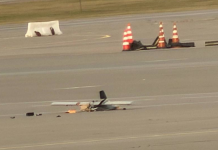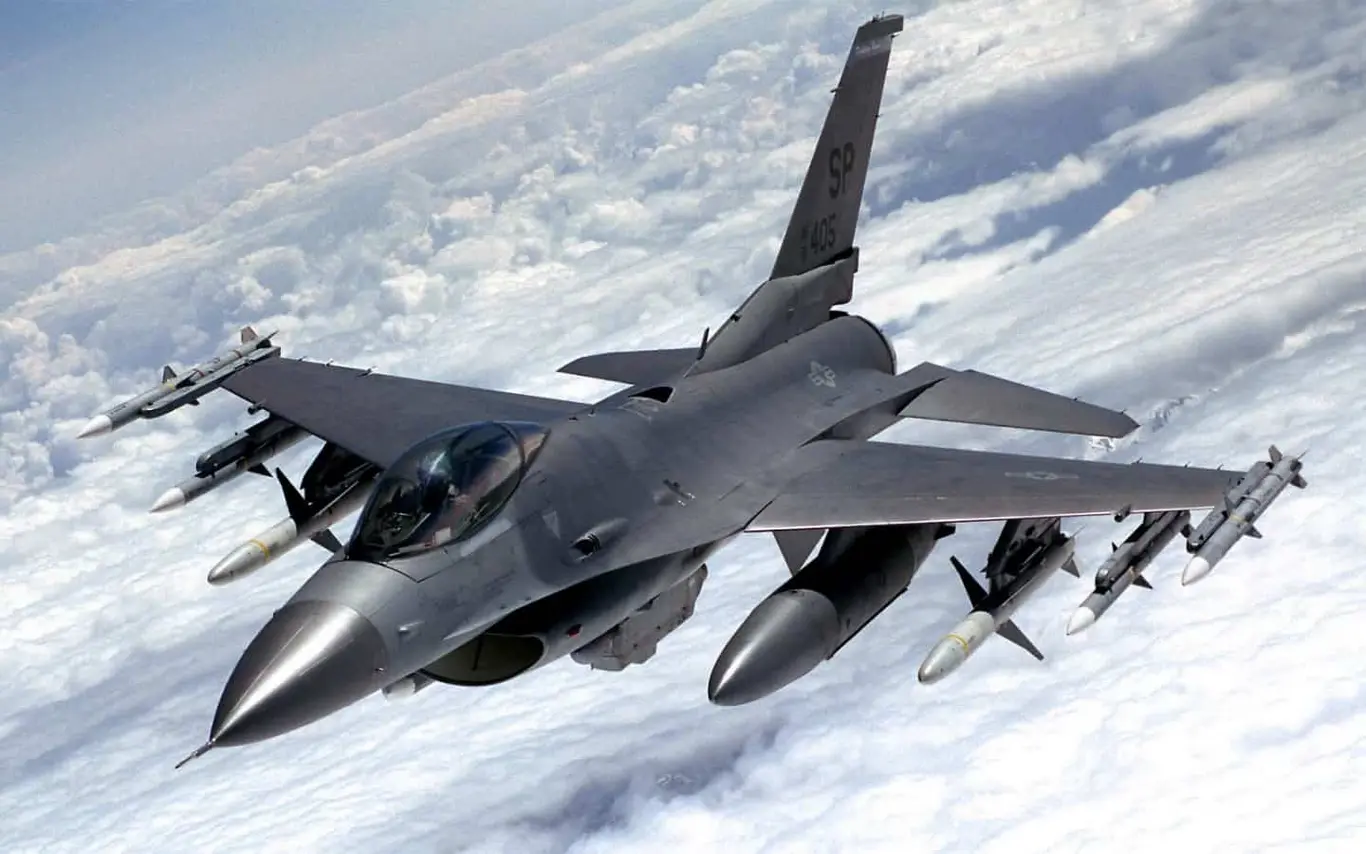
NATO has confirmed that Alliance fighter jets under its command shot down an unidentified drone in Romanian airspace on 24 July. Two Romanian F-16s and two Italian Eurofighters were scrambled to intercept the drone; once the target had entered Romanian airspace, NATO forces were authorised to engage it. According to the Romanian Ministry of Defence, the successful engagement was carried out by an F-16.
Briefly about the main points
- In Romania, NATO fighter jets shot down an unidentified drone.
- Two F-16s and two Eurofighters were scrambled.
- A Romanian F-16 struck a target with an air-to-air missile.
- A drone was shot down near the village of Padina in Buzău County.
- The origin of the aircraft has not yet been established; the wreckage is being searched for.
Trajectory, target and point of impact
The Romanian Ministry of National Defence reported that radar had detected an aerial target at 09:39, approximately 20 kilometres east of Sulina. After entering national airspace, it followed a route from Sulina to Brăila, then to Fetești and finally to Buzău.
The drone was shot down at 11:02 by an air-to-air missile over an uninhabited area near the commune of Padina in Buzău County. RO-Alert warnings were sent to residents of Tulcea and Brăila counties during the operation.
The four aircraft were part of a single operation
An Italian pair of Eurofighters took off at 09:48, and two Romanian F-16 — at 10:56. According to the commander of the operation, General Gheorghe Maxim, the Eurofighters were the first to attempt to strike a target in the Breila area, but the missile missed.
Following this, the Romanian F-16s continued their interception, and one of them shot down the UAV approximately 25 kilometres from the area of the first attempt. Thus, all four fighter jets were involved in the operation, although the successful engagement is officially credited to the Romanian aircraft.
The claim that «four fighter jets were needed» for a single drone does not reflect the full picture of the operation. The deployment of several aircraft involved detection, escort, the allocation of tasks amongst allies, and choosing a safe moment to launch.
They were given the go-ahead to engage after the drone entered the area
The decision to use force was taken immediately after the target entered Romanian airspace, in coordination with NATO’s Joint Air Operations Centre in Torrejón, Spain. However, the actual launch depended on visual identification, the target being acquired by the aircraft’s radar, and an assessment of the risks to people and infrastructure.
President of Romania Nikushor Dan stated that they only opened fire once they were satisfied that there was no risk to the public. The choice of an uninhabited area as the target was in line with this approach.
The origin of the UAV is being determined
At the time of the briefing, the Romanian command had not established who owned the drone or where it had been launched from. The pilots described it as a target with visual characteristics typical of Shahed, although this is not a definitive identification.
The search for the wreckage is continuing, and the authorities have launched an investigation. Until the results of the forensic analysis are made public, there are no grounds for definitively attributing the aircraft to a specific country or determining the purpose of its flight.
Air defence seeks a response to the drone threat
NATO described the incident as confirmation of the Alliance’s readiness to respond to air threats around the clock. The Air Policing mission operates on a continuous basis, and the centre in Torrejón coordinates the airspace south of the Alps, which includes Romania.
At the same time, the episode highlights the practical challenges of countering drones: even when authorised to engage, fighter jets cannot always open fire immediately due to the risks on the ground. It is precisely this need to rapidly detect, identify and neutralise such targets that NATO links to the plans announced on 7 July to invest over 40 billion dollars in anti-drone capabilities and the training of UAV operators over the next five years.