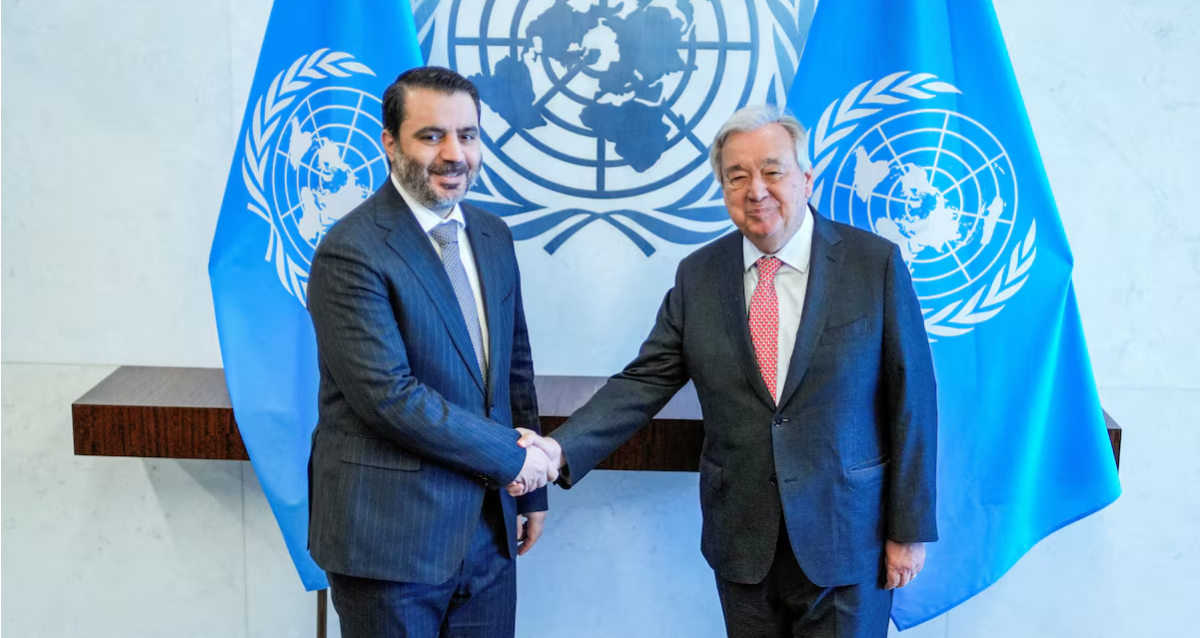
UN Secretary-General António Guterres arrived in Damascus on 25 July — this is the first visit by a sitting head of the United Nations to Syria since 2009. According to the UN and the Syrian news agency SANA, he has already met with President Ahmed al-Sharaa and will hold talks with government officials, civil society representatives and UN peacekeepers over the next few days.
Briefly about the main points
- Guterres arrived in Damascus on 25 July on a solidarity visit.
- This is the first visit to Syria by the current UN Secretary-General since 2009.
- President Ahmed al-Sharaa received the Secretary-General at the presidential palace.
- On Monday, Guterres is due to address the new parliament.
- The visit will include a trip to the UN peacekeeping mission in the Golan Heights.
Negotiations in Damascus and an appeal to the international community
«The United Nations stands with Syria at this critical juncture,» he wrote Guterres on social media X upon his arrival. He called on the international community to do everything in its power to support the Syrian people.
The Syrian state news agency SANA reported that the president Ahmed al-Sharaa received the Secretary-General at the Presidential Palace. A UN spokesperson Stéphane Dujarric had previously stated that Guterres would also meet with the Foreign Minister Asaad al-Shaybani, other officials and representatives of Syrian civil society. The Secretary-General’s office has not released the full itinerary for the visit.
On Monday, the UN Secretary-General is expected to address Syria’s new parliament. He is expected to remain in Damascus for several days.
The visit comes against the backdrop of Syria’s return to the international stage
The trip marked another milestone following the rebels’ removal of Bashar al-Assad at the end of 2024, bringing to an end the war that had been raging since 2011. At the time, Guterres described the end of Assad’s dictatorship as a sign of hope for the region. The transitional period in the country was led by an Islamist leadership.
The al-Sharaa government is attempting to restore economic and diplomatic Syria’s ties after nearly 14 years of war and decades of isolation under the rule of the Assad family. Last year, al-Sharaa became the first Syrian president since 1967 to attend a session of the UN General Assembly in New York. The US has lifted most of its broad sanctions against Syria, and President Donald Trump informed al-Sharaa earlier this month of his intention to remove the country from the list of state sponsors of terrorism.
In November 2025, the UN Security Council, by Resolution 2799, removed al-Sharaa and the Minister of the Interior from the list Anas Hattab from the sanctions list relating to the «Islamic State» and «Al-Qaeda». The document also emphasised Syria’s obligations to combat terrorism, protect the rights of all citizens and promote transitional justice.
Inclusivity and accountability for violence
Dujarric stated that Guterres would emphasise the opportunity for Syria not only to recover from the conflict, but also to lay the foundations for a more stable, inclusive and prosperous future for all Syrians.
The transition comes in the wake of two major episodes of inter-communal violence, which have cast doubt on al-Sharaa’s repeated promises to protect religious minorities. Last year, nearly 1,500 Alawites were killed in the country’s coastal region by groups linked to the government. A few months later, hundreds of members of the Druze minority were killed in the south. Guterres expressed concern over both incidents and called for those responsible to be held to account.
UN It continues to link a political settlement to Security Council Resolution 2254: the process must be Syrian in substance and leadership, inclusive, and provide for a constitutional process and elections in accordance with international standards. This indicates that the visit is not merely a diplomatic gesture, but also a reminder of the criteria for international support for the new phase in Syria.
Humanitarian needs and security in the south
Diplomatic rapprochement does not diminish the scale of humanitarian needs. According to the UNHCR, 15.6 million people were in need of assistance in March, whilst 5.5 million remained internally displaced. Since the change of government, by the end of May 2026, around 1.67 million refugees and approximately 1.9 million internally displaced persons had returned to the country; however, the UNHCR warns of a shortage of housing, services and opportunities to earn a living.
Guterres will also visit the United Nations Disengagement Observer Force (UNDOF) in the Golan Heights, which has for decades maintained a buffer zone between Israeli and Syrian forces. The Security Council extended their mandate on 25 June for a further six months. Following Assad’s ousting, Israeli troops have occupied new areas in southern Syria; Damascus is demanding their withdrawal and a return to the 1974 disengagement agreement.
The trip to UNDOF adds a regional dimension to the visit. Security issues along the Israeli-Syrian border, humanitarian funding and internal reconciliation remain interlinked components of the stabilisation that the UN is seeking to support in Syria.