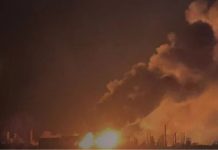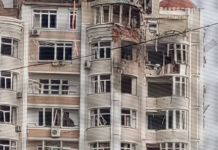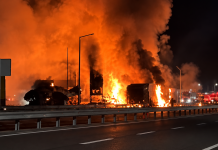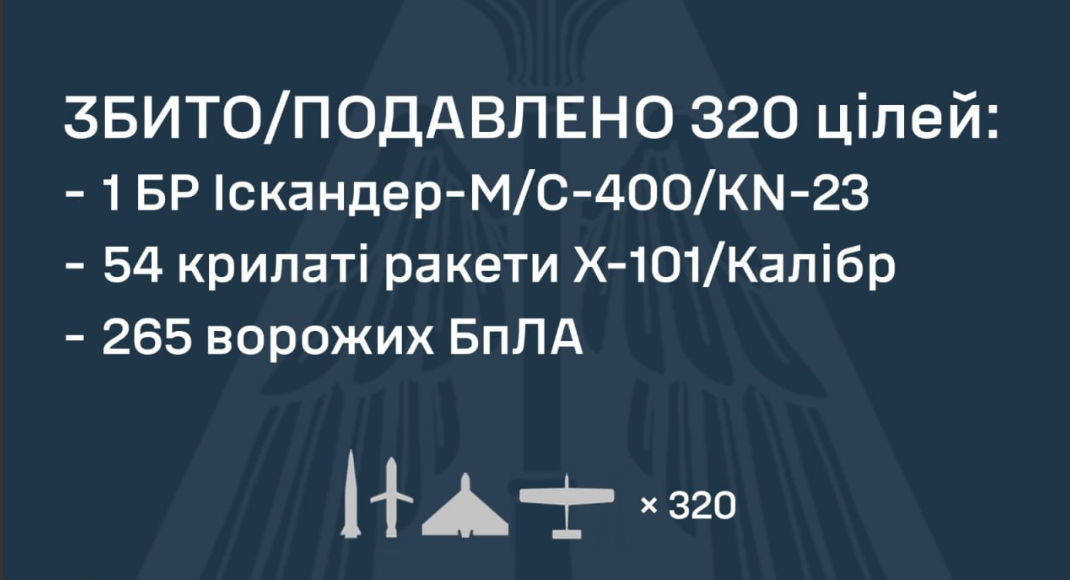
On the night of 30 July, Russia launched a massive combined strike against Ukraine, deploying 74 missiles and 284 drones of various types. According to the Air Force, as of 09:00, Ukrainian air defences had shot down or neutralised 320 targets. The strike affected at least eight regions, and the air attack was ongoing.
Briefly about the main points
- Russia has launched 358 air-attack weapons at Ukraine.
- Air defence forces shot down or intercepted 55 missiles and 265 drones.
- The main areas targeted were the Kyiv and Lviv regions.
- Strikes were recorded at 20 locations across the country.
- The Air Force is currently verifying the information regarding the eight missiles.
What measures did Russia take?
Air Force recorded 358 air-attack weapons. These included four «Zircon»/«Onyx» anti-ship missiles, nine «Iskander-M»/S-400/KN-23 ballistic missiles, 61 X-101/«Kalibr» cruise missiles, and 284 attack drones and decoy drones.
The missiles were launched from the Bryansk, Voronezh, Kursk and Vologda regions of Russia, as well as from the Novorossiysk area. The drones were launched from the directions of Bryansk, Kursk, Orel and Shatalovo.
The air attack was repelled by the air force, anti-aircraft missile units, electronic warfare and unmanned systems units, as well as mobile fire groups from the Defence Forces.
Strikes in the regions and the nature of the attack
The main targets of the attack were the Kyiv region and Lviv Region. Russia also attacked the Dnipropetrovsk, Sumy, Vinnytsia, Poltava, Mykolaiv and Ivano-Frankivsk regions.
As of 09:00, it was reported that three anti-ship missiles, six ballistic missiles and two cruise missiles, as well as 17 attack drones, had struck 20 locations. The fall of downed targets or their debris was recorded at a further 13 locations.
The simultaneous use of different types of missiles and drones from multiple directions complicates the work of air defence: such weapons have different speeds, trajectories and time-to-impact. The significant proportion of ballistic missiles also highlights Ukraine’s need for anti-ballistic capabilities, as previously highlighted by the authorities.
The July series of combined attacks
The strike on 30 July continued a series of large-scale Russian air strikes over the course of the month, during which the Kyiv area was repeatedly one of the main targets. As early as 24 July, the President Volodymyr Zelenskyy stated that the intelligence services and their partners had information about Russia preparing a new large-scale missile strike, without linking this warning to a specific date.
The Air Force urged people not to ignore air-raid sirens, as several attack drones were still in Ukrainian airspace at that time.