More than 48,300 of the approximately 50,000 people who arrived illegally in the Spanish enclave of Ceuta have already returned to Morocco, an unnamed Spanish government official told Politico. The official suggested that the sudden influx may be linked to a Supreme Court ruling which restricted the immediate return of migrants in certain cases.
Briefly about the main points
- Spain has announced that more than 48,300 people have been returned to Morocco.
- Around 50,000 illegal migrants have arrived in Ceuta.
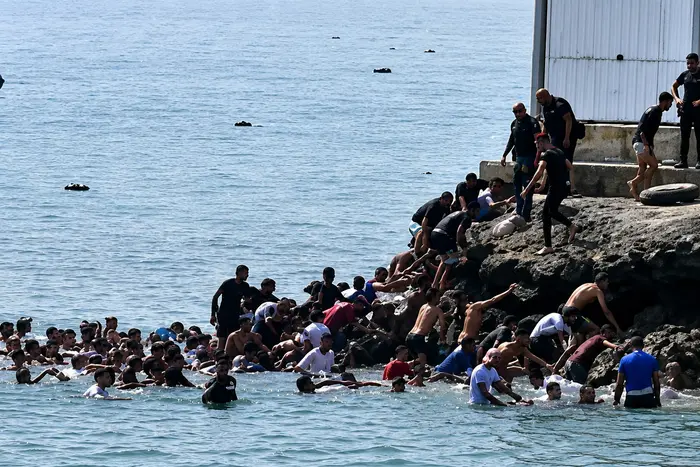
- People swam from the Moroccan coast to the Spanish enclave.
- The court has restricted the immediate return of people intercepted at sea.
- Italy has announced the reinstatement of border controls with Spain.
Return to Morocco
According to a spokesperson for the Spanish government, most people who arrived in Ceuta The day before, they had already returned to Morocco. The official said that the situation in the enclave was «returning to normal».
On the afternoon of 31 July, the Spanish Ministry of the Interior estimated the number of people who had already returned at 37,500. A later estimate of over 48,300 suggests that the return continued throughout the day.
Ceuta is situated on the African coast opposite Gibraltar and is surrounded on all sides by Moroccan territory. In recent days, thousands of people have swum there in an attempt to reach Europe.
Court ruling and the refund procedure
The Spanish authorities believe that the influx may be linked to a recent Supreme Court ruling. This ruling restricted the use of the immediate return procedure to people who were intercepted at sea whilst attempting to reach Ceuta by swimming.
As the Associated Press explained, this decision does not automatically grant the right to reside in Spain: these individuals’ status must be assessed through the standard administrative procedure. At the same time, reports of mass returns should not automatically be equated with forced deportation, as some of the people may have returned voluntarily.
Prime Minister Pedro Sánchez has blamed a network of people smugglers for spreading misinterpretations of the court ruling. The exact cause of the sharp rise in the number of arrivals has not been publicly established.
Europe’s response to the crisis
The European Commission has stated that migrants do not travel on to the European mainland or other EU Member States. European Commission President Ursula von der Leyen has called for dangerous crossings to be stopped and for action to be taken against smuggling networks, in accordance with EU rules on return.
For Ceuta, the influx has also become a humanitarian and administrative burden: the AP reported that some people, including unaccompanied minors, were spending the night in parks and on pavements. Spain has deployed additional police and military personnel to the enclave.
On the evening of 31 July, Italy announced the reinstatement of border controls with Spain and the closure of its air and sea borders. France also announced that it was stepping up checks at its border with Spain.