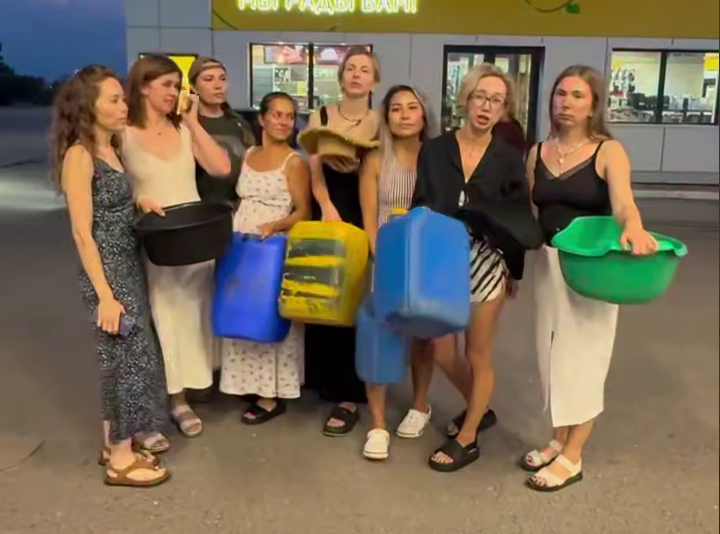
In the Russian region of Khakassia, local women took to the streets with empty jerry cans to protest against an acute petrol shortage. In a video widely shared on social media, they called on the authorities and Russian President Vladimir Putin to explain the situation. Drivers in the region are also reporting shortages of certain types of fuel, sales restrictions and queues at petrol stations.
Briefly about the main points
- Women in Khakassia protested with empty jerrycans.
- The protesters appealed to Vladimir Putin.
- They stated that they were prepared to be placed under administrative detention.
- Drivers are complaining about sales restrictions and queues at petrol stations.
- In Krasnoyarsk, residents have noticed that prices have fallen and queues have disappeared.
The empty jerrycan campaign
The protest took place following a worsening of petrol supply problems in Khakassia. In the video, women are seen standing with empty jerrycans and urging other residents to join them: «People, rise up!».
The participants consider the fuel supply situation to be critical. They have stated that they are prepared to face administrative penalties if this helps draw the federal authorities’ attention to the region’s problems.
The authorities are seeking additional supplies as prices rise
Problems in the fuel market in Khakassia had been evident since at least the end of June. On 7 July, the republic’s government announced a meeting of the emergency response committee: the measures outlined included expanding supply sources, checking fuel stocks at petrol stations and monitoring prices.
The regional authorities acknowledged the increased demand and concerns over the unavailability of certain grades of petrol, whilst insisting that local prices were lower than in most Siberian regions. Valentin Konovalov, Head of Khakassia, stated that he had been in contact with suppliers and had involved the antitrust authority and law enforcement agencies.
In June, the Bank of Russia recorded a significant increase in the republic rise in petrol prices and diesel fuel. This adds to residents’ complaints about the availability of fuel, although it does not specify the extent to which the shortage varies between different grades of petrol, specific petrol stations and localities.
The Krasnoyarsk incident and the wider fuel crisis
On the day of the visit Vladimir Putin In Krasnoyarsk, local residents reported that queues at petrol stations had disappeared and petrol prices had fallen. The authorities have not explained the reasons for these changes; any link to the President’s visit has not been officially confirmed.
Fuel shortages have affected more than just Khakassia. In July, Reuters reported on queues, inflated prices and rationing in various regions of Russia. The agency linked the tensions in Siberia, in particular, to problems following the attack on the Omsk oil refinery — the largest producer of petrol in the Russian Federation.
The Russian authorities had previously justified the restrictions on petrol exports by the need to stabilise the domestic market during periods of seasonal demand and fieldwork. A combination of logistical difficulties, refinery shutdowns and the uneven distribution of supplies could quickly affect remote regions that rely on inter-regional deliveries.