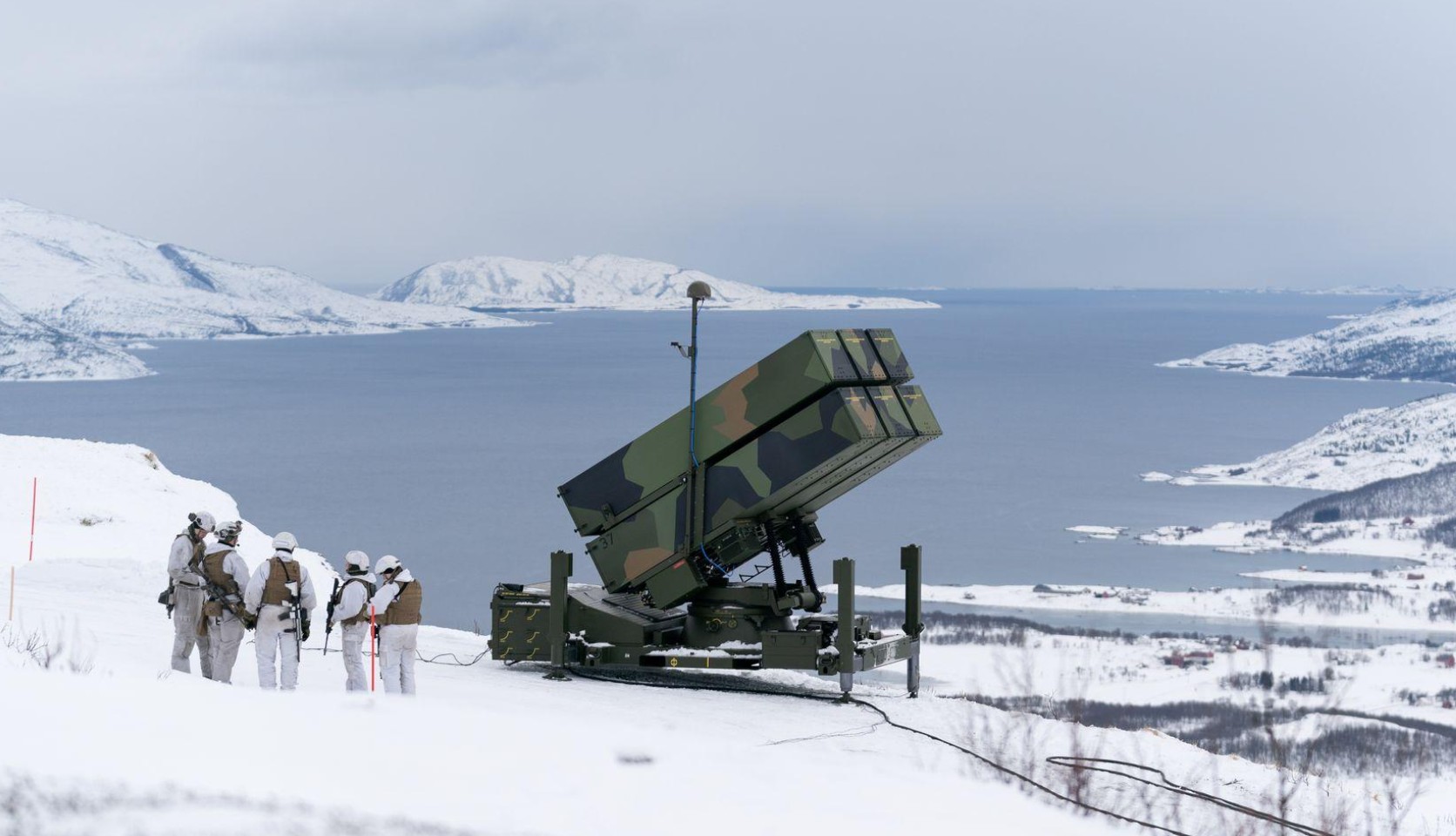
Norway is strengthening its military presence near the border with Russia by deploying more than 30 military personnel to the border region of Finnmark and deploying additional aerial surveillance assets. New sensors in the NASAMS system are designed to detect drones and provide early warning of potential airspace violations. The Norwegian government emphasises that these measures are preventive in nature and are not linked to the emergence of any new immediate threat.
- Norway is deploying more than 30 military personnel to the Finnmark region, which borders Russia.
- NASAMS sensors are being deployed in the Kirkenes area to detect and track drones.
- The Ministry of Defence is taking into account Ukraine’s experience of early warning systems for airborne threats.
- The authorities emphasise that the redeployment is not linked to any new immediate threat.
Norway is deploying NASAMS sensors near the Russian border
New aerial surveillance systems are being installed in the area around the town of Kirkenes in northern Norway, near the border with Russia. The country’s air force is deploying sensors that form part of the NASAMS air defence missile system.
The equipment is designed to detect drones, track their movements and alert the relevant authorities in good time to any potential danger. It will also enable the military to gain a more detailed picture of the situation in the airspace over border areas.
At the same time, the Sør-Varanger garrison will be reinforced by just over 30 service personnel. They will be part of the light infantry battalion until the end of 2026.
The redeployment will also form part of military training, during which Norwegian forces will practise the rapid deployment of personnel and equipment to another area.
The Norwegian armed forces are taking into account the experience of the war in Ukraine
Norwegian Minister of Defence Tore Onshuus Sandvik He explained the decision by citing the experience of European countries, which in recent years have faced incidents involving drones that have deviated from their planned routes. According to him, such incidents require advance preparation, even if there is no immediate threat at present.
The minister also highlighted the experience of Ukraine, where the timely detection of aerial targets has become one of the key elements of its defence against Russian attacks.
The deployment of NASAMS sensors is expected to enhance Norway’s capabilities for the early detection of drones. However, the official statement does not contain any information regarding the deployment of additional missile launchers or preparations to repel an attack by a specific type of drone.
Co-operation between the army and the police is being stepped up near the border with Russia
The new measures provide for closer cooperation between the Norwegian Armed Forces, the police and other bodies responsible for national security.
Under Norwegian law, it is the police who are responsible for responding to unauthorised drone flights in the country’s airspace. The armed forces may provide assistance upon request.
The local authorities in Finnmark have also announced that joint police and army exercises will take place once the surveillance system has been brought into operation. During these exercises, the mechanisms for issuing emergency alerts to the public regarding potential airborne threats will be tested.
The Norwegian Government emphasises that the security situation in the north of the country remains unchanged. The Minister for Justice and Public Security Astri Os-Hansen stated that the residents of Finnmark have no cause for concern.
The new surveillance system is due to remain in operation until at least the end of 2026. The Ministry of Defence has scheduled a meeting with journalists for 6 November at the Geibuktmuen military base near Kirkenes.