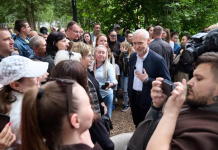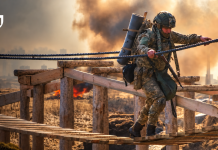
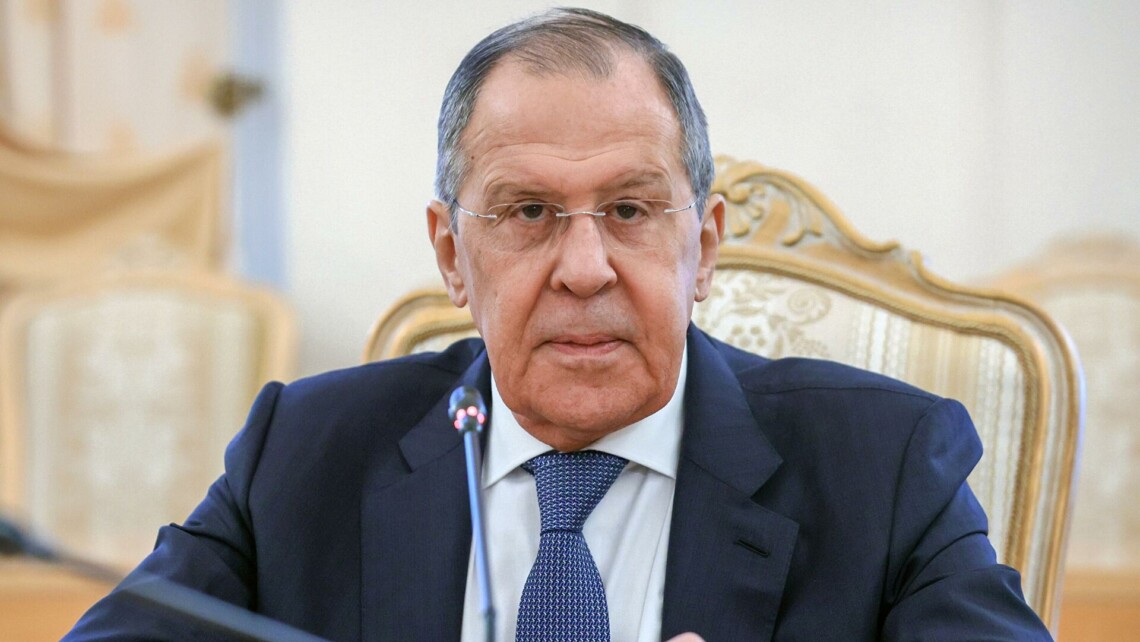
Russian Foreign Minister Sergey Lavrov has stated that Moscow will not agree to cease hostilities along the current line of contact in Ukraine. In an interview with the Russian state broadcaster Vesti, published on 14 August, he also threatened to step up efforts to counter Western military aid to Ukraine, without specifying what steps might be taken.
Briefly about the main points
- Moscow rejects a ceasefire along the current front line.
- The Kremlin is calling for a political settlement before a ceasefire.
- Lavrov has stated his intention to take a tougher stance against Western support for Ukraine.
- Ukraine regards the front line merely as a starting point for negotiations.
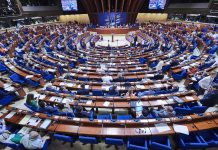
- The European Council has called on Russia to agree to an immediate and unconditional ceasefire.
The Kremlin links the cessation of hostilities to its demands
Sergey Lavrov He justified his refusal to halt the advance of Russian troops by invoking the memory of the Second World War. He repeated the Kremlin’s propaganda narrative about the fight against Nazism, which Russia uses to justify continuing its invasion of Ukraine.
According to him, the hostilities can only come to an end once a so-called «long-term, reliable and sustainable settlement» has been achieved. The Kremlin uses this phrase to insist on the fulfilment of its own political and territorial demands.
The Russian authorities also speak of the need to address the «root causes» of the war. Behind this phrasing, Moscow is concealing its demands regarding Ukrainian territories, the country’s foreign policy and its defence capabilities.
The threat regarding Western aid does not include a new action plan
The head of the Russian Foreign Ministry stated that Russia would make its methods «much tougher» in order to dismantle what he described as the West’s system of support for Ukraine’s «war machine».
This statement does not imply the announcement of a separate new operation. Lavrov did not specify any timeframes, specific countries, companies, supply routes or other targets to which his remarks might refer.
Aid to Ukraine is channelled through various government, coordination and defence-industrial mechanisms. The statement can therefore be interpreted as a signal of a possible increased pressure to support the Ukrainian Defence Forces, rather than as confirmation of a plan that has already been adopted.
Ukraine supports a ceasefire; the EU calls for an immediate truce
Ukraine is calling for a ceasefire and a meaningful peace process. Kyiv acknowledges that the current front line could serve as a starting point for negotiations, but rejects the legal recognition of the occupied territories as part of Russia.
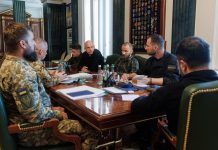
President Volodymyr Zelenskyy had previously reported on the submission of new proposals to the US side regarding the end of the war. One of the key issues remains security guarantees, designed to prevent a renewed Russian attack following a possible ceasefire.
On 18 June, the European Council called on Russia to agree to a full, unconditional and immediate ceasefire and to move towards substantive negotiations. Moscow’s position, as articulated by Lavrov, is consistent: it makes the cessation of hostilities contingent upon a prior political settlement on its own terms.