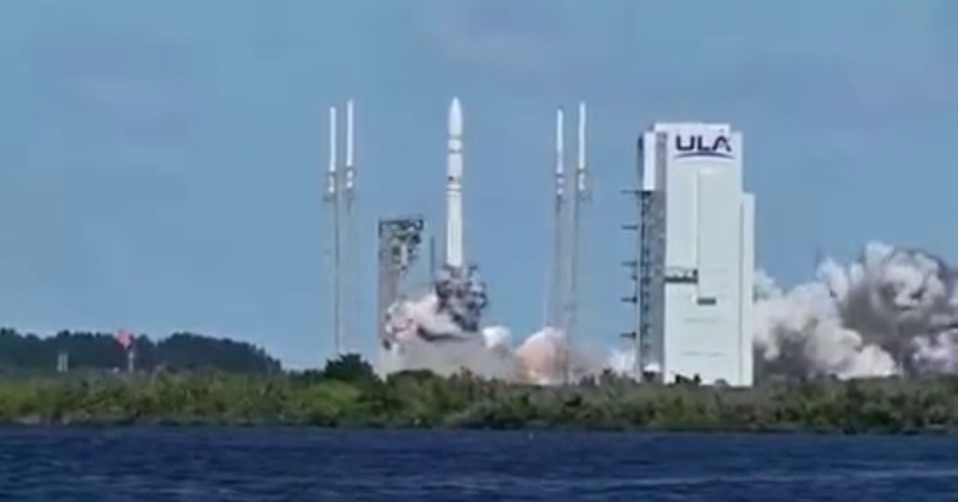
The American Vulcan Centaur launch vehicle, operated by United Launch Alliance (ULA), suffered a failure on 15 November during a launch from a spaceport in Florida. As a result of a technical fault, all 40 Amazon Leo satellites, intended to form a global satellite internet network to compete with Elon Musk’s Starlink, were lost.
- The Vulcan Centaur rocket crashed approximately ten minutes after lift-off.
- Amazon has lost 40 satellites from its future global internet network, Leo.
- The accident could affect the roll-out schedule of Starlink’s competitor.
What happened to the Vulcan Centaur rocket?
According to Reuters, the rocket lifted off from Cape Canaveral at 12.40 local time. Approximately ten minutes into the flight, a malfunction occurred, which prevented the spacecraft from reaching orbit.
It appears that the problem arose whilst the Centaur upper stage was in operation. ULA specialists are analysing the telemetry data to determine the exact cause of the failure.
It was the fifth flight Vulcan Centaur and the first complete failure in the nearly 20-year history of the United Launch Alliance, a joint venture between Boeing and Lockheed Martin.
The day before, the company Elon Musk also encountered technical problems during the test Starship rockets, having lost the Super Heavy accelerator.
Amazon is rolling out a rival to Starlink
Amazon Leo, formerly known as Project Kuiper, involves the deployment of a constellation of 3,236 satellites in low Earth orbit. The network is intended to provide high-speed internet to users in regions with limited access to terrestrial telecommunications infrastructure.
Prior to the accident, Amazon had successfully launched 398 satellites, representing over 12 per cent of the planned constellation. The company had expected to begin providing satellite internet services by the end of 2026.
The failed mission was the first of 38 planned by Amazon using Vulcan rockets.
At the same time, the company is continuing to roll out its network using other launch vehicles. The next launch of 36 Amazon Leo satellites on a European Ariane 6 rocket is scheduled for 23 November at the earliest.