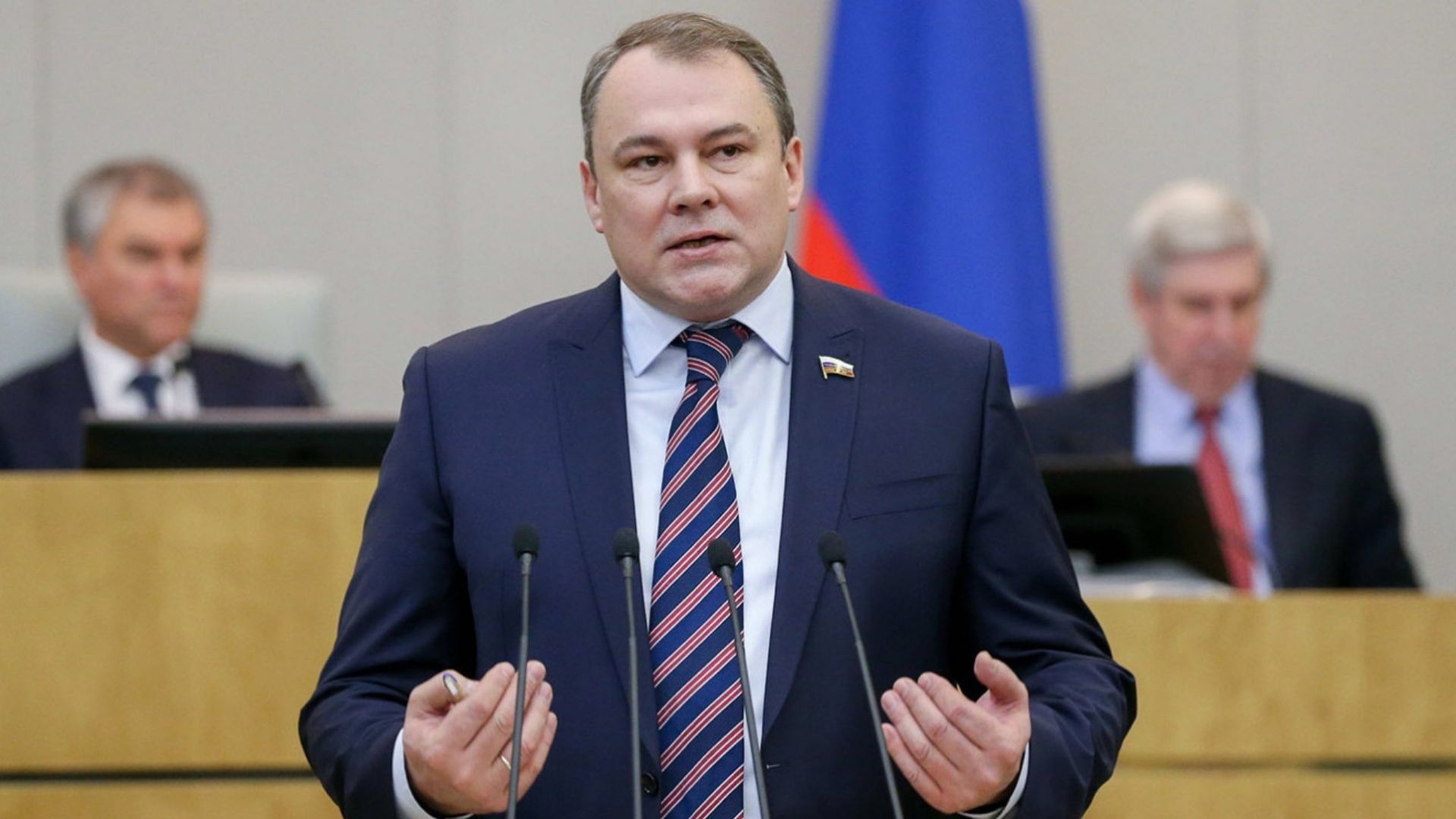
Petr Tolstoy, Deputy Speaker of the Russian State Duma, called for strikes to be carried out on Ukrainian cities in order to demoralise the population and force them to cease resistance to Russian troops. The statement was made on 27 August during a broadcast on Channel One. The objective he proposed contravenes the prohibition on the intimidation of civilians, as established by international humanitarian law.
Briefly about the main points
- Tolstoy proposed launching attacks on cities across Ukraine.
- He stated that the aim was to break the civilians’ will to resist.
- The MP suggested giving city residents one day’s notice.
- Tolstoy is the current Deputy Speaker of the State Duma of the Russian Federation.
- A warning does not legitimise attacks on civilians or indiscriminate strikes.
What exactly did the Russian MP propose?
The remark was made during the talk show «Time Will Tell» on Russia’s «Channel One». The publication «We Can Explain» drew attention to the politician’s comments, after which they were picked up by other media outlets.
During the discussion Tolstoy They asked about the fate of those who would remain in Ukraine if its territory were to be turned into «scorched earth». He replied that city dwellers could be given advance warning of impending bombardments — roughly a day in advance — so that they could leave.
Tolstoy stated that he was hoping for a situation in which Ukrainians would «come out to meet our troops with their hands raised». His proposal concerned strikes on towns as a means of exerting psychological pressure on people, rather than as a means of destroying a specific military target.
The statement contrasts with Moscow’s public stance
Tolstoy is the current Deputy Speaker of the Russian Parliament and a member of the United Russia party, not an independent television commentator. The State Duma’s official website lists him among the chamber’s deputy speakers.
The position he has put forward contradicts the long-standing statements by Russian officials, who claim that the Russian Federation’s army is allegedly carrying out strikes in Ukraine exclusively against military targets. In this instance, a representative of the State Duma leadership directly linked the possible bombings to pressure on the civilian population.
What rules does international humanitarian law apply?
Article 51 of Additional Protocol I to the Geneva Conventions prohibits targeting the civilian population or individual civilians. It also prohibits acts or threats of violence whose principal purpose is to spread fear amongst the civilian population. Russia remains a party to this Protocol.
The International Committee of the Red Cross classifies this prohibition as part of customary international humanitarian law. Among the examples it cites are attacks intended to terrorise civilians and large-scale indiscriminate bombardments and the regular bombing of towns.
An early warning can serve as a precautionary measure ahead of an attack, which may affect civilians, provided that circumstances permit. However, it does not relieve a party to the conflict of its obligation to distinguish between civilian and military targets, to observe the principle of proportionality, and to refrain from indiscriminate attacks. Therefore, the stated aim of demoralising the population is not justified by the mere fact of the warning.