Russia may resort to almost continuous attacks on Kyiv using jet-powered strike drones, launching new waves over the course of many hours. This assessment was made by Oleksandr Musienko, head of the Centre for Military-Legal Studies, following the prolonged air attack on the capital on 27 August. He links this scenario to the increase in UAV production and the expansion of Russia’s launch infrastructure.
Briefly about the main points
- Musienko anticipates wave-like attacks on the capital with short intervals between them.
- New groups of UAVs may be deployed before the previous ones have left Ukrainian airspace.
- The Main Intelligence Directorate estimates the monthly production of «Geranium-4/5» missiles at approximately 3,000 units.
- The jet-powered versions can reach speeds of up to 600 km/h, reducing the time required for interception.
- Satellite analysis has revealed at least ten Russian bases with new launch pads.
Anxiety can linger or return quickly
According to Musienka, Russian forces are capable of deploying attack drones in successive waves over an extended period. Subsequent waves can be launched whilst the previous ones are still in Ukrainian airspace.
Under such a scenario, the air raid alert in Kyiv could last for many hours or resume almost immediately after it is lifted. The expert considers the capital to be one of the priority targets for Russian air strikes and does not expect their number to decrease in the near future.
The Main Intelligence Directorate reports an increase in the production of «Geranium» jet missiles»
In August, the Main Intelligence Directorate reported that the Russian defence industry was producing approximately 3,000 «Geran-4» and «Geranium-5» per month. The main mass production is based in the «Alabuga» Special Economic Zone in Tatarstan, and other enterprises in the Russian Federation are also involved in the production chain.
In the summer of 2026, satellite imagery captured new construction work on the site of the complex in Alabuga. According to estimates by the Main Intelligence Directorate, production of jet-powered variants has already exceeded that of the piston-engined «Geran-2» models, and stocks of the «Geran» family of drones stood at around 6,200 units as of August.
Higher speed leaves air defence forces with less time
Conventional piston-powered «Gerani» aircraft fly at speeds of up to approximately 185 km/h, whilst jet-powered variants are capable of reaching speeds of 500–600 km/h, depending on the version. This reduces the time available to Ukrainian air defences to detect and intercept a target.
Musienko noted that the range of such UAVs enables them to pose a threat to the northern, eastern, southern and central regions of Ukraine, including Kyiv. According to his assessment, Russia may, in some instances, simultaneously launch groups of up to 20 rocket-powered aircraft in the direction of the capital.
New launch sites make it more difficult to predict attacks
An analysis of satellite imagery in August indicated at least ten Russian bases with dozens of new launch sites identified along routes near Ukraine and Belarus. The expansion of this network enables the Russian Federation to spread its launches and devise various flight paths for its drones.
This makes it difficult to predict the timing and direction of launches. According to Musienko, the combination of new infrastructure and an increase in the number of jet-powered UAVs enables Russia to conduct longer air operations.
The stated objectives include energy and economic infrastructure
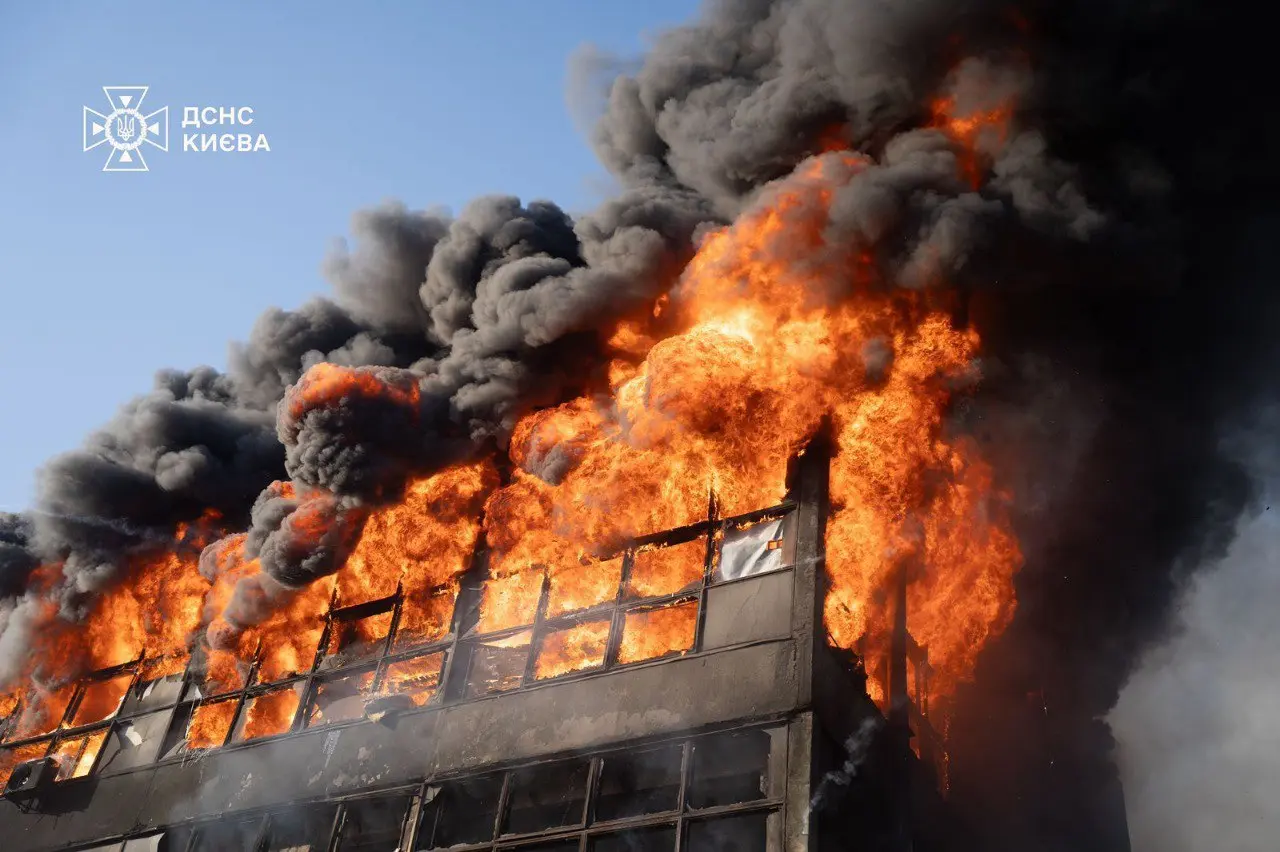
Alongside the energy sector, Russia is increasingly attempting to target warehouses, logistics centres, businesses, retail outlets and other economic infrastructure facilities, said Musienko. In his view, the aim is to systematically undermine Ukraine’s economic potential and put pressure on the home front.
The expert attributes the particular focus on Kyiv to the likelihood of a recurrence of sustained attacks by jet drones, with new groups targeting the capital at short intervals.