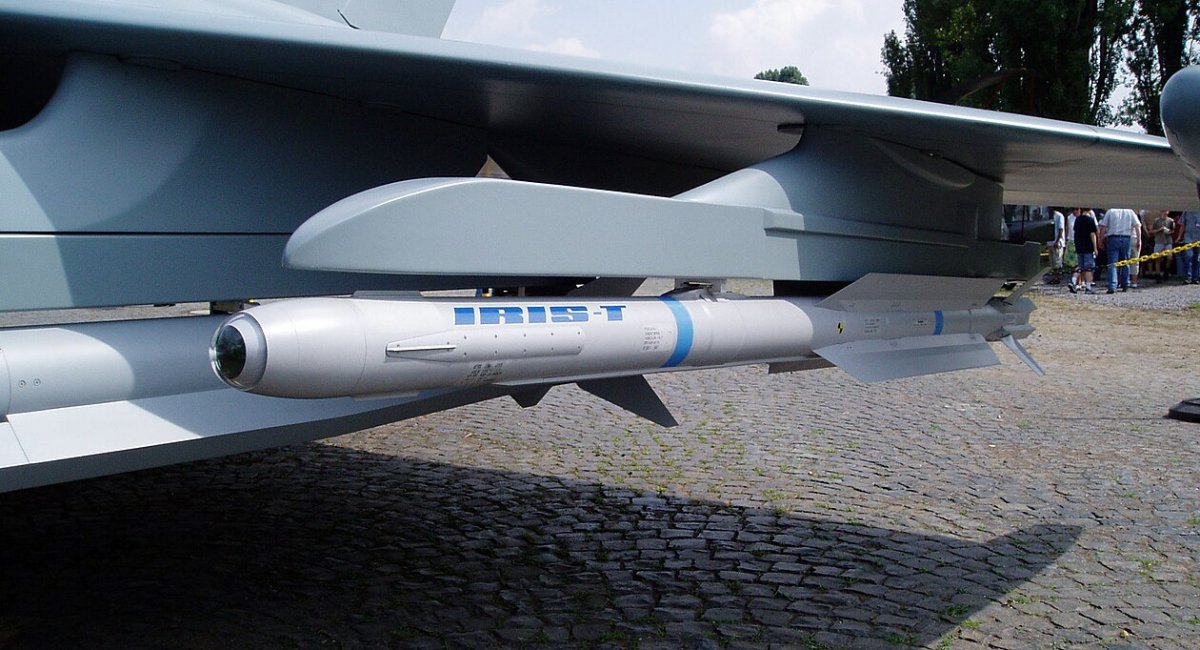
Germany is preparing to supply Ukraine with additional missiles for the IRIS-T systems, several thousand attack drones and enhanced cooperation between its intelligence services and Ukrainian intelligence. This was reported by t-online and n-tv, citing sources within government circles. The decision is linked to the attempted attack at Leipzig/Halle Airport, for which Berlin has blamed Russia.
Briefly about the main points
- Missiles for the IRIS-T systems are due to be delivered to Ukraine in September.
- Germany plans to supply several thousand attack drones in the near future.
- The reports do not specify the type of the new drones or the number of missiles.
- A drone carrying explosives was discovered near Ukrainian aircraft in Leipzig.
- Berlin is preparing sanctions, diplomatic and intelligence measures against Russia.
The package will include missiles, drones and intelligence cooperation
Additional anti-aircraft missiles are due to arrive during September. Sources have not disclosed either the number of interceptors or the variant of the system for which they are intended.
Separately, Berlin plans to supply several thousand attack drones in the near future. The specific type has not been disclosed. Germany is also set to expand cooperation between its intelligence services and Ukrainian intelligence.
German government circles believe that Ukraine’s military successes in recent months have been largely due to Western support, particularly from Germany. In their view, Russia is responding to this by stepping up its attacks on Ukraine and its hybrid operations in Europe.
The IRIS-T SLM is used to counter drones and cruise missiles
Ukraine uses systems from the family IRIS-T, in particular the IRIS-T SLM medium-range system. It is designed to engage aeroplanes, helicopters, cruise missiles and unmanned aerial vehicles.
According to the manufacturer, Diehl Defence, the IRIS-T SLM can engage targets at ranges of up to 40 kilometres and altitudes of up to 20 kilometres, providing all-round protection. The system comprises a radar, a command post and launchers; it is capable of engaging multiple aerial targets simultaneously. Diehl Defence reports that it has been deployed in combat in Ukraine.
The replenishment of missile stocks is taking place against the backdrop of an increase in the number of Russian air strikes, in which attack and reconnaissance drones, as well as cruise and ballistic missiles, are being used.
Germany has linked the incident in Leipzig to Russian organisations
Attempted attack The incident took place at Leipzig/Halle Airport on 4 August. Investigators discovered a drone carrying explosives near Ukrainian cargo aircraft. The airport is a major cargo hub and is involved in the transport of military aid to Ukraine.
On 1 September, the German government officially attributed responsibility for the incident to Russia. According to the government, the configuration of the drones, the explosive materials and the detonation system are consistent with methods that the German security services have previously identified in other Russian hybrid operations.
The Minister of the Interior, Alexander Dobrindt, stated that police files, intelligence reports and information from European partners point to the involvement of Russian state bodies.
Berlin is preparing diplomatic restrictions and new sanctions
Germany has decided to close the Russian Consulate-General in Bonn and to shut down the «Russian House» in Berlin. The government also intends to push for new EU sanctions, tighten entry restrictions for certain Russian citizens and step up pressure on Russia’s «shadow fleet».
Russia denies any involvement in the incident and has threatened Germany with retaliatory measures. Berlin regards the incident in Leipzig as part of a systematic Russian hybrid campaign against European states.
The new drones are not associated with the Shrike programme
The new batch of drones is not linked to any specific German model or programme. In July, Reuters reported that Germany was funding the production of 50,000 Shrike attack drones for Ukraine at a cost of approximately 90 million euros; some of them are already being handed over to the Ukrainian military.
Ukraine and Germany had previously also agreed on joint programmes to produce several thousand mid-range strike drones and to fund Ukraine’s long-range capabilities. The type of drone included in the current package has not been disclosed, so there is no basis for identifying it as the Shrike or linking it to other agreements.