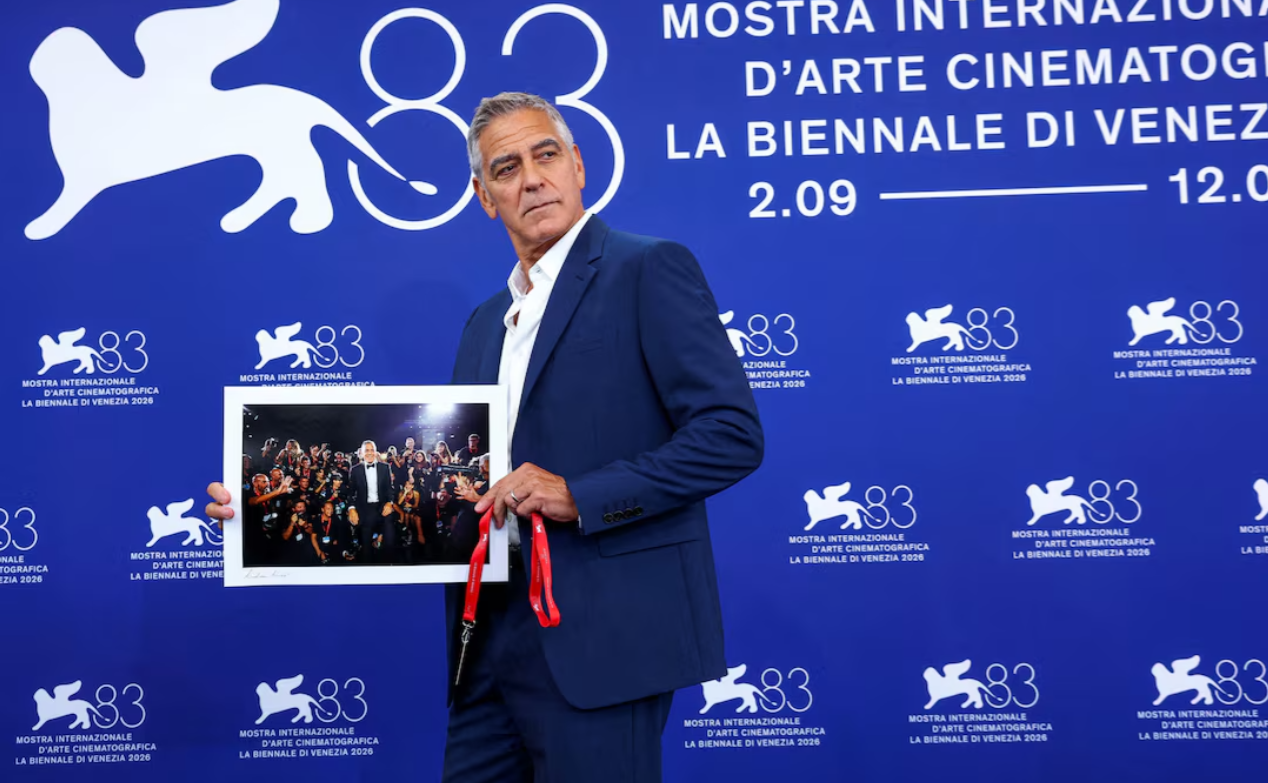
American actor and director George Clooney said at the Venice Film Festival that the development of artificial intelligence is increasingly blurring the line between truth and fiction. In his view, deepfakes and other synthetic content are undermining trust in information and posing a problem for journalists, governments and society.
Briefly about the main points
- Clooney believes that AI makes it harder to distinguish between what is real and what is fictional.
- Doubt about the content, he says, makes it possible to refute genuine evidence.
- The actor did not see enough effective safeguards following his meetings with AI developers.
- He linked technological risks to the concentration of media ownership.
- Clooney expressed scepticism about a possible merger between Paramount and Warner Bros.
Doubts about the content may also affect genuine material
George Clooney He said that the greatest danger lies not only in the creation of convincing fakes. When the audience becomes accustomed to suspecting manipulation, genuine videos, photos or other evidence can also be dismissed as forgeries.
The measures provided for have been in force in the European Union since 2 August AI Act requirements transparency regarding deepfake content and certain texts created or altered by AI, where these relate to matters of public interest. The European Commission has also published a voluntary code of practice on the labelling of such content. These rules are intended to help the public understand the origin of such material, but they do not address the broader problem of mistrust in authentic evidence, as highlighted by Clooney.
The actor is not convinced that the defence is keeping pace with technology
According to Clooney, he met with leading artificial intelligence developers, but saw no significant progress in the creation of safeguards capable of keeping pace with the rapid development of the technology. He also joked that he would not want his likeness to be used in adverts decades after his death.
At the festival’s opening ceremony, Clooney received the «Golden Lion» for his lifetime achievement. He has been a regular visitor to the Lido for almost three decades — ever since the premiere of the film *Out of Sight* in 1998.
Clooney linked the risks of AI to media concentration
The actor expressed concern that key media assets are owned by a small number of extremely wealthy individuals. He mentioned *The Washington Post* and Twitter in the context of their owners Jeff Bezos and Elon Musk. At the same time, Clooney said that, despite constant changes and pressure on journalism, information will ultimately find its way to the audience.
He also expressed scepticism about Paramount’s proposed acquisition of Warner Bros., noting that media consolidation is often accompanied by job losses and is difficult to implement. The completion of the deal between Paramount, Skydance and Warner Bros. Discovery has been postponed due to legal proceedings brought by a coalition of states. Paramount claims that the transaction will boost competition, whilst the states and the Writers Guild of America see it as posing risks to the market and industry workers.